Lessons from goat eID retention project
In January 2026, Australian goat producers have completed their first year of mandatory National Livestock Identification System (NLIS) electronic identification (eID) adoption.
While the introduction of tagging has introduced improved on-farm management via individual animal identification and data records, eID implementation also presents a significant cost to producers – particularly where eID device retention is sub-optimal.
To better understand tag retention and quantify rates of eID loss, the Department of Agriculture, Fisheries and Forestry (DAFF) has funded a study, supported by Meat & Livestock Australia (MLA), into the key factors that influence NLIS-approved eID device retention across Australian goat farms.
The methodology
Twenty mobs were enrolled across 15 goat businesses in June 2025, across NSW, Queensland and SA (Figure 1). The producers on these farms will enable an independent assessment of eID retention rates under commercial conditions.
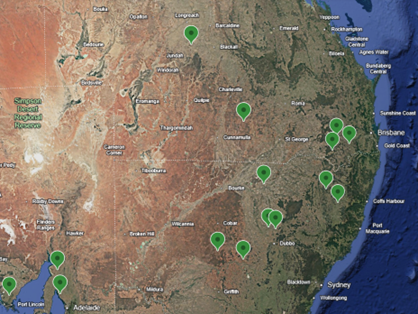
Figure 1: Locations of case study farms
Participating goat businesses were selected based on the following mob factors:
- Approximately 500 animals across a broad cross-section of goat enterprise types, regions and environments applicable to the Australian goat industry.
- Either mature goats or younger kids exclusively, selected across a diverse range of rangeland and improved breed types.
- Mix of previously tagged and untagged animals, as well as farms experiencing both high and low eID retention rates.
Progress to date
Initial data collection has now been completed across all case study farms, capturing:
- detailed information on NLIS-approved eID device type
- device placement accuracy
- application procedures and hygiene practices
- animal data (sex, age/class and breed type)
- handling infrastructure
- data relating to the farm and current environmental condition.
The initial data collection activities involved recording eID information and subsequently applying a visual tag with a unique identification number to assist with identifying study animals in the event of a lost eID device.
What we’re seeing
While data collection to measure device retention is still underway, several preliminary qualitative observations have been identified during initial data collection activities. These include:
- Tagging location variation
Early observation has indicated a significant variation in the eID placement both within and between mobs. This indicates a variation in producer preference of tagging location, and the consistency which they tag within the ear (Figure 2), which may contribute to device loss.
The figure below displays the variation in eID device placement across the case study farms.
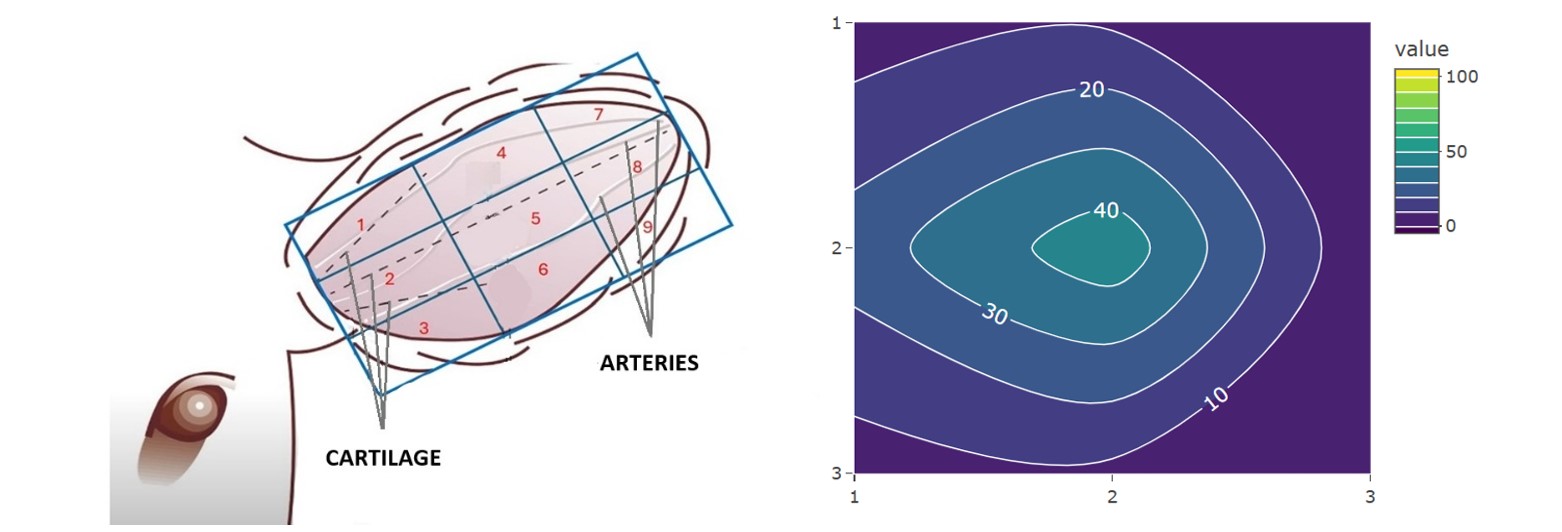
Figure 2: (Left) 3x3 placement grid to measure placement accuracy per animal, (Right) Average location of eID device placement on the ear across 20 sampled mobs
- Handling variation
It’s been identified that goats are frequently handled and processed in yards designed for sheep. This may present challenges for animal handling and pose potential challenges for the consistency and accuracy of eID device placement.
- eID applicator usage
Several examples have identified challenges around matching the correct eID applicators to the corresponding eID devices, which in some cases resulted in inconsistent device application and increased risk of device damage or misplacement.
Insights in practice: Meet TimTim Light runs a mixed grazing operation west of Armidale, managing around 500 Boer–Rangeland nannies alongside cattle and sheep. His goats were untagged before the project, and with new kids on the ground this year, he was preparing to use eID devices for the first time in his goat herd. “Working with cattle, I’ve used eID for management on my cows and sheep, but I wasn’t sure how well it would work with goats as they are a lot more unpredictable,” he shared. “After being part of the study and experiencing better retention results and tagging success than expected, I felt more confident going forward.” Tim originally planned to tag animals before trucking but now is thinking to tag at marking based on his experience in the project. “Before selling animals, I will only have to focus on weighing and drafting, which is one less thing to worry about,” Tim said. “Now I can consider tracking performance data on different mobs and bucks, which is quite interesting to think about going forward.”
|
Next steps
With final data collection completed in February, the project will move into detailed analysis and the development of practical extension materials, with the results informing industry guidance aimed at refining application techniques and improving eID system reliability on-farm.
These early insights will be presented with best practice handling recommendations at the AgForce Southern Inland Queensland (SIQ)/South West Queensland (SWQ) Bollon Goat Forum on Friday 13 March 2026. This free event convenes industry experts and producers to discuss the latest developments in the Goat Industry. Find out more and register for the event online.
The overall project is scheduled for completion June 2026.