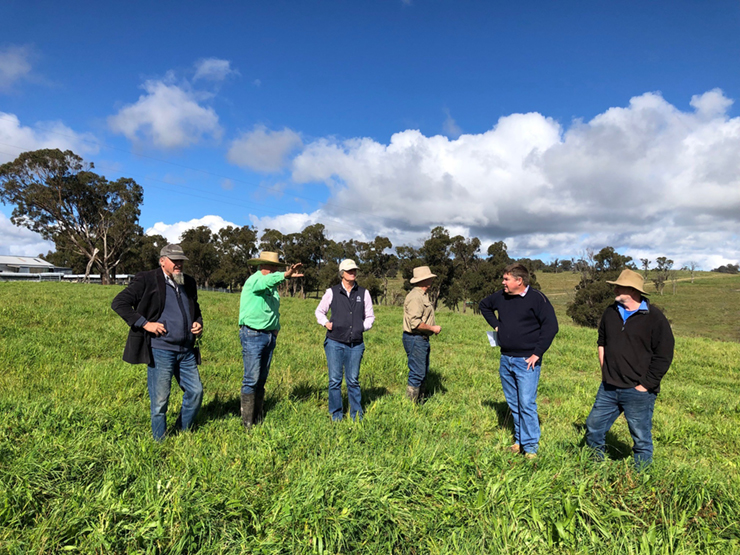
 Producer Demonstration Sites foster local collaboration and region-ready solutions to farming challenges.
Producers lead the charge in 18 new on-farm projects
Meat & Livestock Australia (MLA) has announced 18 new Producer Demonstration Sites (PDS) projects to commence in 2026. These projects equip beef, sheep and goat producers to test and prove what works on commercial properties – building skills and enabling faster adoption of proven practices across the red meat industry.
The PDS program brings local producers together to trial new approaches, measure the results and share what they learn. It’s all about region‑ready solutions that save time, lift productivity and improve decision‑making.
Below is a snapshot of the new projects that will be kicking off around the country this year – showcasing the producer‑led demonstrations delivering region‑ready solutions.
WA
Western Australian sheep producers are under growing pressure to finish lambs efficiently on‑farm, particularly through the late spring/summer feed gap when pasture quality drops away and cereal stubbles can fall short without extra supplementation. With tighter seasons, reduced pasture availability in mixed farming systems and changing market dynamics, many producers are looking for reliable, cost‑effective options to maintain weaner growth rates, improve livestock flow and hit target turn‑off windows.
This Producer Demonstration Site (PDS) will put standing fodder crops – including legumes and cereal‑legume mixes – under the spotlight, showing how they can help bridge that feed gap and deliver practical results in real commercial conditions across the wheatbelt and southern regions of WA.
Delivered through four on‑farm demonstration sites, the project will work with 22 core producers (and a wider observer network) to compare traditional post‑weaning pasture/stubble systems with lambs grazing standing fodder crops. Producers will measure feed quality and quantity (including feed-on-offer and key feed tests), stocking rate/carrying capacity and lamb performance, backed by an economic comparison so producers can see what stacks up in their own systems.
The project aims to demonstrate that lambs grazing standing fodder crops can achieve up to 200g/day liveweight gain – around double traditional systems – and be approximately 4.2kg heavier after six weeks, supporting faster turn‑off and reduced reliance on supplementary feeding. Learnings will be shared through producer‑led workshops, field walks and communications, giving producers the confidence to choose suitable crop options, integrate them into rotations and adopt strategies that improve productivity, profitability and resilience.
More information
Facilitator contact: Brianna Wightman, AgPro Management M 0457 064 777, E brianna@agpromanagement.com
Producer Group: StockPro
Stay up to date with project progress: PDS: Standing fodder crops for finishing lambs | Meat & Livestock Australia
NSW and Victoria
Getting more kilograms of feed grown and utilised per hectare is one of the biggest levers grazing businesses can pull – and it often comes down to timing and residuals. The ‘Optimising grazing management for improved production outcomes’ Producer Demonstration Site (PDS) will work with sheep and beef producers across southern NSW and northern Victoria to demonstrate how a simple, repeatable approach to rotational grazing – based on key plant signals like the 3‑leaf stage and maintaining an optimal residual – can lift pasture productivity and improve livestock performance compared to more set‑stocked or less structured grazing. With three on‑farm trial sites planned in Wodonga (Victoria) and Widgelli (two sites in NSW), the project will generate practical, locally relevant data that producers can use to make confident feedbase decisions season‑to‑season.
Across the demonstration sites, paddocks will be run side‑by‑side as a “business‑as‑usual” control and a rotational grazing treatment, with the same pasture species and stocking pressure so the results are clear and comparable. Producers will track pasture growth and quality (kg DM/ha plus feed tests), recovery intervals to hit target leaf stage, stocking rate (DSE/ha), and livestock outcomes including liveweight gain and condition score. The project will also put hard numbers around the economics, with annual cost‑benefit analysis comparing $/kg DM grown and $/kg liveweight gain, helping producers see what changes pay their way.
Supported by annual training, workshops, field days and webinars, the PDS is designed to build producer confidence in practical pasture assessment and decision‑making, with a strong focus on adoption – targeting rotational grazing uptake by most core producers and building intent to adopt across a wider observer network.
More information
Facilitator contact: Alexandra Morona, Yenda Producers Co-operative Society Ltd
M 0437 566 646,
Producer Group: Yenda Grazing Group
Stay up to date with project progress: PDS: Optimising Grazing Management for Improved Production Outcomes | Meat & Livestock Australia
WA
Mixed farming businesses across Western Australia’s Great Southern and South Coast regions regularly face tough autumn and early‑winter feed gaps, often stretching pasture resources and increasing pressure on supplementary feeding. The ‘Drone‑smart crop grazing’ PDS is putting new technology to work, showing how drone imagery (NDVI and plant health mapping) can support smarter, lower‑risk decisions when grazing early‑sown winter crops.
Led by Stirlings to Coast Farmers (SCF), the project will run across six demonstration sites, working with 10 core producers and at least 70 observers to build confidence in using drones to assess biomass, identify graze‑ready areas, set stocking rates and protect grain yield. The region grows high‑value dual‑purpose cereals, yet only around 5–10% of producers currently graze crops – and almost none use drone data to guide decisions, highlighting a major opportunity to unlock feed, ease pressure on pastures and improve whole‑farm resilience.
The demonstrations will compare grazed and ungrazed crops alongside traditional pasture or stubble paddocks, measuring livestock performance, pasture rest benefits, crop recovery and final grain yield. Previous research shows crop grazing can provide 1.0–1.5t/ha of high‑quality feed and support 150–200 g/head/day sheep growth during critical feed gaps, while also extending pasture recovery time. Drone‑derived biomass and canopy data will help producers time grazing more precisely, avoid overgrazing, and monitor crop regrowth with confidence. The project also includes a practical extension program – workshops, field walks, case studies, videos and local communications – ensuring producers can see the technology in action and understand how to fit it into their current operations. With strong industry partnerships and SCF’s extensive mixed‑farming network, the PDS aims to lift crop‑grazing adoption significantly, improving livestock performance, reducing feed costs and helping Southern WA producers develop more productive, balanced and tech‑enabled mixed farming systems.
More information
Facilitator contact: Victoria Surridge, Stirlings to Coast Farmers Inc. M 0428 171 285, E Victoria.surridge@scfarmers.org.au
Producer Group: Stirlings to Coast Farmers
Stay up to date with project progress: PDS: Drone-smart Crop Grazing for Southern WA | Meat & Livestock Australia
WA
The ‘Proactive pastures: Demonstration innovation for resilience’ project, led by Stirlings to Coast Farmers (SCF), aims to address the growing challenge of pasture reliability in southern WA due to climate variability.
Traditional pasture systems, such as annual ryegrass and sub-clover, are increasingly misaligned with the region’s drying climate, prompting the need for more resilient alternatives. This Producer Demonstration Site (PDS) project will showcase new and alternative pasture varieties that offer improved productivity and profitability under changing conditions, with a particular focus on bridging the late-season feed gap. The project will be delivered across the Great Southern and South Coastal regions of WA, including Albany, South Stirlings, Wellstead, Mt Barker and Frankland River.
SCF will engage 10 core producers and at least 70 observer producers through a combination of small plot and paddock-scale demonstrations, workshops, field walks, and extension activities. The project will generate locally relevant data on pasture establishment, biomass, feed quality, and livestock performance, supported by economic analysis.
Outcomes will include increased producer knowledge and confidence in selecting climate-resilient pasture species, improved feedbase management, and enhanced drought preparedness. By collaborating with existing initiatives such as the ‘Halo’ and ‘FEED365’ projects, SCF aims to accelerate adoption and deliver long-term benefits to livestock enterprises in the region.
More information
Facilitator contact: Victoria Surridge, M 0428 171 285, E victoria.surridge@scfarmers.org.au
Producer Group: Stirling to Coast Farmers
Stay up to date with project progress: PDS: Proactive Pastures – demonstrating innovation for resilience | Meat & Livestock Australia
WA
The ‘AI and microscopy for worm control’ Producer Demonstration Site (PDS), led by Stirlings to Coast Farmers (SCF), aims to address the growing challenge of drench resistance in sheep gastrointestinal worms across the Great Southern and South Coastal regions of WA. With resistance now affecting all major drench classes, including emerging issues in triple-combination drenches, the project responds to an urgent need for more effective, sustainable worm control strategies. This PDS will demonstrate the use of digital microscope and AI technology to enable timely, on-farm identification of worm burdens and resistance status, helping producers make more informed drenching decisions and reduce reliance on chemical treatments.
Over the four-year project, SCF will engage 10 core producers and at least 70 observers through six demonstration sites, annual field walks, workshops, and extension activities. The project will showcase how the technology can support integrated parasite management, improve drench efficacy, and enhance animal health and productivity.
Outcomes include increased adoption of best-practice worm control, improved producer confidence, and long-term preservation of drench effectiveness. The initiative builds on SCF’s strong track record in delivering regionally relevant research and extension, and responds directly to producer interest expressed at recent SCF events.
More information
Facilitator contact: Victoria Surridge, M 0428 171 285, E victoria.surridge@scfarmers.org.au
Producer Group: Stirling to Coast Farmers
Stay up to date with project progress: PDS: AI and microscopy for worm control | Meat & Livestock Australia
WA
Many producers across the WA wheatbelt rely on cereal stubbles to finish Merino wether lambs, but declining stubble quality and increasingly unreliable seasonal breaks are making it harder to hit growth targets and meet market specifications. The ‘Optimising Merino lamb performance through containment’ PDS is set to demonstrate how well‑managed containment finishing systems can unlock stronger weight gains, earlier turn‑off and improved whole‑farm feed use compared with traditional paddock‑based finishing. With three demonstration sites operating across the Wheatbelt and Upper Great Southern regions, the project will work with 10 core producers and a wider observer network to generate practical, region‑specific data on the production, economic and animal‑health outcomes of containment systems.
At each site, lambs will be run in parallel through a paddock‑finishing “business‑as‑usual” system and a containment system using well‑designed feed rations, roughage management, transition feeding and best‑practice animal health protocols. Producers will monitor average daily gain, hot carcase weights, dressing percentages and fat scores, with a strong focus on meeting the 22–24kg trade lamb market window. Research shows containment can increase growth rates to 250–300g/day, compared with 150–200g/day in paddock systems, and lift carcase consistency while reducing grazing pressure on stubbles and dry pastures. The project will also examine how containment can support whole‑farm efficiency such as reallocating saved paddock feed to breeding ewes and improving reproductive outcomes across the flock.
A detailed economic comparison will run across all sites, accounting for feed, labour, infrastructure use and carcase returns, helping producers understand the return‑on‑investment for their own systems. Supported by field days, case studies, webinars and practical guidelines on ration development, induction, weaning and animal health, the project aims to significantly lift producer confidence and adoption of containment strategies. Ultimately, the PDS will provide clear, local evidence to help WA producers finish Merino lambs more profitably, predictably and sustainably in increasingly variable seasons.
More information
Facilitator contact: Erin Murray, Facey Group, M 0483 831 149, E agrec2@faceygroup.org.au
Producer Group: Facey Group
Stay up to date with project progress: PDS: Optimising merino lamb performance through containment | Meat & Livestock Australia
Southern Australia – SA, Victoria and NSW
A new MLA Producer Demonstration Site aims to help southern producers make smarter, more profitable decisions when selecting replacement heifers. Led by neXtgen Agri, the project brings together innovative commercial producers to demonstrate how combining visual assessment with modern genomic tools can significantly improve fertility, longevity and lifetime productivity in maternal herds.
Although tools like HeiferSELECT, Igenity and Inherit Select are increasingly available, fewer than 5% of southern beef producers currently use genomic information alongside on‑farm assessment when selecting heifers. This gap often results in missed genetic potential, poorer conception rates and higher first‑calf losses. By lifting confidence, skills and practical know‑how, this project is set to show producers how a balanced, evidence‑based approach to heifer selection can drive real improvements.
Five core producer sites supported by more than 40 observer producers will track multiple heifer cohorts over two full breeding cycles. Animals will be assessed for structure, weight, docility, frame, condition score and more, and compared with genomic rankings to understand which traits and tools best predict real‑world performance. Outcomes such as calving ease, rebreeding success, calf survival and long‑term retention will be measured to build guidelines tailored to southern production environments.
A strong extension program including field days, webinars, podcasts, case studies, videos and practical selection guides will share learnings widely across the southern beef industry. With more than 150 producers expected to engage directly and hundreds more online, the project aims to lift adoption of genomic testing and help producers make more confident, future‑focused breeding decisions.
Ultimately, this project provides producers with practical, region‑relevant tools to build more fertile, resilient and productive herds, unlocking genetic potential and delivering long‑term gains for southern beef businesses.
More information
Facilitator contact: Phoebe Eckermann, Nextgen Agri M 0447 810 991, E phoebe@nextgenagri.com
Producer Group: NeXtgen AgriHub
Stay up to date with project progress: PDS: Optimised heifer selection – Integrating genomic selection tools and on-farm assessments to maximise lifetime productivity | Meat & Livestock Australia
Victoria
This new Producer Demonstration Site project, ‘Extreme pastures for extreme times’, responds to the growing challenge facing beef producers across north-east and central Victoria: how to rebuild and future‑proof pasture systems after repeated extreme weather. In recent years, many properties along the Goulburn River have endured severe floods followed by one of the worst droughts in memory, leaving degraded pastures, reduced carrying capacity and costly reliance on purchased feed. With more than 30,000–50,000 hectares affected in this region alone during the 2022–23 floods, producers are seeking clear, practical guidance on how to restore resilience and feedbase security.
Delivered via the Yarck Beef Group and led by Agridome Consultancy, this project will demonstrate best‑practice, science‑based pasture recovery strategies across six on‑farm sites. Each site will compare four approaches – oversowing, full renovation, multi‑species mixes and a “do nothing” control – to show how proactive pasture renewal can lift productivity, improve feed availability and support more profitable livestock systems.
The aim is to give producers the confidence and know‑how to make timely, cost‑effective decisions following drought or flood. Across three years, the project will measure recovery through dry matter production, groundcover, species composition and the quality of conserved fodder, while demonstrating how well‑timed hay and silage production can dramatically improve feed value. Field days, in‑paddock learning sessions, workshops, webinars and a final seminar will ensure findings are widely shared with over 70 participating producers and the broader south‑east Australian red meat community.
Expected outcomes include improved carrying capacity, reduced feed costs, better pasture resilience, strengthened peer networks and a suite of practical extension resources, culminating in a legacy fact sheet to support long‑term adoption. Ultimately, this project will help producers rebuild stronger, more climate‑ready pastures and make more informed decisions in the face of increasingly “extreme” seasons.
More information
Facilitator contact: Matt Mahoney, Agridome Pty Ltd M 0438 209 707, E matt.agridome@gmail.com
Producer Group: Extreme Pastures Group/Yarck Beef Group
Stay up to date with project progress: PDS: Extreme pastures for extreme times | Meat & Livestock Australia
NSW
Lamb producers across central-west NSW are under increasing pressure to lift productivity, reduce labour demands and make more informed decisions, particularly with the rollout of mandatory electronic identification (eID). Many are keen to harness new technology that can provide accurate, real‑time information to guide nutritional management, parasite control and marketing decisions. Currently, most lambs are only weighed when mustered and yarded, which is labour‑intensive, stressful for animals, and infrequent, meaning weight loss, worm burdens or growth setbacks often go unnoticed until it’s too late.
This PDS project, delivered by For Flocks Sake, will demonstrate the benefits of using Optiweigh units in commercial lamb finishing systems. Working with 12 core producers and more than 100 observer producers, the project will operate across six demonstration sites representing both paddock finishing and confinement feeding systems. Optiweigh units will rotate through each site twice across the project, collecting continuous, stress‑free liveweight data on mobs of 200–600 lambs over 6–8‑week periods.
The aim is to show how real‑time liveweight trends can improve decision‑making around drenching, supplementary feeding, health interventions, drafting and market timing. Producers will be supported through hands‑on training, weekly data reviews, GrazFeed modelling sessions and group debriefs. Early identification of weight loss or poor performance will help producers respond sooner, improving average daily gain and profitability.
Expected outcomes include demonstrated 15%+ increases in production, improved confidence using digital tools, stronger skills in data interpretation, and greater understanding of how eID‑enabled systems can boost enterprise performance. Adoption impacts will be shared widely through field days, webinars, case studies and practical extension resources, giving the broader industry clear evidence of the value of Optiweigh in modern lamb finishing systems.
More information
Facilitator contact:
Tim Gole, For Flocks Sake M 0499 055 007, E tim@flockssake.com.au
Julie Gray, For Flocks Sake M 0403 489 384, E info@flockssake.com.au
Producer Group: For Flocks Sake Optiweigh Enthusiasts
Stay up to date with project progress: PDS: Demonstration of Optiweigh use in lamb finishing systems | Meat & Livestock Australia
NSW
Sheep producers across central-west NSW face an ongoing challenge: while genetics is recognised as one of the most powerful drivers of productivity and profitability, adoption of Australian Sheep Breeding Values (ASBVs) remains low, with many producers unsure how to apply breeding objectives or interpret ASBVs in a practical, on‑farm context. Surveys from recent workshops show that up to 84% of producers lack a written breeding objective, and national reports indicate that only around half of Australia’s sheep producers currently use ASBVs. This represents a major missed opportunity for improved growth, efficiency and long‑term sustainability.
This Producer Demonstration Site will work with the Tooraweenah Prime Lamb Marketing Co‑operative to show tangible differences between using high‑growth (top 25%) and low‑growth (80th percentile) sires for post‑weaning weight. Through a hands‑on, tactile approach, the project will help demystify genetics and demonstrate the clear benefits of selecting rams based on objective breeding values rather than traditional visual assessment.
Across three years, the project will monitor 400 ewes joined to high‑ and low‑ASBV rams, measuring differences in lamb growth rates, carcase outcomes, health and profitability. Producers will also learn best practice for ewe and ram pre‑joining exams, scanning for multiples, lamb‑marking with pain relief, parasite management and weaning strategies. Real‑time weight gain will be tracked using autodrafter systems and Optiweigh units, supported by nutrition modelling via GrazFeed.
Expected outcomes include improved producer confidence in using ASBVs, increased adoption of breeding objectives, clear cost-benefit evidence of genetic investment, and a suite of practical extension outputs including field days, workshops, case studies, webinars and a comprehensive SOP resource to support lasting industry change. Ultimately, this project will help producers lift turn‑off rates, improve efficiency, and build more profitable and resilient sheep enterprises through smarter sire selection.
More information
Facilitator contact:
Tim Gole, For Flocks Sake M 0499 055 007, E tim@flockssake.com.au
Julie Gray, For Flocks Sake M 0403 489 384, E info@flockssake.com.au
Producer Group: Tooraweenah Prime Lamb Marketing Cooperative
Stay up to date with project progress: PDS: Demonstrating the Value of Genetics – Live | Meat & Livestock Australia
WA
Livestock producers in the Esperance region of WA are increasingly seeking resilient, profitable pasture options that complement mixed farming systems and reduce reliance on synthetic nitrogen. While vetch – especially RM4 vetch – has become a benchmark performer in local grazing and cropping rotations, it comes with challenges including high seed cost, supply constraints, toxicity risks, and crop contamination issues due to hard‑seededness. At the same time, new research from the Harvestable Annual Legume Options (HALO) project is identifying high‑performing pasture legumes with strong potential for WA conditions, but these findings currently lack commercial‑scale demonstration to drive adoption among livestock producers.
This Producer Demonstration Site (PDS) project, led by ASHEEP & BEEF, aims to showcase the productivity, profitability and rotational benefits of emerging harvestable pasture legumes, using vetch as a control across a range of environments. Over five growing seasons, the project will establish 15 commercial‑scale demonstration sites across different soil types and rainfall zones, comparing vetch with top‑performing legumes identified through HALO research. Each site will measure biomass, nutritive value, grazing potential, seed harvest, nitrogen contribution, and implications for following crops, providing producers with real‑world data to guide feedbase decisions.
Through targeted field days, digital content, case studies, paddock walks and a regional WhatsApp group, producers will gain practical insights into selecting, grazing and harvesting alternative legume species, as well as strategies to manage toxicity and reduce crop contamination risk. By project end, at least 80% of core producers and 50% of observer producers are expected to adopt or intend to adopt new varieties or improved vetch practices.
Ultimately, this project will help raise the bar for pasture performance in mixed farming systems, delivering more productive grazing, stronger livestock profitability, improved soil fertility, and better integration of pasture and cropping enterprises in the Esperance region.
More information
Facilitator contact: Sarah Brown, ASHEEP & BEEF M 0409 335 194, E eo@asheepbeef.org.au
Producer Group: ASHEEP & BEEF
Stay up to date with project progress: PDS: Raising the Bar for Harvestable Pasture Legumes | Meat & Livestock Australia
WA
Producers across the Esperance region of WA face an ongoing challenge in managing micromineral deficiencies (a well‑known issue in the region’s extensive sandplain soils). Copper, cobalt and selenium deficits are common, and producers regularly invest in supplementation options without clarity on whether products are working, whether stock are being over‑ or under‑supplemented, or how these decisions translate to productivity and animal health. Several producers have even experienced stock losses linked to over‑supplementation, highlighting both the financial and animal welfare risks associated with guesswork.
This Producer Demonstration Site (PDS) will help producers move from uncertainty to confidence by showcasing liver biopsy as a safe, accurate, veterinarian‑led diagnostic tool for assessing true micromineral reserves – something blood tests alone cannot reliably capture. Through a collaboration between ASHEEP & BEEF and Swans Veterinary Services, the project will establish 10 on‑farm demonstration sites where liver biopsy results will be compared with blood tests, current supplementation practices and subsequent on‑farm outcomes.
Across three years, participating producers will gain hands‑on exposure to the biopsy process, learn how to interpret results, and apply findings to fine‑tune supplementation strategies for replacement heifers prior to joining. The project will also generate cost-benefit analysis to help producers understand the value of diagnostics relative to supplementation spend. Extension will be delivered through field days, case studies, digital content, conference sessions and a regional WhatsApp group.
By project end, at least 80% of core producers and 60% of observer producers are expected to adopt or intend to adopt liver biopsy as part of their routine management, empowering them to address micronutrient deficiencies proactively and cost‑effectively. Learnings will also be extended to sheep producers, paving the way for future projects. Ultimately, this PDS aims to lift productivity, improve reproductive performance and enhance animal welfare by helping producers make more informed, evidence‑based nutrition decisions.
More information
Facilitator contact:
Sarah Brown, ASHEEP & BEEF M 0409 335 194, E eo@asheepbeef.org.au
Enoch Bergman, Swans Veterinary Services M 0427 716 907, E enoch@swansvet.com
Producer Group: ASHEEP & BEEF
Stay up to date with project progress: PDS: Liver Biopsy to Assess Micromineral Levels in Cattle | Meat & Livestock Australia
NSW
Producers across the Southern Slopes region of NSW have long relied on subterranean clover as the backbone of their pasture legume base. However, with increasing climate variability, declining legume persistence, rising soil acidity and animal health issues such as bloat and oestrogen‑related disorders, relying on a single species is becoming a growing vulnerability for grazing systems. Many producers are now seeking alternative legumes that can better handle variable rainfall, acid soils and emerging seasonal patterns. Recent trials by NSW DPIRD and CSIRO have highlighted serradella – particularly the Avila (Yellow) and Margurita (French) types – as a promising, low‑bloat, high‑resilience annual legume option for the region.
Strong producer interest following the 2024 Morven field day has driven the need for a coordinated, on‑farm demonstration program. This Producer Demonstration Site (PDS), delivered by Holbrook Landcare Network, will work with 10 core producers to establish seven or more serradella demonstration sites. These will compare establishment methods, varieties, companion grasses and performance across different soil types and land classes, including challenging non‑arable areas where serradella’s deep roots, hard‑seededness and low phosphorus demand make it particularly attractive.
Across four seasons, the project will measure emergence, biomass, feed quality, seed production and persistence, while supporting producers with training in sowing, paddock preparation, grazing management and pasture assessment. A cost-benefit analysis will quantify serradella’s economic value relative to sub clover and current feedbase options. Extension will include annual field days, workshops, case studies, in‑depth articles and ongoing support through the Holbrook Landcare network.
By 2030, the project aims to see 75% of core producers adopting or intending to adopt serradella, with at least 25% of observer producers signalling interest. This will help diversify legume options, lift productivity, reduce bloat risk and strengthen pasture resilience across the Southern Slopes.
More information
Facilitator contact: Nick McGrath, Holbrook Landcare Group Ltd M 0488 155 101, E nickmcgrath@holbrooklandcare.org.au
Producer Group: Holbrook Landcare Network
Stay up to date with project progress: PDS: Serradella’s suitability to the Southern Slopes | Meat & Livestock Australia
SA
Producers across SA’s Barossa Valley and Eastern Mount Lofty Ranges are increasingly turning to containment feeding to manage pregnant ewes during dry seasons and protect groundcover and pastures. While containment has proven to be an effective management strategy, long‑term use has highlighted new challenges: nutritional deficiencies, rumen health issues, variable feeding methods, differing mineral supplementation approaches, and ewe mortality around lambing. Variation in practice is high, and many producers are unsure how best to safely feed, supplement and transition ewes back to pasture. These challenges have created hesitation among producers nationally who are considering containment, despite clear benefits when it is managed well.
This Producer Demonstration Site (PDS), delivered by the Barossa Improved Grazing Group (BIGG), aims to finetune and standardise best‑practice containment feeding to improve ewe health, lambing performance and producer confidence. Across three major demonstration sites, the project will compare feeding frequencies, fibre and grain ratios, and different mineral supplementation strategies. It will track blood mineral status, rumen health indicators, ewe condition score trends, metabolic disease risk, ewe mortality and reproductive outcomes over three breeding seasons.
The project will also conduct a cost-benefit analysis to understand the economics of feeding strategies and supplementation relative to lamb survival and ewe mortality. Training and extension will play a central role, with annual field days, case studies, a webinar, producer fact sheets, videos and ongoing communication through the BIGG network. Observer producers will gain practical guidance on safe, efficient and nutritionally sound containment systems.
By 2028, the project aims for 100% of core and observer producers to improve their knowledge, skills and confidence, and for 70% of observers to intend to adopt at least one improved practice – whether it’s correct ration formulation, feeding frequency, mineral supplementation or targeted nutrition for single and multiple‑bearing ewes. The findings will support producers across Australia to implement containment feeding as a key drought‑management and reproductive‑efficiency strategy.
More information
Facilitator contact: Deb Scammell, Talking Livestock M 0407 790 622, E deb@talkinglivestock.com.au
Producer Group: Barossa Improved Grazing Group
Stay up to date with project progress: PDS: Improved ewe health outcomes from containment | Meat & Livestock Australia
SA
Producers across the Barossa Valley and surrounding regions of SA are facing unprecedented seasonal pressures, with the past two years delivering the lowest annual rainfall on record. These extreme conditions have made it increasingly difficult to meet the nutritional needs of weaned lambs – a vulnerable class of stock – resulting in higher mortality, reduced growth rates and poorer ewe recovery post‑weaning. With limited pasture and rising feed costs, producers are urgently seeking reliable strategies to lift weaner performance, support ewe condition and build whole‑farm drought resilience.
This Producer Demonstration Site (PDS), delivered by the Barossa Improved Grazing Group (BIGG), will showcase practical, high‑impact weaning strategies proven to support lamb health and farm profitability in tough seasons. The project will establish three demonstration sites, each trialling different approaches including early weaning, weaning into containment, and targeted pellet or mineral supplementation. These strategies have already been adopted anecdotally by more than 60% of local producers during recent dry years, with many reporting improved lamb survival, better growth rates and stronger ewe recovery (but without formal measurement or guidelines).
Across two seasons, the project will measure lamb survival from weaning to six months, liveweight gains, ewe condition score and, in year two, pregnancy rates to understand the long‑term reproductive impact. Each strategy will also undergo economic analysis to quantify the return on investment, helping producers make informed decisions based on both productivity and profitability.
Extension activities such as field days, case studies, a webinar, a video series and strong integration with BIGG’s communication channels will ensure learnings are shared widely. By project end, the aim is for 100% of involved producers to increase their knowledge and confidence, and for at least 10 farms to adopt improved weaning strategies, strengthening the region’s ability to manage variability and drought into the future.
More information
Facilitator contact: Georgie Keynes, Barossa Improved Grazing Group M 0409 287 291, E georgie.keynes@biggroup.org.au
Producer Group: Barossa Improved Grazing Group
Stay up to date with project progress: PDS: Strategies for Managing Weaner Lambs for Drought Resilience | Meat & Livestock Australia
WA
‘Ewe lamb joining made easy’ is a Producer Demonstration Site (PDS) designed to showcase the practical and financial benefits of best-practice ewe lamb joining techniques. Despite the potential for improved productivity and profitability, adoption of ewe lamb joining remains low, particularly among Merino producers, due to inconsistent results and a lack of accessible, producer-friendly guidance. This project addresses that gap by combining MLA’s ewe lamb decision support tool with a simplified, step-by-step guide, aiming to build producer confidence and increase uptake of the practice.
Delivered across five demonstration sites within a 500km radius of Albany, WA, including Boyup Brook, Broomehill, Ongerup, Palmdale, and Munglinup, the project will engage 10 core producers and at least 150 observers. Through field days, webinars, case studies, and hands-on training, producers will learn to implement best-practice management for ewe lamb joining, with targets of ≥80% conception and ≥50% weaning rates. The project will also demonstrate the use of eID technology and conduct cost-benefit analysis to highlight economic viability. Ultimately, the initiative aims to improve enterprise profitability, accelerate genetic gains, and support broader industry adoption.
More information
Facilitator contact: James Macfarlane, M 0447 999 902, E james@agricultra.com.au
Producer Group: AgricUltra
Stay up to date with project progress: PDS: Ewe Lamb Joining Made Easy | Meat & Livestock Australia
NSW
Across the Warrumbungle Shire and broader central-west and northern NSW, producers are seeing a worrying decline in annual legume performance within tropical grass pastures. While tropical grasses are incredibly valuable for filling feed gaps and generating large amounts of herbage, their high productivity has also led to significant nutrient removal. As a result, legumes – critical for driving biological nitrogen fixation – are often failing to establish or persist. A recent AgSTAR survey showed that only 8% of producers were satisfied with their legume performance, and over 80% reported low confidence in reading soil tests to diagnose issues such as low phosphorus, sulphur or acidic soils.
This Producer Demonstration Site (PDS), led by AgSTAR Projects with the Warrumbungle Mixed Farming Producer Group (WMFPG), aims to tackle this challenge head‑on by helping producers understand and fix the soil constraints holding back legumes. The project will establish three on‑farm demonstration sites, each comparing treatments that address soil limitations such as lime and targeted fertiliser against untreated controls. Producers will work hands‑on to conduct soil tests, apply treatments and measure impacts on legume groundcover, total herbage mass and nutrient availability.
Through soil test coaching, workshops, pasture monitoring and field days, the project aims to lift legume groundcover from <5% to >30%, increase pasture production by at least 2t/ha, and build producers’ skills and confidence in interpreting soil test results. A cost-benefit analysis will help quantify the return on investment for fertiliser and lime applications, supporting practical decision‑making. Extension will include case studies, media releases, a factsheet, social media content and annual field days to share findings across the region.
By project end, at least 7 of 11 core producers are expected to adopt targeted fertility strategies, with 50% of observers intending to follow – lifting soil health, improving legume performance and strengthening long‑term feedbase resilience.
More information
Facilitator contact: Callen Thompson, Agstar Projects M 0428 125 906, E callen@agstarprojects.com.au
Producer Group: Warrumbungle Mixed Farm Producer Group (WMFPG)
Stay up to date with project progress: PDS: Fixing our soils | Meat & Livestock Australia
Victoria
Producers across eastern Gippsland, Victoria are actively seeking ways to lift the productivity, fertility and long‑term performance of their breeding herds. While most use Estimated Breeding Values (EBVs) when selecting bulls, very few commercial beef producers in the region are applying genomic testing to their heifer selection decisions. As a result, selection accuracy is limited, genetic progress is slower than it could be, and opportunities to lift herd productivity – particularly around fertility, growth and maternal traits – are often missed. Recent droughts have also highlighted a major risk: without genomic information, producers may unintentionally cull their highest‑value genetics during destocking events.
This project, initiated by members of the Mitchell River Better Beef Network, aims to fast‑track genetic gain and improve decision‑making by integrating genomic estimated breeding values (GEBVs) into best‑practice heifer selection. Across 6–7 demonstration farms, involving Angus, Hereford and crossbred herds, the project will compare traditional selection methods with genomic‑informed approaches, using real‑world data from up to 1,040 heifers tested annually.
Producers will apply genomic testing alongside structural assessment, performance data and breeding objectives to make clearer, more confident decisions about which heifers to retain – achieving 30–50% higher selection accuracy and improving outcomes such as conception rates, growth performance and herd consistency. The project will also demonstrate how genomics helps make more objective, high‑value decisions during drought.
Over four years, the project will measure weight gain, reproductive outcomes, culling decisions, sire matching strategies and genetic progress, including the proportion of progeny ranking above the 50th percentile for key EBVs. A comprehensive economic analysis will quantify return on investment, helping producers understand the financial value of genomics in commercial herds. Extension activities will include field days, workshops, training events, case studies, fact sheets and podcasts, engaging >100 observer producers across the region.
By project end, at least 60% of core producers are expected to adopt genomically assisted heifer selection, supporting more productive, profitable and resilient breeding herds across Gippsland.
More information
Facilitator contact: Alison Gunn, Herd Solutions Pty Ltd M 0409 144 825, E a.gunn.vet@gmail.com
Producer Group: Mitchell River Better Beef Network (BBN) group
Stay up to date with project progress: PDS: Accelerate: Smarter Breeding with Genomics | Meat & Livestock Australia