Revegetation reaps rewards
Mark and Liv Walter run a mixed sheep and cropping enterprise in the Cascade area, west of Esperance. In 2023 they were among the first group of producers to join the Meat and Livestock Australia’s (MLA), Producer Demonstration Site (PDS)-funded project, Emission Intensity – Getting Started on Farm.
Liv spoke with project coordinator Jan Clawson about their involvement and progress to date. Their original plan was to investigate what establishing a tree-planting ‘Carbon Project’ would involve.
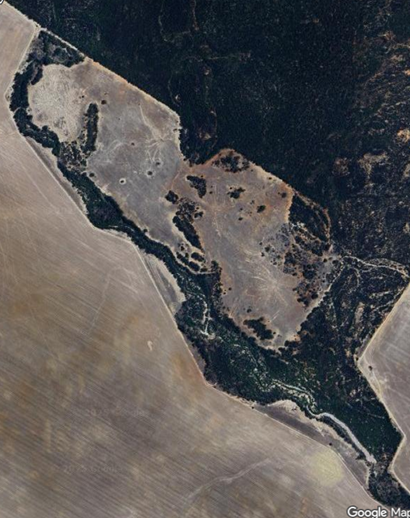
They had an area of land that was partially cleared in the 1960s, along with the rest of the farm. However, this site was found to contain many rocks and poisonous plants, making it a low productivity area, so development ceased. The area was re-fenced and ripped in preparation for trees in 2022 − prior to joining the project. This presented the first hurdle because a ‘Carbon Project’ must be registered before any changes are made.
Further investigations revealed a series of complications. “You can do X, Y, or Z,” or “if you pay this organisation or consultant, you could do 1, 2 or 3.”
The ever-changing rules and methods − each requiring significant time and money − made it difficult to identify a clear and straightforward path.
As part of this project, Mark and Liv attended the Katanning Research Station Tour in 2023, where emission reduction strategies were identified, and also visited the North Stirling Downs tree planting project. In 2024, they joined the Eastern States Tour, which included a visit to Jigsaw Farms − one of the first farms to achieve carbon neutrality in 2011. These tours, along with their own research, led them to decide not to pursue the ‘Carbon Project’ path because it presented too much risk for future generations.
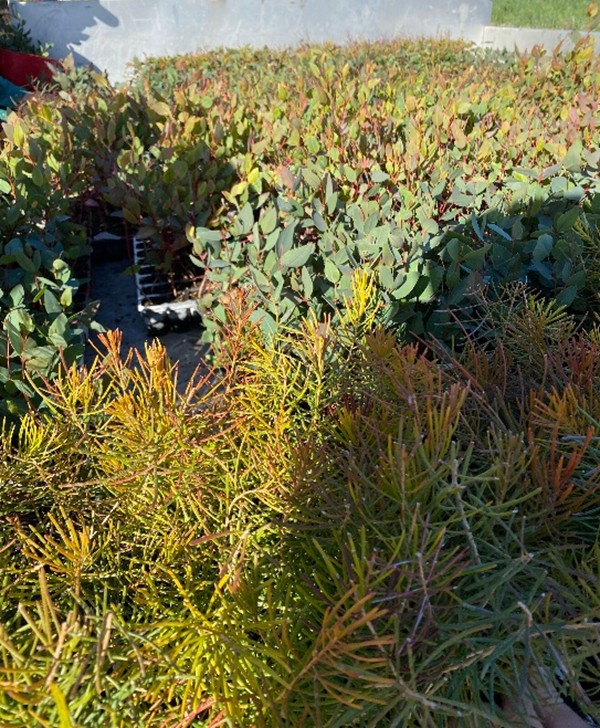
Instead, they decided to continue their longstanding land management approach by expanding the native revegetation they began years earlier.
Liv explained she wanted trees that could be harvested, while also providing a source of seeds and bush tucker. She selected nine different tree varieties, including:
- Two Callistemon species: Fiery and One-Sided Bottlebrush
- Five Eucalyptus species: Sugar Gums, Red Flowering Yellow Gums, Flat Topped Yate, Salt River Gum and Coral Gum
- Two Melaleuca species: Western Black Tea Tree and Broombush.
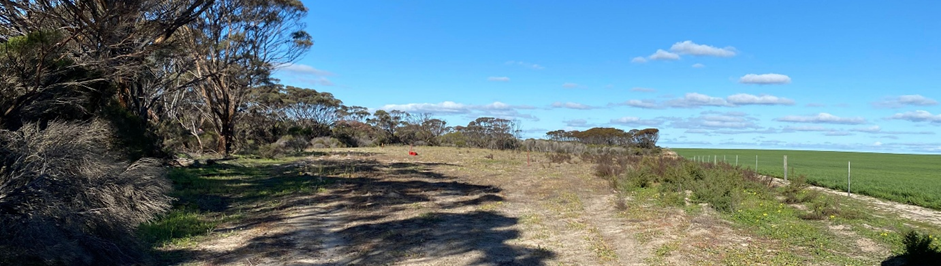
Tree planting between the new fence and native vegetation
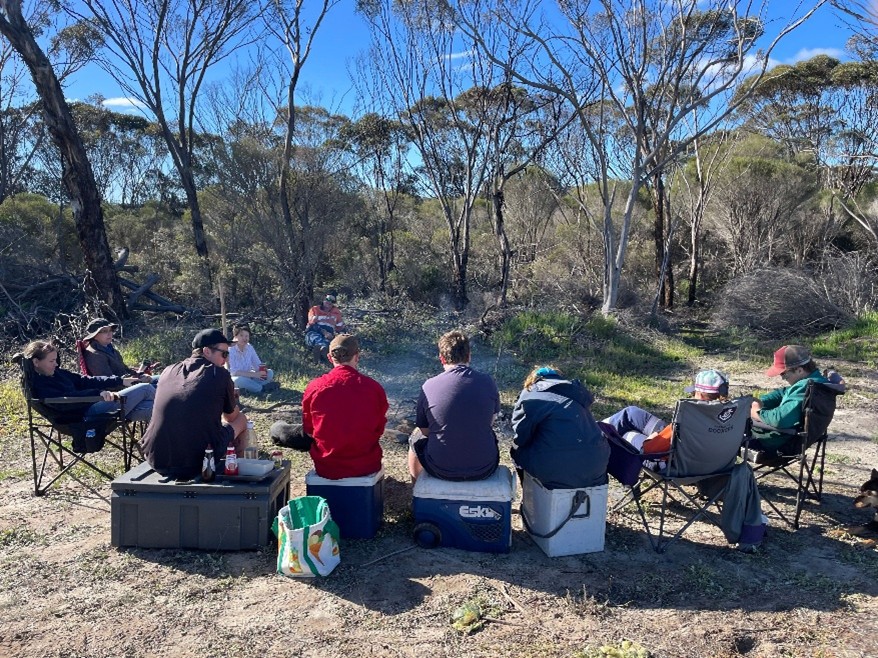
The July school holidays, with the children home from school, provided the perfect opportunity to begin planting. A keen group of willing helpers and farm staff started planting between the new fence and the remaining native vegetation, using six pogo sticks tree planters. After lunch, they moved to the main revegetated area, planting about half of the 20,000 tree seedlings in one day! Mark, Tara and his team completed the planting a week later using a mechanical tree planter − covering roughly one-quarter of the 28-hectare area.
Mark and Liv additionally planted 3,000 saltbush seedlings and another 10,000 mixed-species seedlings on a separate farm. In total, they planted over 27,000 trees this year and the latest report indicates they are growing well.
Liv hopes to continue planting next year − weather permitting − using seedlings and direct seeding if a seed supplier can be found.
 |
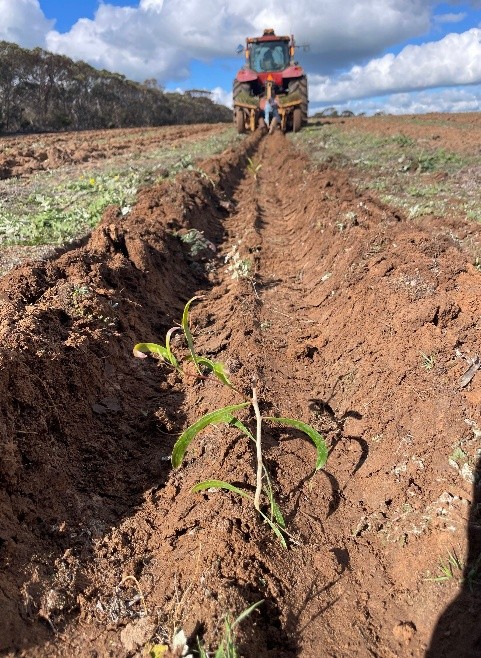 |
| Lunch for the group of willing helpers | Mechanical tree planter |
This revegetation will increase biodiversity to the top end of the Young River catchment and although the Walters won’t be selling Australian Carbon Credit Units (ACCU), there are still significant benefits. Once the 28ha of mixed species-environmental planting is included in the Sheep & Beef Greenhouse Accounting Framework (SB-GAF) calculator, the trees will increase sequestration by:
- 43 tonnes of CO2e at five years
- 96 tonnes of CO2e at ten years.
This will reduce overall farm emissions. At ten years of age, with no other changes, it will lower emission intensity by 0.4kg CO2-e per kilogram of liveweight.
 |
|
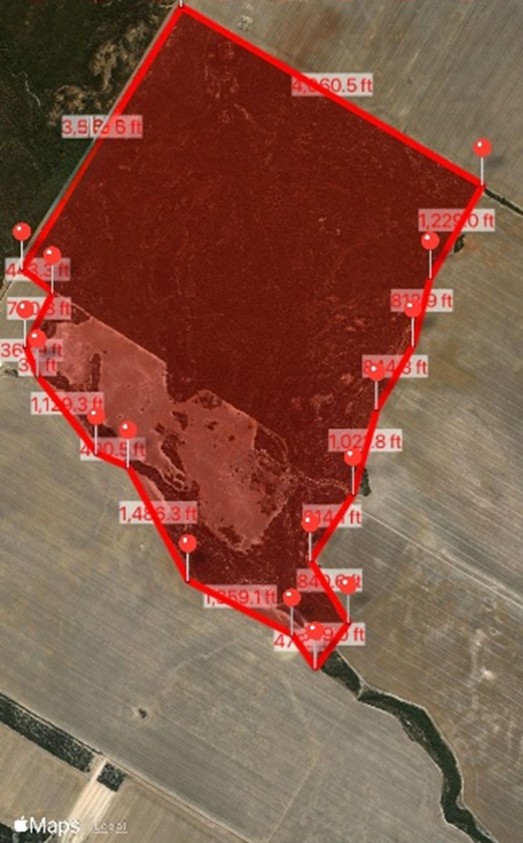
Total area 206.9ha |
Mark and Liv also participated in a Murdoch University first-year Veterinary Medicine student study. They shared their SB-GAF calculator data to help students understand how to complete the calculator using real numbers from a working farm business. The students estimated the tree planting area could yield 125 tonnes of CO2e more than a 25-year permanence period using the current FullCAM model, had they pursued the ‘Carbon Project’ path.
It has been rewarding to watch the Walters work through the Carbon Project decision. Ultimately, they chose a path that benefits the environment and their business.
While we will monitor the impact of this planting, the final outcome will extend beyond the remaining year of this MLA Project.