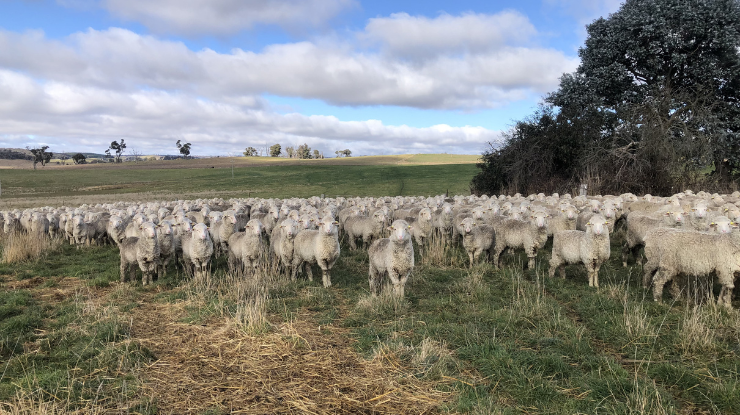
 Ewes and lambs at the Kelly family’s farm are managed carefully to achieve optimum survival rates. Image: Gabby Kelly
Vitamin trial boosts lamb survival by 5%
Providing Merino ewes with essential vitamins supported survival rates for Central NSW sheep producer, Gabby Kelly.
Gabby, along with her family (including her parents Stuart and Melanie, uncle Andrew and children, sister Claudia and grandparents Cliff and Robynne), were host producer in an Australian Wool Innovation and MLA co-funded project focused on practical management to reduce ewe mortality.
The project investigated causes of ewe mortality and various practical intervention strategies and their impact on ewe survival before, during and after lambing.
|
FARM SNAPSHOT Kelly family – Newbridge and Caloola, NSW Area: 2,225ha Enterprise: 22,000 Merino sheep, 600 Hereford cattle Pastures: Viable Soils: Loam Rainfall: 662mm |
Take your vitamins
The causes of ewe mortality reported in phase 1 of the project (2024) informed the selection of the vitamin ADE injection trial for the 2025 lambing cycle on the Kellys’ farm.
Guided by veterinarian Elsa Glanville, Gabby recorded on-farm data around the impact of an intervention which saw half of their 1,000 two-year-old maiden ewes with single pregnancies receive a vitamin ADE injection a month prior to lambing (the ‘treatment group’).
The other 500 were placed in the ‘control group’ and were managed according to their usual on-farm strategies, including classing and feeding ewes based on their body condition, weight and single or twin pregnancy status.
Elsa and Gabby wanted to know if the injection would help reduce vaginal prolapse rates – which, along with dystocia, is a big issue in the Kellys’ region – and the ewe and lamb mortality associated with it.
“Most commonly, ewes prolapse after lambing – we don’t know what causes it but if we can reduce the risk of prolapse, it will have a positive impact on our survival rates,” Elsa said.
Typically, vaginal prolapse occurs prior to lambing and uterine prolapse after lambing. However, in phase 1 of the project, on farms across the Central Tablelands, ewes experienced vaginal prolapse both before and after lambing.
Pinpointing the risk factors for vaginal prolapse can be difficult and may be multifactorial. The trial on the Kellys’ farm was based on the results of a small trial in New Zealand, which showed a significant reduction in the incidence of prolapse in ewes treated with commercial vitamin ADE prior to lambing.
Following the 1mL vitamin injection, preliminary results suggest Gabby recorded fewer prolapses in the treatment group that received the vitamin injection than in the control group.
Additionally, preliminary results suggested ewe mortality during lambing was lower in the treated ewes than in the control ewes.
However, Gabby said prolapse numbers were significantly lower than usual. Anecdotally, this was a trend observed across other Central Tablelands farms with spring lambing Merino ewes in 2025.
Overall, lamb survival rate to marking was 82%, up 5% on the previous year’s maiden ewes, with Gabby acknowledging this could also have been due to good preparation and the good season they had during their 2025 lambing cycle.
“We had perfect weather for lambing, they were ideal conditions,” Gabby said.
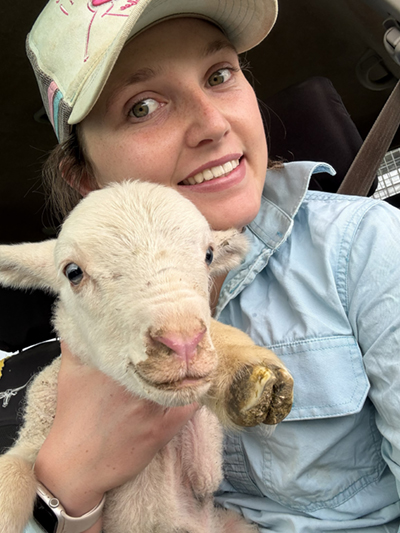
Gabby Kelly with one of the lambs at her family farm in Newbridge. Image: Gabby Kelly
Good return on investment
A comprehensive cost-benefit analysis is still being conducted, however the return on investment of the vitamin injection appears solid.
“It’s around one dollar a head, so $500 to give the treatment group the injection – so if we gain four extra lambs from implementing the vitamin injection, it’s covered the cost of it,” Gabby said.
Careful management
Throughout the lambing season, Gabby checked the ewes every morning and helped pull lambs if they were stuck.
“There weren’t many lambs stuck – with maidens they are more likely to have dystocia as their bodies still need to adjust to birthing, but looking at all the data sheets I might have only pulled three lambs that didn’t make it, but three or four that I helped did survive,” she said.
Ewes are put in paddocks with grass high enough to provide ample feed and shelter for lambing.
Ag-tech fine-tunes management
With the help of AgriWebb, Gabby splits up groups of 250 ewes according to nutritional requirements into 25ha paddocks.
“AgriWebb is so helpful – you can put in roughly how much feed is in each paddock and it will tell you when to take the sheep out. You can record drenching and even the serial number of the drench.”
Following lambing, Gabby supplementary feeds ewes if needed.
“This keeps them in good condition and adjusts the microbiome in the lamb’s gut, as well as gets them used to the big red trailer which means feed,” she said.
Frequent worm tests are undertaken to ensure they catch any ewes before they go downhill. Keeping them in good health is a top priority.
Gabby has finished her gap year back on the family farm and she’s looking forward to completing her Certificate III in Agriculture ahead of studying to be a large-animal veterinarian.