Why the spring lamb flush is shrinking
Key points
- The spring lamb flush is shrinking, with more lambs sold earlier in the season and almost half of expected sales now pushed into January to June 2027.
- Saleyard data reflects the shift, with young lambs arriving earlier but the spring flush levelling off and total lamb yardings 17% lower than a year ago.
- Flock rebuilding is contributing to the change, with more producers planning to increase breeding ewe numbers and retain more ewe lambs.
Lamb turn-off is moving away from its traditional spring peak.
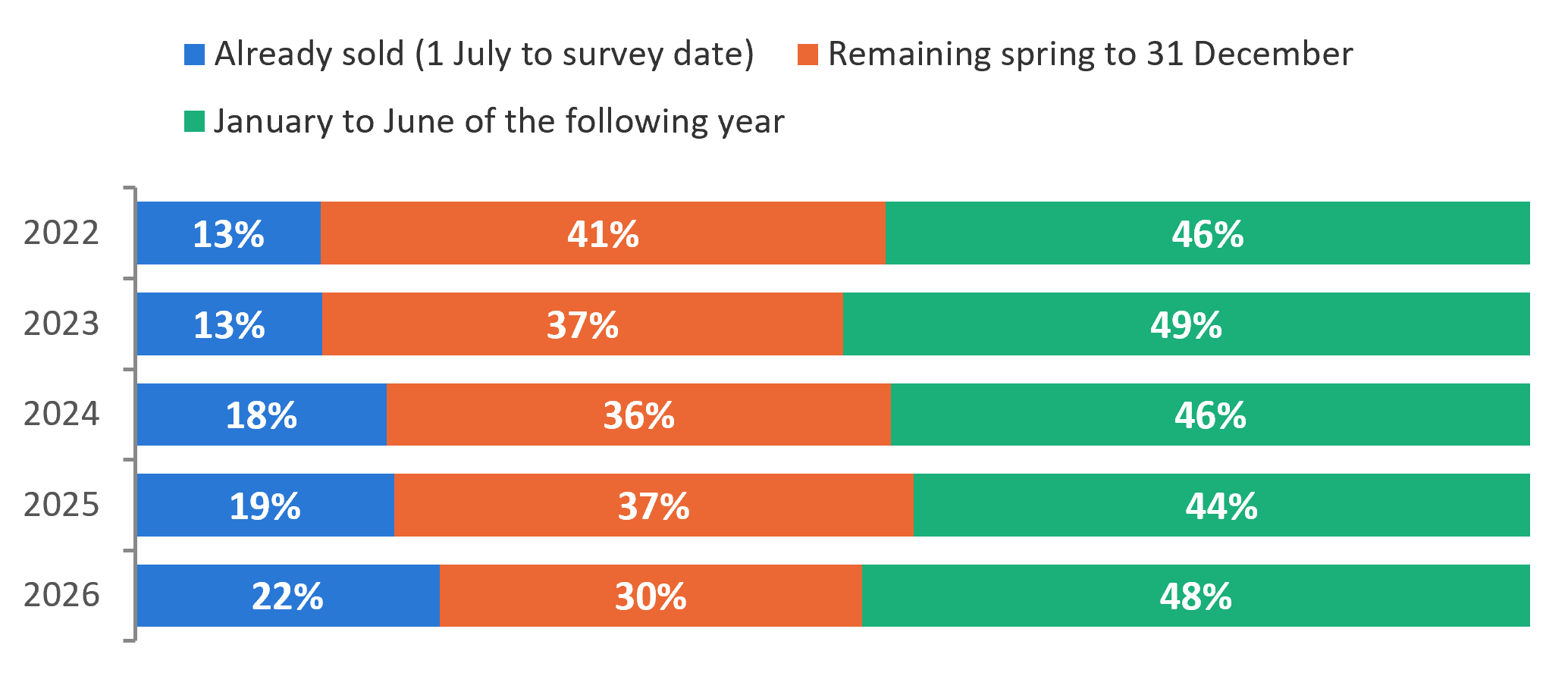
According to the October 2026 Sheep Producers Intentions Survey (SPIS), producers expect to sell 6.78 million lambs between the October survey period and 31 December 2026, 24% fewer than at the same point last year.
Total expected sales for 2026–27 are 6% lower than last year, but the bigger change is in the timing.
Earlier sales and more lambs held into 2027
By the time producers were surveyed in October, they had already sold 22% of their expected lambs, up from 19% last year and 13% in 2022.
In contrast, the remainder of spring accounts for just 30% of expected sales, down from 37% last year and 41% in 2022.
The balance has shifted into next year, with almost half (48%) of expected sales now planned for January to June 2027.
Share of lamb sales by selling period
Source: SPIS October 2026
The chart shows the spring flush losing share at both ends, most sharply in 2026.
Saleyard data are already reflecting this pattern
National Livestock Reporting Service (NLRS) data shows young lambs arrived earlier this spring, with September yardings 30% higher than a year earlier.
However, the flush has not built from there. Weekly young lamb yardings have held at around 50,000 head through November, whereas by late November 2025 last year yardings were approaching 60,000 head.
Since October, young lamb yardings have matched last year's levels, but remain well below 2024. With fewer older lambs also coming forward, total lamb yardings are 17% lower than a year earlier.
Weekly young lamb saleyard yardings
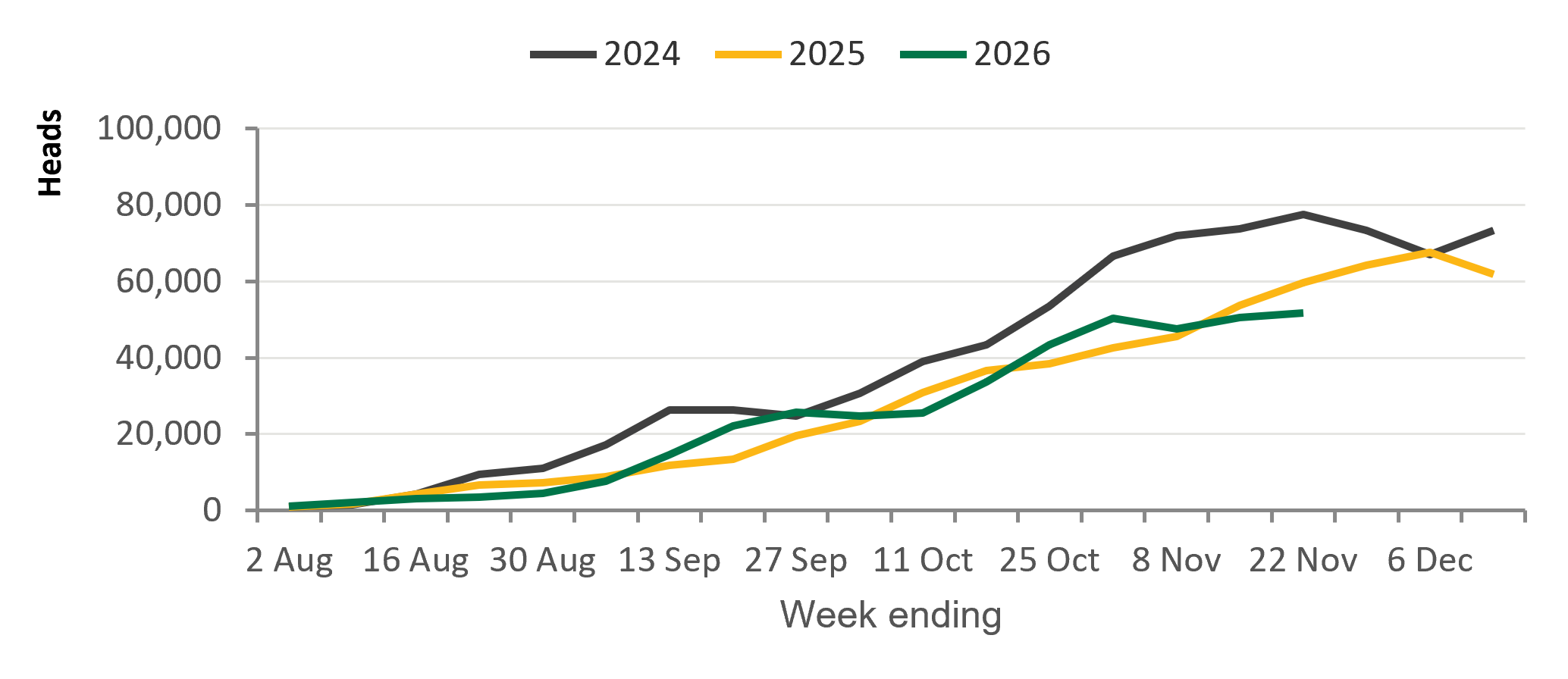
The chart shows the 2026 flush levelling off while previous seasons continued to build.
Rebuilding changes the timing
Flock rebuilding is a key factor. For the first time in the current survey series, more producers expect to increase their breeding ewe numbers over the next 12 months than reduce them.
Almost half of producers planning to increase lamb production in 2027 intend to do so by retaining more ewes, up from around one-third last year.
Retention takes ewe lambs out of the sale pool, leaving fewer lambs for the spring market. It also builds the breeding base for a larger lamb flock in 2027.
Feed and costs move into focus
A thinner spring flush may support competition for available lambs throughout the rest of the year. However, producers are more cautious about prices, with fewer expecting lamb prices to rise than a year ago.
For producers carrying lambs into 2027, feed supply, finishing costs and seasonal conditions over summer and autumn will play a larger role in returns, with most producers expecting input costs to rise.
The spring flush remains an important selling window, but a growing share of the lamb crop is now being sold either before or well after the traditional spring season.
Read the October 2026 Sheep Producers Intentions Survey report.