The future prosperity of Australia’s red meat producers relies on a sustainable processing sector – one that provides choice and flexibility while also delivering improved efficiency, cost competitiveness and worker safety.
However, the dual problem of rising costs and reduced capacity presents a real challenge for industry.
Australia has some of the highest processing costs in the world, significantly outpacing countries such as the US, Brazil and Argentina1. This issue is compounded by ongoing labour shortages, together with the processing, storage and logistics challenges arising from our variable carcase weights.
Seeking to deliver grading and sortation efficiencies while also reducing processing costs, MLA (together with AMPC) partnered with a range of processors and technology providers to develop and drive the adoption of new technology capable of supporting a data-driven culture.
Many of these primary processing solutions are now fully commercialised, delivering lower operating costs and reduced reliance on skilled labour, while improving yield, efficiency and safety outcomes.
After more than two decades of investment, this program has reached maturity, with AMPC assuming responsibility for future commercialisation and adoption of these primary processing technologies.
1Australian Meat Processor Corporation (AMPC) 2019, Cost to operate and processing cost competitiveness: Final report, AMPC, Sydney. Available at: https://ampc.com.au/media/lrcfruq5/ampc_costtooperateandprocessingcostcompetetitivness_finalreport.pdf
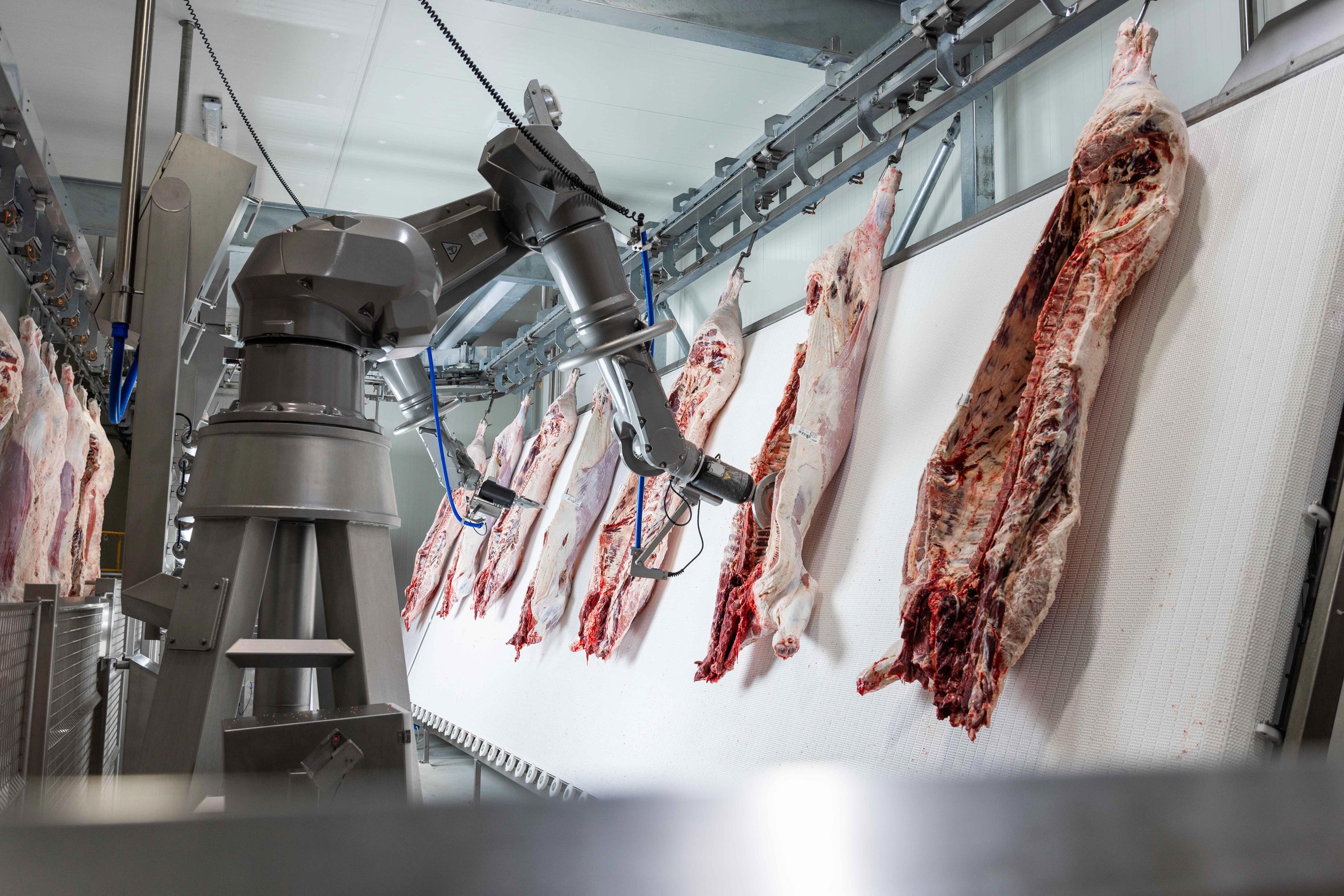
MLA first partnered with Scott Automation Robotics (SAR) to develop the LEAP™ Sheepmeat automated precision cutting systems in the late 2000s. Since then, MLA’s investment in new systems has helped implement artificial intelligence (AI)-machine learning modules which have further increase carcase value by minimising waste, maximising the volume of higher-value cuts, and delivering a high throughput on a large scale.
Since 2011, AMPC has invested around $40 million of processor levies in these projects with MLA and the accelerated adoption of automation technology in recent years has seen processors realise an annual benefit of $70–$80 million – delivering an estimated total of $350–$400 million in additional productivity and cost savings over the course of FY21–252.
LEAP4Lamb
After two decades of research and development, the automated LEAP4Lamb cutting system is now fully commercialised and processing around 60% of Australian lambs annually via the three modules:
- LEAP III: A lamb primal system which separates carcases into shoulder, middle and hindquarters. In 2022, a lower-cost version of this system was introduced to increase uptake amongst smaller processors who could then upgrade to the full LEAP III at a later date.
- LEAP IV: A middle system which breaks the rack and loin barrel into various sub-primal components.
- LEAP V: A bone-in forequarter system that uses a 3D camera to identify cut lines for optimal carcase value and consistency, coupled with a robotic arm to grasp the forequarter and a bandsaw to make the precision cuts.
Since 2023, upgrades to these integrated LEAP4Lamb boning systems enabled better incorporation of data from AI and machine learning, resulting in improved cutting line accuracy and delivering a combined benefit of more than $7/head.
LEAP4Beef
Leveraging the success of LEAP4Lamb technology, a pre-commercial LEAP4Beef middle system is moving industry one step closer to delivering the world’s first fully automated beef boning system.
The pre-commercial system was successfully trialled in a major beef processing company in early 2024 and delivered impressive accuracy and throughput results.
AMPC is now leading the further design and delivery of LEAP4Beef’s long-term vision to deliver either modules, or a whole-of-animal beef boning carcase solution.
Once fully developed and integrated, the LEAP4Beef system will unlock large-scale, high throughput and sophisticated automation to maximise cutting accuracy and yield – with an estimated $29/head benefit or $10 million annual return for high throughput beef processors.2
2Meat & Livestock Australia (MLA), MLA Annual Report 2024–25, Meat & Livestock Australia, Sydney, 2025. Available at: https://www.mla.com.au/globalassets/mla-corporate/about-mla/documents/planning--reporting/mla-annual-report-2024-25.pdf
While MLA's investment in the LEAP systems has improved worker safety by enabling carcases and blades to be operated remotely, many tasks continue to require manual intervention.
This led to the creation of safety solutions such as BladeStopTM (which is now fully commercialised) and to MLA investigating the viability of ‘exo-suit’ solutions.
| Learn more about MLA's research in Improving human performance - evaluation of exo-suit manual assist devices |
AMPC is now exploring opportunities to conduct further trials to test and potentially commercialise this technology.
BladeStop™
 Bandsaws are an essential tool in meat processing, but they carry a substantial risk of severe injury.
MLA and AMPC partnered with SAR to develop and deliver BladeStop™ – a bandsaw that instantly senses when the blade comes into contact with the operator and stops it within 10 milliseconds, meaning the difference between losing a limb or receiving a skin cut. With AMPC’s support, a series of units were successfully adopted by processors.
In 2020, Worksafe Australia estimated that systems such as BladeStop™ had helped reduce serious injury and compensation claims by 28% since 20083.
To date, more than 889 BladeStop units have been sold across several countries, generating $889,000 in royalties for the benefit of MLA members.
| Learn more about BladeStopTM and other safety solutions at Scott Automation. |
3Safe Work Australia, Work-related traumatic injury fatalities, Australia 2020, Safe Work Australia, Canberra, 2021. Available at: https://www.safeworkaustralia.gov.au/sites/default/files/2021-11/Work-related%20traumatic%20injury%20fatalities%20Australia%202020.pdf
In 2024, MLA’s technology partner MSPC modified its existing Rinse & Chill® Technology (RCT) which involved flushing the carcase with a chilled control-release of an isotonic solution. A review of the modified RCT found it was able to deliver, on average, a further 3% increase for beef and a corresponding 1.5% increase in yield for sheep carcases - with no negative impact on shelf life. MSPC estimates this could return an additional $10.8M in yield value if adopted by existing Australian customers.4
AMPC now manages industry R&D investment in this technology and continues to explore its potential with interested processors and brand owners.
4Meat & Livestock Australia (MLA), Lamb meat yield benefit of Rinse & Chill® (Project P.PSH.1327): Final report, Meat & Livestock Australia, Sydney, 2023. Available at: https://www.mla.com.au/contentassets/7aed7e6f6fd94e038b45347d60d7c3c9/P-PSH-1327-Final-Report.pdf
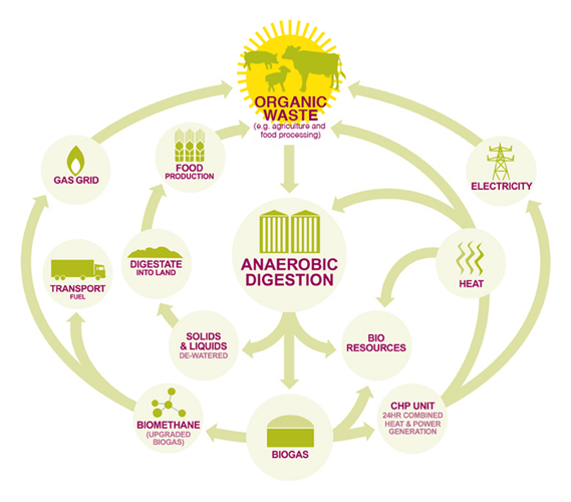 Each year, Australia’s red meat, dairy and pork industries produce around 79 gigalitres of liquid waste and two million tonnes of solid waste. Managing this volume of organic livestock waste across the on-farm, feedlot and processor sectors costs more than AUD$100M annually.5
To address this challenge, MLA led the government-funded Waste to Profits project which established a collaborative and diverse group of stakeholders from across Australia’s livestock industries. This project led to the development of the ADAdvisor tool (launched in 2022) which enables businesses to assess sustainability criteria such as the economic feasibility of adopting anaerobic co-digestion projects for their livestock sector waste streams.
The large-scale conversion of livestock waste at abattoirs into commercially viable products such as fertilisers, feeds, energy and chemicals could unlock new revenue streams – contributing to future profitability while helping offset rising costs and improving productivity.
| To start using or learn more about the tool, visit advisor.info |
Following MLA’s initial work in this area, AMPC now leads the processing sector’s pursuit of operational excellence in wastewater and energy conversion technologies, such as biogas, biodiesel, and hydrogen derived from animal fats and other waste.
5Meat & Livestock Australia (MLA), Wastes to Profits (Project V.RDP.3010): Final report, Meat & Livestock Australia, Sydney, 2022. Available at: https://www.mla.com.au/globalassets/mla-corporate/research-and-development/final-reports/v.rdp.3010--final-report.pdf