Data-driven weaner management delivers
Snapshot
Name: Dunan Pastoral, James Cameron
Location: Casterton, Victoria
Average rainfall: 650mm
Enterprise: Beef breeding (800 Angus cows), backgrounding, and trading
Farm area: 1000Ha
Soil type: Majority basalt clay loam
Pasture base: Perennial ryegrass, phalaris, clover, and annual grasses
Business philosophy
"We aim to produce efficient, easy-doing cattle with elite carcase qualities that sell for above-average commercial values where possible, while utilising a resilient, low cost-of-production business model."
Background
Dunan Pastoral is a multi-generational, family-owned beef enterprise, operating with three full-time labour units. The business breeds Angus cattle at Casterton and Henty, while growing out weaners at Drumborg, utilising higher rainfall pastures.
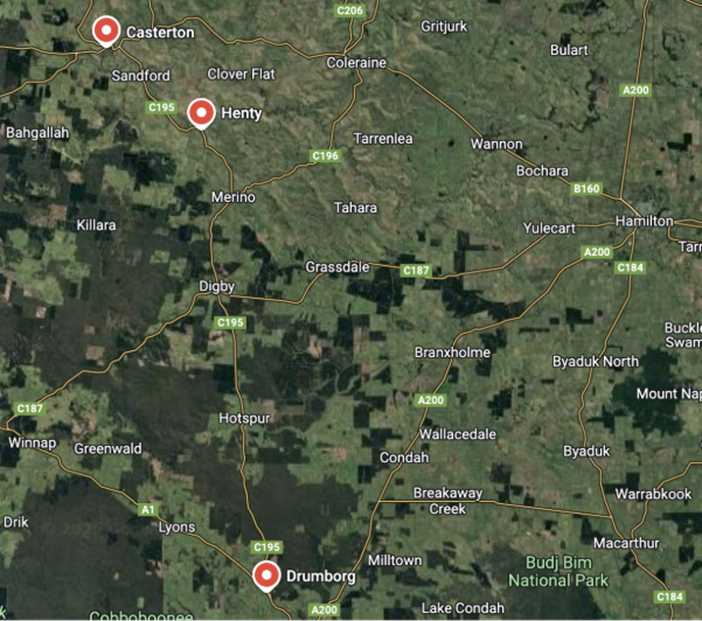
Location of land holdings for Dunan Pastoral
The operation follows a structured production cycle, where steers are raised to feeder weight and heifers are joined on their southern property before returning home to calve with the mature cows in late winter and early spring.
For more than two decades, Dunan Pastoral has relied on internal artificial insemination (AI) programs to retain high-performing cows and bulls − ensuring consistency in genetic selection.
The farm has historically relied on purchased hay and silage rather than producing its own − using this fodder to sustain weaners. However, recent efforts have focused on enhancing the weaner program to improve growth rates and increase resilience against poor seasonal conditions. To achieve this, the business has trialled various feeding systems, transitioning from traditional hay and silage methods to grain-based strategies, ensuring greater adaptability to shifting seasonal patterns.
Dunan Pastoral aims to join heifers at 320kg, targeting a minimum weight of 250kg by mid-June to ensure adequate development. In poorer seasons, however, a minimum threshold of 290kg is accepted to maintain sufficient joining numbers. Heifers typically compensate with additional growth before calving, supported by extended pasture availability and a longer growing season on the Cameron’s southern property.
Steers are typically sold into the feeder market between 16–21 months of age, generally weighing 440–520kg. A small percentage (5% or less) exceed feeder specifications and are retained to grow out as bullocks.
Weaning strategies traditionally focused on transitioning cattle onto green feed, supplementing with hay as needed. More recently, the approach has shifted towards higher-quality hay and silage to enhance nutritional intake. Currently, specialty feeds and grains are being trialled to further improve production efficiency and optimise growth rates.
Historical weaning strategies
Weaning at Dunan Pastoral is normally conducted in late autumn, with timing dependent on seasonal conditions, cow and calf status, and feed availability. The general process involves:
- separation of calves overnight in the yards, followed by removal of cows on day two or three, depending on herd behaviour
- exposure to human handling, movement through yards, and controlled dog pressure
- a variable yarding period (3–6 days but typically 4–5 days) that’s adjusted based on calf temperament and response to handling.
This approach has been found to effectively manage weaning stress and ensures cattle are conditioned for a lifetime of positive handling. By reducing stress, cattle are allowed to more easily adapt to their new environment and consequently time off feed and disruptions to growth are minimised. Additionally, lower stress levels contribute to disease minimisation, helping to reduce health complications and improve overall herd resilience.
2023 drop weaner management approach
Calves born in 2023 and weaned in autumn 2024 faced particularly challenging seasonal conditions. To assess performance under varying nutritional strategies, the weaners were divided into two groups, each receiving a different ration: lupins, or silage (rye silage followed by lucerne silage). The following table outlines the financial outcomes associated with each feeding program.
Table 1: Gross profit per head of rations provided to 2023 drop weaners
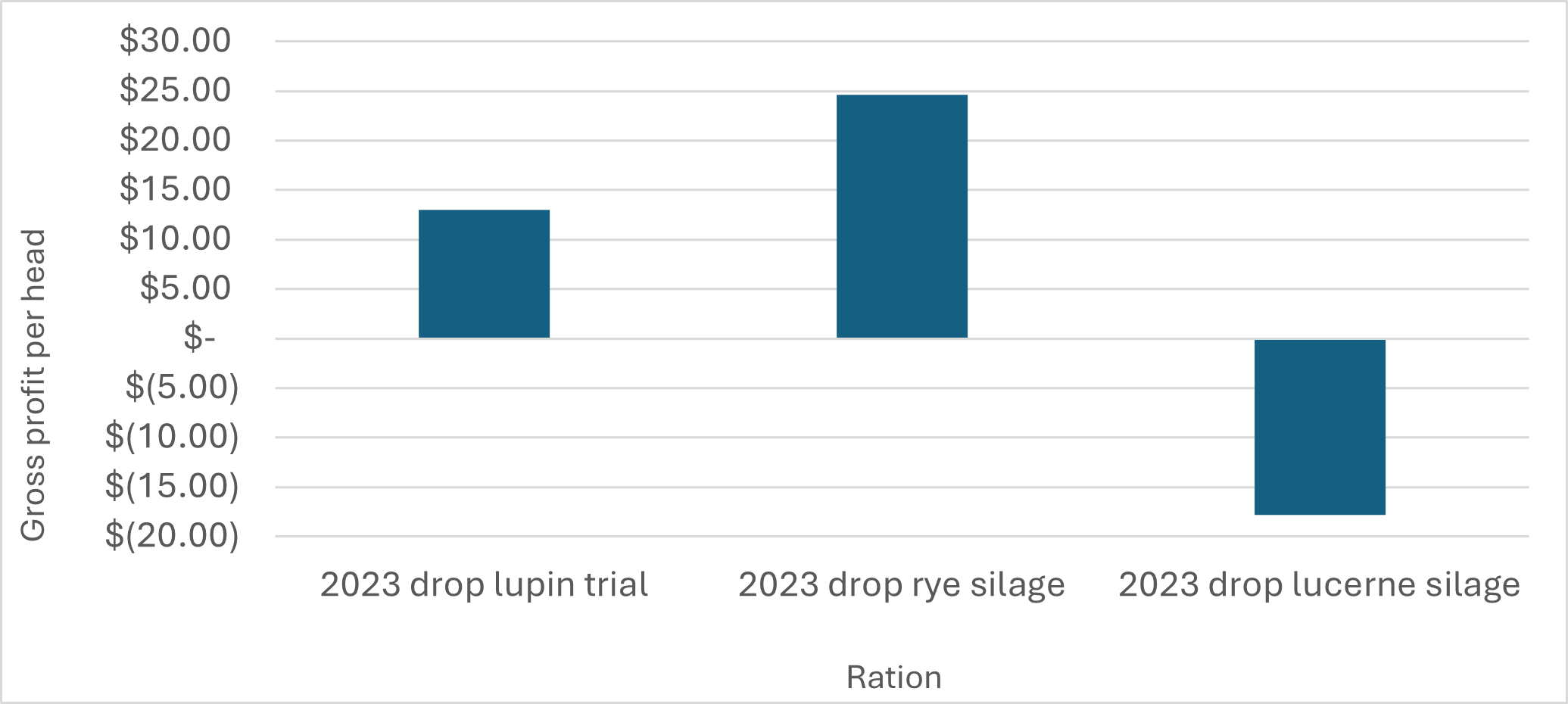
The financial performance of the three rations varied significantly due to differences in intake, feed conversion efficiency, and overall cost-effectiveness. Rye silage delivered the highest return at $25/head − attributed to its combination of higher average daily gain (ADG) and lower feeding costs. However, once the rye silage was depleted, the animals transitioned to lucerne silage, which resulted in a $17.81 loss/head. Despite being the lowest-cost ration per tonne, the lucerne silage’s poor nutritional quality led to zero weight gain, underscoring the critical role of feed testing and strategic ration selection in optimising weaner performance. Additionally, the presence of grass seeds in the lucerne silage contributed to a high incidence of pink eye within the herd, further complicating management outcomes.
Lupins, despite their extended feeding period, generated a lower return of $13.02/head due to the limited feeding rate, which failed to meet the nutritional requirements necessary for higher growth rates. Additionally, rumen adaptation may have delayed the full benefits, as cattle typically require a couple of weeks to adjust. If not properly balanced with fibre, lupin intake can be inconsistent, further affecting feed efficiency and weight gain.
These results must be viewed within the context of unprecedented seasonal conditions, where uncertainty around rainfall necessitated a survival-focused approach to management. Decision-making prioritised immediate viability over optimal feeding strategies, meaning typical best practices may not have been fully applied. As a result, caution is required when analysing the data, as outcomes may have differed in a more typical season where feeding programs could be planned with greater certainty.
Gross margins were calculated based solely on livestock value and feed costs, excluding other operational expenses. Additionally, the duration of feeding varied across lupins, rye silage, and lucerne silage, which necessitates caution when making direct comparisons, as differences in feeding periods may influence overall performance outcomes.
Outcomes: the importance of data collection
Participation in the MacKillop Farm Management Group’s ‘Weaning management strategies for cattle herds’ project has led to significant refinements in management at Dunan Pastoral, driving more goal-oriented decision-making and enhanced feeding strategies. These improvements have strengthened the ability to track weaner performance, optimise nutritional interventions and refine resource allocation − contributing to more efficient and sustainable herd management.
Clearer objectives for weaner nutrition are being established, based on measurable performance metrics, while more frequent weighing will ensure accurate tracking of growth rates. Regular feed testing has become a key component, allowing for optimised supplementary nutrition decisions. These changes bring several business benefits, including an improved ability to identify alternative feed options and assess their effectiveness. Greater confidence in trialling new feeding techniques is leading to better economic outcomes, while discontinuing less effective silage types has reduced waste and inefficiencies. Additionally, decisions regarding the expansion of feeding equipment can now be made with greater certainty, supported by quantifiable benefits observed throughout the trials, further enhancing operational efficiency.
One of the most rewarding aspects of the project for the Camerons was engaging with industry professionals and fellow producers, gaining insights into different philosophies on feeding young cattle – from minimal input systems to intensive approaches – and understanding the economic and practical justification behind each. This exposure to diverse perspectives on feeding strategies has enabled more informed decision-making, contributing to a deeper understanding of the trade-offs and efficiencies in cattle management.
Key takeaways and final reflections
James Cameron’s experience with data-driven weaner management demonstrates the value of structured feeding trials, frequent weight monitoring, and strategic feed evaluation in optimising herd performance.
This case study underscores several key takeaways:
- Accurate data collection informs better decision-making, driving economic and operational efficiencies.
- Trialling varied feeding systems ensures adaptability to seasonal fluctuations.
- Industry collaboration and peer-to-peer learning fosters knowledge exchange, supporting business resilience and growth.
The MacKillop Farm Management Group’s ‘Post-weaning management strategies for cattle herds’ project successfully met expectations for Dunan Pastoral, delivering valuable insights and reinforcing the importance of data collection in refining management strategies. Where future PDS align to their business objectives and operational needs, the family would consider participating again.
James’ refined approach to weaner nutrition and data-driven management will continue shaping Dunan Pastoral’s long-term feeding strategies and profitability, reinforcing the importance of precision agriculture in livestock production.