Heifer prices fall as buyers target more quality
Key points
- The National Restocker Heifer Indicator fell 20% from its late-June peak.
- Heifers weighing 280–330kg recorded the largest weekly fall, while heavier lines held comparatively firmer.
- NSW heifer prices remained above Queensland, supported by a smaller offering.
The broader cattle market has been easing over recent weeks, unwinding part of the strong lift that followed the break in seasonal conditions during May.
Improved conditions supported producer confidence and restocker competition through May and June. The National Restocker Yearling Heifer Indicator rose from 321.5¢/kg liveweight (lwt) on 1 May to a peak of 483.2¢ on 23 June.
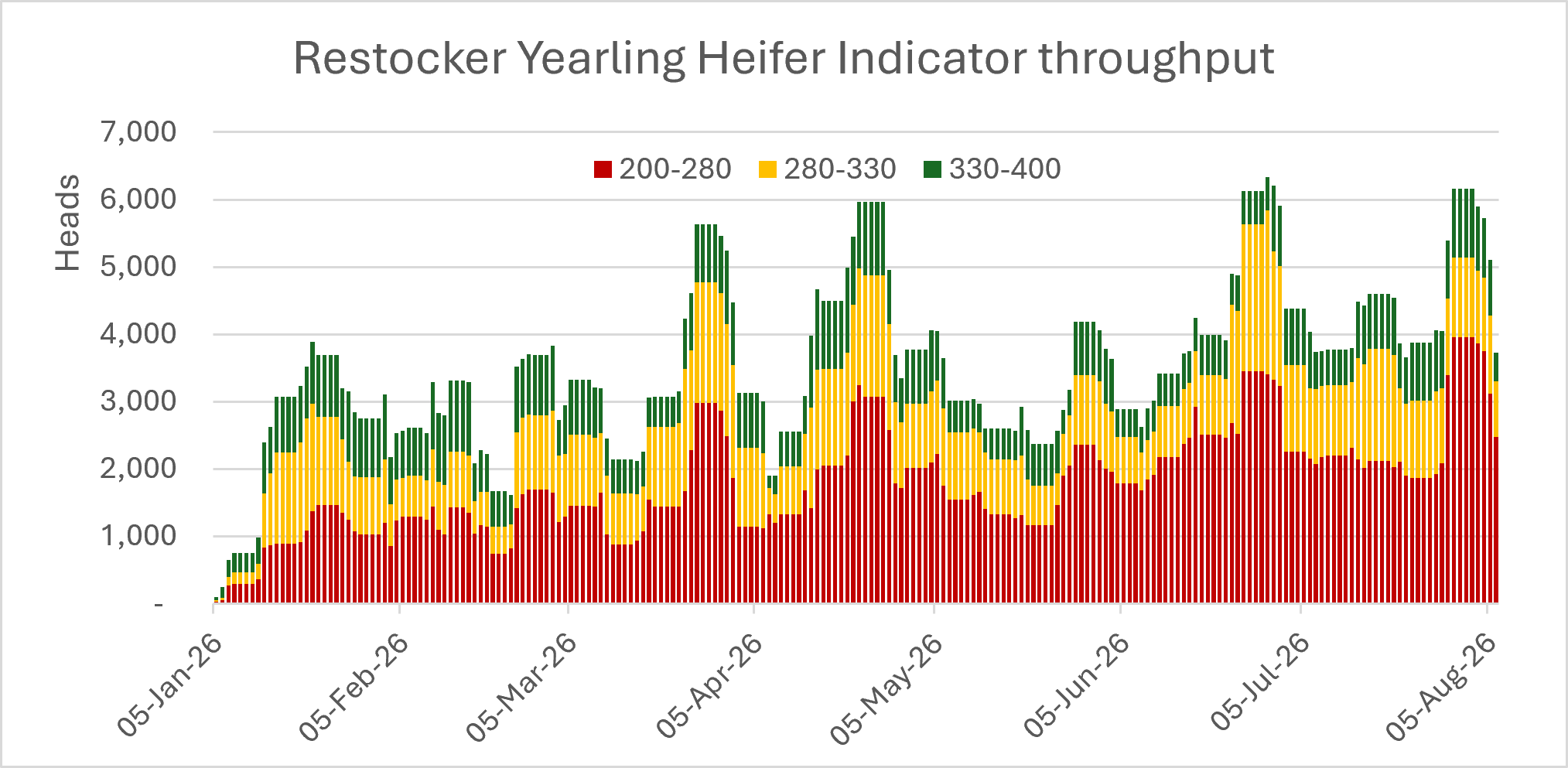
Since then, lower rainfall and tightening feed and water supplies across some Queensland production regions have shifted the market again. Increased yardings have been reported in northern saleyards, while buyers have become more selective about cattle requiring additional time and feed.
The Heifer Indicator fell to 386.67¢/kg lwt, down 37.4¢ over the week and 96.5¢ (or 20%) from its June peak. The decline is part of a broader correction, with restocker steers and feeder cattle also lower over the week. Processing lines such as cows and heavy steers are holding comparatively firmer.
Lighter heifers face the greatest pressure
The strongest adjustment occurred among heifers below 330kg.
- Heifers weighing 200–280kg averaged 382.6¢/kg lwt, down 102¢ for the peak in June.
- The 280–330kg category fell 90¢ to 400¢/kg lwt, while
- Heavier 330–400kg heifers declined 74¢ to 414¢/kg lwt.
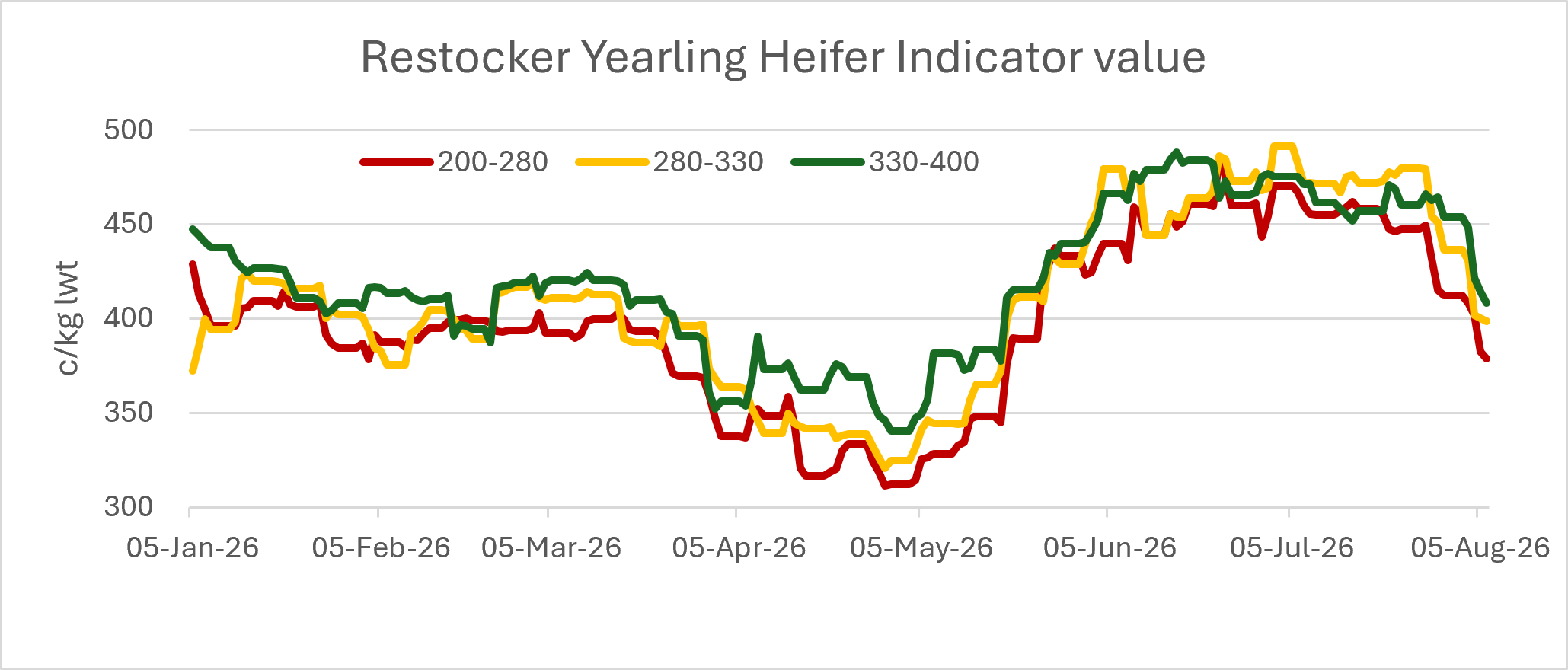
With lighter heifer lines requiring a longer carrying period and with feed becoming more limited, buyers are placing a greater premium on cattle closer to productive weights.
Queensland carries the market weight
Queensland supplied around 90% of eligible heifers in the latest detailed saleyard data and averaged 386¢/kg lwt, compared with 451¢ in NSW.
Roma accounted for more than one third of the indicator’s throughput, averaging 396¢/kg lwt, down 41.6¢ for the week and 114¢ from its late-June peak.
Dalby also averaged 396¢/kg lwt, but the saleyard report showed lightweight restocker heifers losing 40¢. Better lines averaged around 400¢/kg lwt, while secondary cattle sold closer to 320¢/kg lwt as some interstate restockers were absent.
At Gracemere, well-bred lightweight heifers averaged 303–345¢, compared with 242–283¢ for lesser-quality lines, highlighting the widening discount for cattle outside preferred specifications.
NSW prices remained higher, but the market also weakened. Wagga, Carcoar and Dubbo recorded sharp falls, although NSW’s smaller eligible offering means its state average is more sensitive to changes in individual saleyards and cattle quality.
Feeder heifers hold better than restockers
The National Feeder Heifer Indicator fell to 458.03¢/kg lwt, down 44¢, or 9%, from its 3 July peak. This was less than half the percentage decline recorded by restocker heifers.
The feeder premium over restocker heifers has now widened to 71¢/kg lwt, compared with near parity in late June.
Interest increasingly concentrated in 330–400kg heifers, which accounted for almost half of feeder purchases, up from 39% around the early-July peak. Heifers above 400kg also recorded the smallest price decline.
Attribute content to: Emiliano Diaz, MLA Senior Market Information Analyst.
Information is correct at time of writing on 6 August 2026.