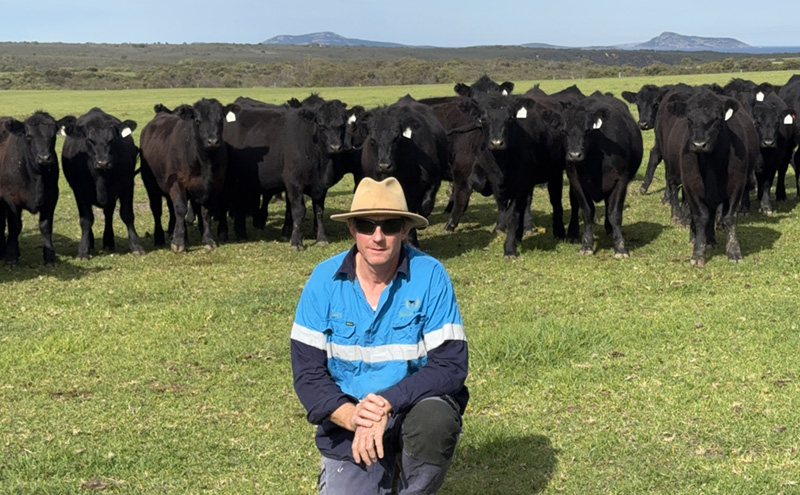
 Simon Fowler from Chilwell Farms in Esperance, WA.
Bull breakdown could be costing your herd performance
Losing young bulls to breakdown was once a major cost for the Fowler family’s ‘Chilwell Farms’, but almost 20 years of vaccinating virgin bulls before joining has helped them reduce losses and improve their confidence in investing in better genetics.
Participating in MLA’s Producer Demonstration Site (PDS) ‘Preventing bull preputial breakdown by vaccination’ helped Simon Fowler validate long-term observations with broader regional data and wider producer participation.
The three-year project, which was run by ASHEEP & BEEF in collaboration with Swans Veterinary Services, investigated strategies to reduce infectious balanoposthitis (IBP) and associated bull preputial breakdown in virgin bulls.
Return on genetic investment
For Simon, the impact of bull breakdown extended well beyond the immediate loss of individual animals. Over time, it began influencing breeding decisions and confidence to invest in new genetics.
“It got to the point where I was reluctant to spend money on superior genetics because of the risk of losing them,” Simon said.
At Chilwell Farms, new Angus bulls are initially used to back up a fixed-time AI program before moving into the wider breeding herd, making the performance and longevity of young bulls particularly important to the business.
Before vaccination became part of the operation’s standard management program, breakdown losses during first joinings were making those investments increasingly difficult to justify.
“We were seeing up to 50% of our first-year bulls suffering penile breakdown within the first three weeks of joining,” Simon said.
Farm snapshot
-
NameSimon and Robyn Fowler, Andrew and Marie Fowler
-
LocationEsperance, WA
-
Area in hectares50,000ha
-
Enterprise2,000 Angus cattle, 28,000 Merino ewes, 2,000 Ultra-white ewes
-
PasturesClover, serradella, tetraploid ryegrass, vetch
-
SoilsLargely duplex sand over clays with some heavy clay on the coast
-
Rainfall350-500mm across the property
Young bull breakdown
Simon had been vaccinating virgin bulls for many years before the PDS began. Like many producers in the Esperance region, he observed that breakdown was far more common in young bulls during their first joining.
“We were seeing the same pattern year after year,” Simon said.
To better understand the issue, Simon worked closely with local veterinarian Dr Enoch Bergman, who suspected bovine herpesvirus was contributing to the high rates of IBP.
“Young bulls were breaking down within weeks of joining, while older bulls were far less affected,” Enoch said.
“Recognising that bovine herpesvirus can cause inflammation of the penis and prepuce, I began blood testing affected bulls and found most virgin bulls appeared to be exposed during their first joining opportunity.”
Enoch said some local producers began using Rhinogard prior to joining and believed they were seeing fewer breakdowns as a result.
“The PDS gave us an opportunity to test those observations across a larger group of producers and build confidence in what people were seeing on-farm,” Enoch said.
|
Lessons learned
|
Putting observations to the test
While the practice itself was not new at Chilwell Farms, the PDS created an opportunity to gather larger-scale regional data and compare vaccinated and unvaccinated groups over multiple seasons.
Across the Esperance district, more than 3,500 bulls were monitored throughout the project. The results consistently showed increased rates of penile breakdown amongst virgin bulls as compared to experienced bulls, and lower rates of penile breakdown amongst vaccinated virgin bulls as compared to unvaccinated virgin bulls.
For Simon, the findings reinforced what he had already seen on-farm.
“Before vaccination we were losing up to half our virgin bulls,” he said.
“Now we might lose two bulls out of 20 or 25. It’s a much better result.”
The business also saw fewer bulls failing observational testing in subsequent seasons due to corkscrewing, also known as premature spiral deviation of the penis.
“We had years where we were losing a third of our bulls at testing,” Simon said.
“Now it’s only two or three.”
Enoch explained that corkscrewing is a progressive syndrome, worsening amongst bulls with age, and is thought to be related to low-level trauma and scar tissue formation.
“I believe preputial injury could contribute to the syndrome,” he said.
“If vaccination reduces preputial injury, I believe it could also reduce the incidence of corkscrewing later in some bulls’ careers.”
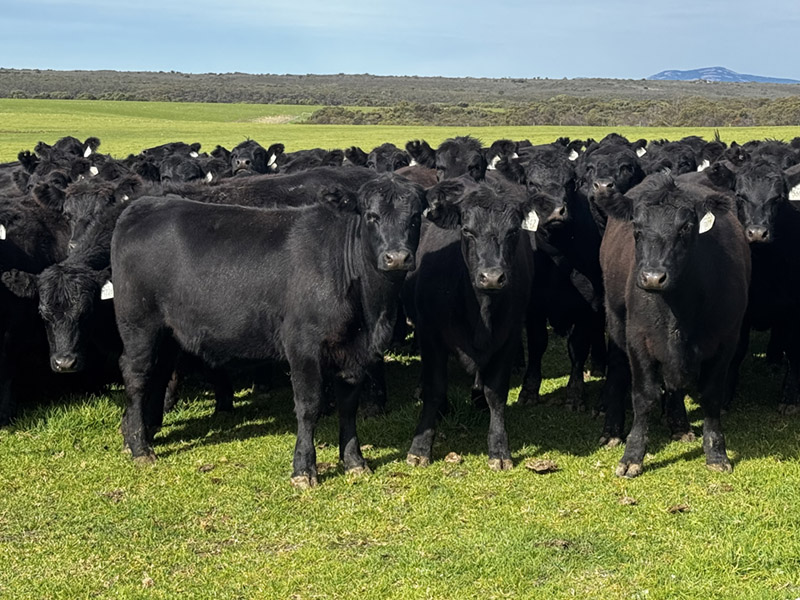
The 2,000 head cattle operation has reaped the benefits of vaccinating bulls for almost 20 years. Image supplied.
Prevention and early action
Today, vaccinating virgin bulls before joining is standard practice at Chilwell Farms, but Simon said vaccination is only part of the solution.
Close monitoring during joining has become equally important, particularly during the first few weeks when breakdown risk is highest.
“Now that we understand the condition better, we can identify bulls showing early swelling or injury and remove them quickly, allowing us to treat them,” Simon said.
Improving awareness of the early signs of breakdown has been one of the key benefits of the project.
“If you can identify them early, pull them out, treat them and give them sexual rest, you’ve got a much better chance of saving that bull for next season,” Enoch said.
The project also highlighted the influence seasonal conditions can have on breakdown rates, with wet and muddy conditions associated with a higher incidence of injury during joining.
|
Seasonal action plan Pre-joining
During joining
Post-joining
|
Producer confidence
Rather than introducing a completely new practice, Simon said the project helped strengthen producer confidence in a management strategy many local producers were already trialling and some had never even considered.
“I think the PDS was important because it helped put science behind what producers were seeing in the paddock,” he said.
“It gave us confidence that vaccination was making a real difference.”
Dr Bergman said the project also improved producer awareness of early signs and intervention strategies.
“Vaccination is not a silver bullet,” he said.
“But it does appear to reduce both the incidence and severity of preputial and penile breakdowns, and thanks to the PDS, more local producers are much better at proactively managing as well as recognising clinical cases early now.
“That is a great welfare outcome.”