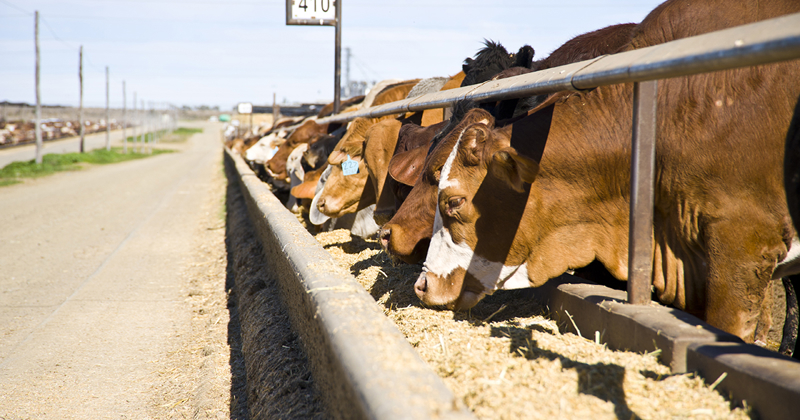
Preparing cattle for feedlot success
Successful feedlot performance often starts well before cattle arrive at the gate.
This was a key message shared at BeefEx 2026, where feeder cattle preparation and pre-vaccination were highlighted as important management practices for supporting animal health, wellbeing and productivity outcomes across the feedlot sector.
Recognising the impact that preparation can have on feedlot performance, Meat & Livestock Australia (MLA) recently launched the Feeder Cattle Preparation Best Practice Guide. A resource designed to help producers prepare cattle for the challenges of feedlot entry.
Discussions at BeefEx reinforced the guide's key message.
MLA Program Manager – Feedlot, Dr Tony Batterham said investing in best practice cattle preparation before feedlot entry can deliver benefits for both cattle and operational performance throughout the feeding period.
"Feeder cattle preparation involving pre-conditioning, vaccination and socialisation in backgrounding can set cattle up with an optimal immune response and adaptation to the feedlot production system,” he said.
“Such that their wellbeing and productivity have the best chance to thrive.”
Pre-vaccination continues to gain momentum
A key topic discussed at BeefEx 2026 was the growing adoption of pre-vaccination programs for Bovine Respiratory Disease (BRD), one of the most significant health challenges facing feedlot cattle.
Pre-vaccination programs are increasingly being adopted across the industry to help strengthen immune responses before cattle enter what is often considered one of the highest-risk periods of the production cycle.
Speaking on the Front-loading Performance discussion panel, Tony said reductions in BRD-related illness and mortality had been achieved despite significant growth in cattle numbers across the feedlot sector.
“We’ve seen a 50% reduction in BRD mortalities,” he said.
“But importantly because they’ve got these optimised immune responses, the cattle are also not becoming chronic animals.”

JBS Australia General Manager - Livestock Northern Edwin Cooke, Gundamain Pastoral Company Managing Director Caitlin Herbert and MLA Program Manager for Feedlot, Animal Wellbeing and Biosecurity Dr Tony Batterham discuss cattle health, pre-vaccination and feeder preparation during the Front-loading Performance panel at BeefEx 2026. Image supplied: ALFA.
Tony was joined on the panel by Gundamain Pastoral Company Managing Director Caitlin Herbert and JBS Australia General Manager - Livestock Northern Edwin Cooke, who shared their experiences implementing pre-vaccination programs within commercial feedlot operations.
Edwin shared JBS's experience implementing pre-vaccination requirements for cattle entering its NSW feedlots as part of its broader approach to managing BRD risk.
Five years on, the program had expanded significantly with all Angus cattle entering JBS's Queensland and NSW feedlots now required to be pre-vaccinated prior to feedlot entry.
Tony said pre-vaccination programs continued to deliver positive cattle health outcomes as adoption increased across the industry.
He noted the strongest benefits were achieved when vaccination was consistently applied before cattle entered the feedlot.
“Programs like what JBS have, where it’s structurally built in for animals to be prepared with a pre-feedlot entry vaccination, means it makes a material difference,” he said.
“If some animals in pens are not vaccinated and some are, there’s less guarantee of the results that JBS has seen.”
While JBS had adopted a mandatory approach, Caitlin shared how pre-vaccination had become an increasingly important part of Gundamain's animal health strategy.
Based in Eugowra, central-west NSW, the operation did not currently mandate pre-vaccination, however, producer incentives had encouraged greater uptake.
Caitlin said experience gained through the business's backgrounding and lot feeding programs had shown the benefits of revaccinating cattle on day 13 after feedlot entry.
“Any cattle that aren’t pre-vaccinated prior to feedlot entry at Gundamain are then vaccinated on day 13, and it has been an absolute game changer for our business,” she said.
“Being a southern yard, we don’t typically buy ‘easy’ cattle, we buy smaller mobs of southern cattle.
“We buy a lot of saleyard cattle, so mixing mobs is a big part of what we do.
“Because of that, we do have a higher BRD risk, so for us, revaccination and pre-vaccination is a big part of the job at Gundamain.”
The panel discussion reinforced a consistent message across the industry – preparing cattle before feedlot entry could have a significant impact on overall animal health, wellbeing and performance outcomes.
As pre-vaccination adoption continues to increase, many feedlots are seeing benefits through reduced illness, lower mortality rates, improved animal performance and a reduced need for treatment interventions.
Beyond vaccination and best practice for feedlot success
BeefEx 2026 conversations also reinforced that successful lot feeding performance began well before cattle arrived at the feedlot.
To support producers supplying cattle into grainfed programs, MLA recently launched the Feeder Cattle Preparation Best Practice Guide.
Developed by MLA and authored by Queensland feedlot veterinarian Dr Kev Sullivan, the guide brings together practical, research-backed information on preparing cattle for feedlot entry.
MLA Project Manager – Feedlot, Liz Pearson said the guide consolidated existing information into a practical resource for producers and the wider supply chain.
“There was a lot of valuable, research-backed information available on preparing cattle for feedlot entry, but it wasn’t all in one practical, easy-to-use resource,” she said.
“MLA developed this guide to bring that information together and give grassfed producers clear steps to prepare cattle that arrive ready to adapt, perform and meet feedlot requirements, ensuring that cattle thrive, not simply arrive.”
The guide highlighted the range of challenges cattle can face when entering a feedlot, including changes in environment, feed and water sources, transport, handling and co-mingling with cattle from different origins and health statuses.
How cattle adapt to these changes can have a significant impact on their health, wellbeing and performance outcomes.
A key focus of the guide was reducing stress before feedlot entry.
Yard-weaned and well-educated cattle have consistently been shown to adapt more successfully to feedlot conditions and are less likely to experience health and wellbeing challenges during the early stages of feeding.
The guide outlined a range of management practices to support successful feedlot entry. This included weaning and education, vaccination, parasite management, minimising time off feed and water, and careful transport planning.
Liz said the guide was designed not only for producers supplying cattle to feedlots, but also for lot feeders, livestock agents and advisers working across the supply chain.
“We see it as a practical resource that helps everyone involved in the supply chain have more informed conversations about feeder preparation and what drives successful outcomes for everyone,” she said.