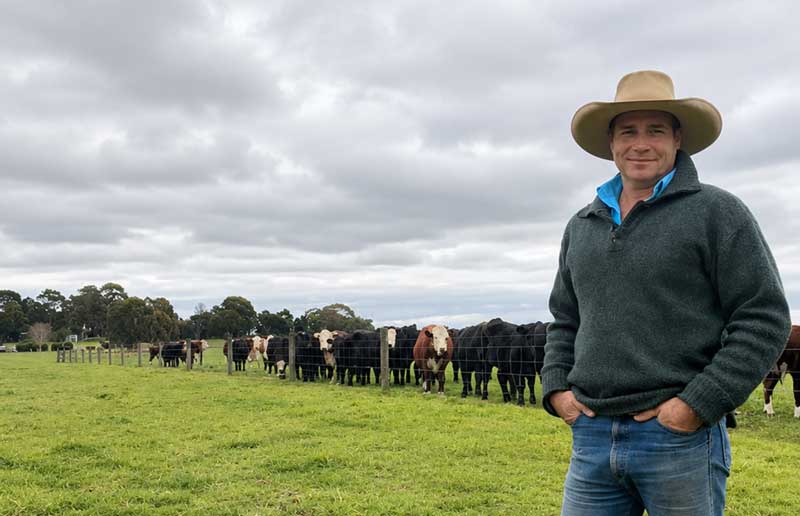
 Quentin Hodge says soil moisture data has helped him make more informed decisions around pasture planning, species selection and seasonal risk management. Image supplied.
Digging deeper into pasture performance
Improving soil health and pasture productivity has become a major focus for East Gippsland producer Quentin Hodge across his two very different properties.
Quentin operates breeding country near Gelantipy alongside a second property at Bairnsdale, where he backgrounds and trades cattle and lambs while progressively renovating pastures.
Together, the two properties give him flexibility across varying seasonal conditions, but they also present two very different management challenges.
“At Gelantipy we’re running a permanent pasture-based breeding system, while Bairnsdale is more annual crops and pasture renovation,” Quentin said.
His focus on productivity led Quentin to become involved in the MLA-funded Producer Demonstration Site (PDS) project exploring how soil moisture probes can be applied for seasonal preparedness in a commercial setting.
“I’ve become a bit of a dog with a bone about soil fertility,” he said.
“If you haven’t got the building blocks right, then all the other work you do in the business just won’t work for you.”
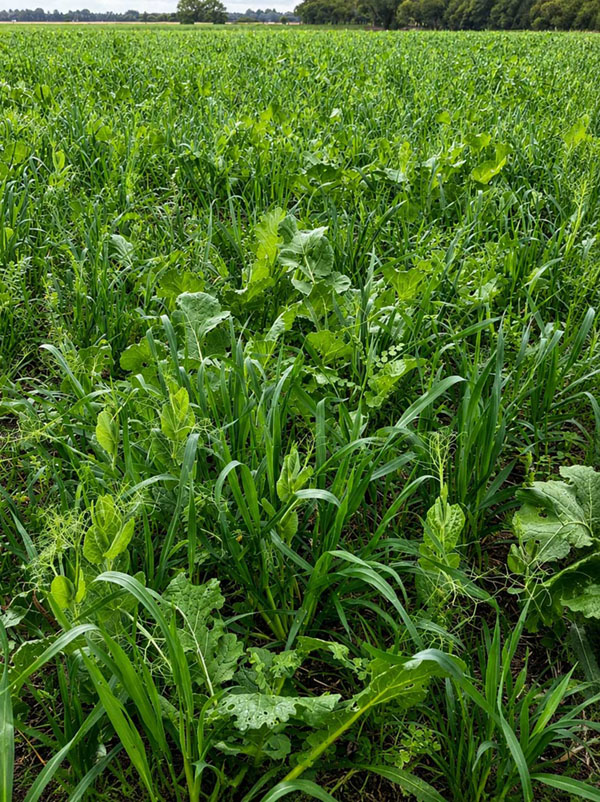
A diverse forage mix at ‘Kallara Downs’ supports feed production and flexibility in a variable seasonal environment. Image supplied.
Farm snapshot
-
NameQuentin Hodge, ‘Kallara Downs’
-
LocationGelantipy and Bairnsdale, VIC
-
Enterprise230 Poll Herefords
300 second-cross Border Leicester/Merino and Poll Dorset-cross sheep -
PasturesPermanent perennial pastures and annual forage crops
-
SoilsBairnsdale: sandy loam over clay
Gelantipy: heavier sandy loam soils -
Rainfall600mm
Beyond calendar decisions
Before becoming involved in the project, Quentin said many decisions around sowing and fertiliser timing were largely based on habit and seasonal expectations.
“It was all pretty seasonal and calendar-based,” he said.
“Around here it was traditionally, ‘put your fertiliser out in autumn’ because that’s what everyone did.”
Using soil moisture and temperature data has shifted that approach toward more targeted, informed decision-making.
For Quentin, one of the biggest advantages has been improving crop establishment timing, particularly for warm-season species like millet and sorghum.
“You hear people say they planted millet and rape together and the rape came up but the millet didn’t,” he said.
“Then you look at the soil temperature and realise the millet never really had a chance.”
The probe data has also helped guide decisions around nitrogen applications and pasture stimulants, supporting application when conditions are likely to deliver a response.
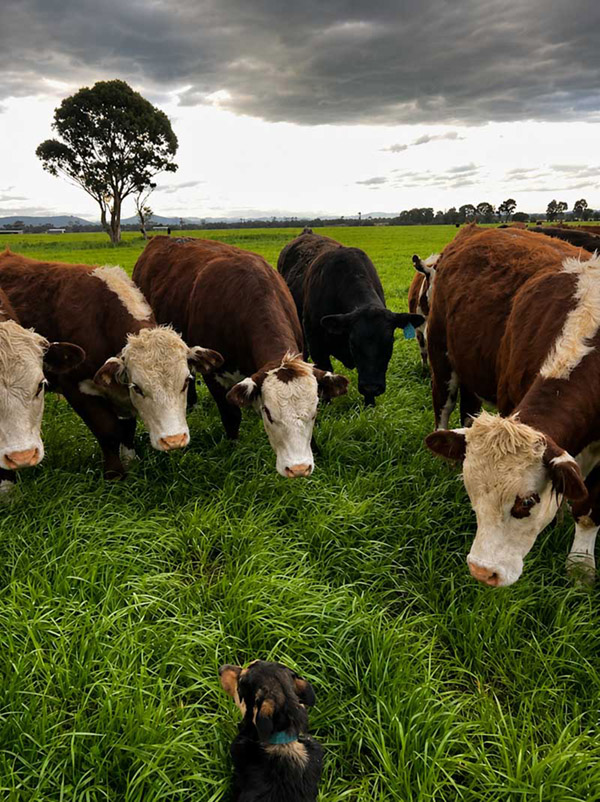
Poll Hereford and Angus cattle grazing improved pastures at ‘Kallara Downs’ near Bairnsdale. Image supplied.
Looking below the surface
One of the key observations for Quentin came from comparing soil moisture trends under annual crops versus perennial pastures.
“The graphs were almost opposite to each other,” he said.
“The annuals were using that top moisture, while the perennial pastures were pulling moisture from much deeper in the profile.”
Seeing how differently pasture systems used water helped inform how he approached feed supply and seasonal resilience.
“It really surprised me just how deep those perennial roots were getting,” he said.
Quentin believes having access to soil moisture information has significantly improved confidence in seasonal planning and risk management.
“If we think we’re heading into a dry period, we can now look deeper into the profile and work out whether there’s still enough moisture there to carry us through,” he said.
“That changes decisions around supplementary feeding, fertiliser and stocking pressure.”
Another tool in the toolbox
Quentin said one of the biggest benefits of participating in the PDS was having access to practical information he could apply both on his own farm and in conversations with clients through his role as area manager for a fertiliser company.
The ability to access local soil moisture probe readings has helped shift decision-making around pasture planning and fertiliser timing from relying on instinct alone to using data more confidently.
“Having that little snapshot into what’s happening underneath our feet is critical,” he said.