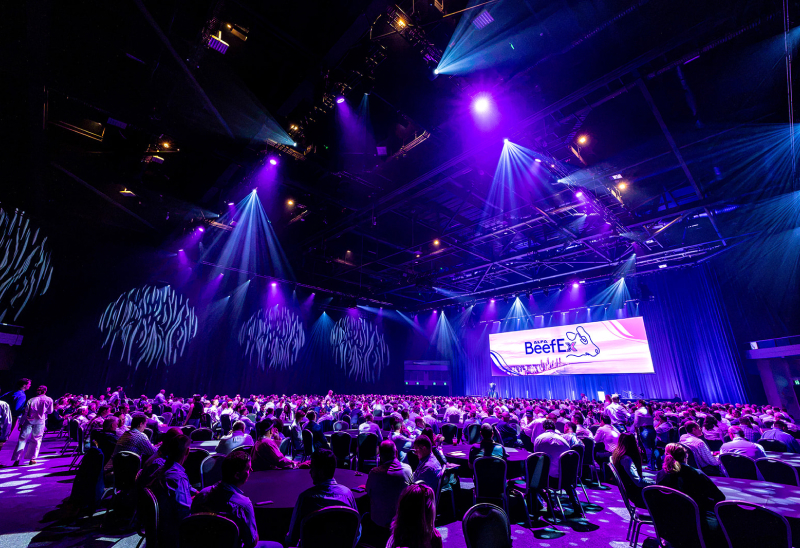
Showcasing innovation and partnership at BeefEx 2026
Meat & Livestock Australia (MLA) was proud to partner with the Australian Lot Feeders' Association (ALFA) for BeefEx 2026, Australia’s flagship grainfed beef industry event hosted by ALFA.
Held from 22–24 September, the biennial conference brought together lot feeders, service providers, processors, exporters, researchers and industry experts from across the supply chain to discuss the opportunities and challenges shaping the future of the feedlot sector.
The event provided an important platform to showcase the long-standing partnership between MLA and ALFA and highlighted how levy-funded investments continue to support research, innovation and adoption across the industry.
MLA and ALFA continue to work together to address industry priorities through targeted research, development and adoption investments.
Guided by the MLA-ALFA Feedlot Research and Development Strategy, investments continue to focus on improving productivity, animal wellbeing, workforce capability, automation and environmental sustainability.
BeefEx provided an opportunity to connect directly with levy payers and demonstrate how these investments are translating into actionable outcomes for lot feeders.
MLA Managing Director Michael Crowley said the partnership between MLA and ALFA played an important role in ensuring industry priorities were reflected in research, development and adoption investments.
“The partnership we have with ALFA is very strong, and we consult heavily with the industry body to make sure the priorities we're investing in align directly with the sector's requirements,” he said.
“We're really keen to make sure we're delivering value to levy payers and directly addressing the priorities that will have the biggest impact for the feedlot sector.”
Michael said BeefEx provided a valuable opportunity to bring together all parts of the grainfed beef supply chain.
“It allowed us to showcase the latest outcomes of research and development, engage directly with lot feeders on adoption opportunities and work closely with the service providers supporting the industry,” he said.
“It really represented the whole sector, not just the lot feeders themselves, but also the service providers and the broader network supporting the grainfed beef industry.”
Envisioning the feedlot of 2040
A major highlight of BeefEx 2026 was the Feedlot ‘40 session delivered in partnership with MLA and narrated by futurist Anders Sörman-Nilsson.
The session challenged attendees to consider what Australian feedlots could look like in 2040 and brought together researchers, lot feeders and industry experts to explore emerging technologies, management systems and future opportunities from induction through to the consumer.
Delegates were taken through both technologies already influencing feedlot operations and innovations still at the concept stage. Providing a glimpse into how the industry may evolve over the coming decades.
A recurring theme throughout Feedlot ‘40 was how emerging technologies could support better decisions across the entire feedlot system.
Discussions explored the growing role of artificial intelligence, automation, predictive analytics and digital monitoring systems in improving productivity, animal wellbeing, labour efficiency and operational performance.
The session highlighted how future technologies may help lot feeders move beyond measuring outcomes at the end of the feeding period towards making more informed decisions much earlier.
This included opportunities to identify animal health, wellbeing, performance and marketing outcomes at an individual animal level.
One of the innovations showcased was SizeR and its ability to predict, using AI, feedlot and carcase outcomes at an individual animal level.
MLA Board Director and Gundamain Pastoral Company Director Tess Herbert said advances in digital technologies were helping shift the industry towards more informed decision-making throughout the production cycle.
“It is exciting to see technology moving beyond simply measuring an outcome at the end of the feeding period, towards identifying an individual animal's potential at multiple stages, during backgrounding, at induction, while on feed and potentially through to exit and carcase performance,” she said.
“If we can use information earlier in an animal's life or feeding period to make better decisions around health, nutrition, management and marketing, there is the potential to improve both animal outcomes and business performance.”
Feedlot ‘40 also explored how technologies already in development could work together in the future.
Conversations throughout the session highlighted the potential to combine information from systems such as SizeR, behavioural monitoring cameras, automated feeding systems and weather intelligence platforms to support increasingly precise management decisions.
Future sustainability opportunities were another focus of the presentation.
Delegates heard how innovations in areas such as renewable energy, heat load management, water planning and covered housing systems could support more productive and resilient feedlot operations while improving resource efficiency and animal wellbeing.
The session also reinforced that technology should support, rather than replace, the people working within feedlots.
Across the broader BeefEx program, there was strong recognition of the role feedlot teams play in caring for livestock and driving operational success, which highlighted the importance of combining human expertise with emerging technologies.
Perspectives also considered how customer expectations may evolve by 2040 with future consumers expected to seek greater transparency around provenance, sustainability, animal wellbeing and production practices.
The ability to generate trusted data and verify production outcomes was identified as an important opportunity for the sector moving forward.
Reflecting on the broader BeefEx program, Michael said the conference achieved a strong balance between future-focused conversations and addressing issues currently facing the sector.
“There was a really good balance in the program between being future-focused and addressing the priorities directly in front of us,” he said.
|
Feedlot ‘40 speakers A special thank you to the Feedlot ‘40 speakers who shared their expertise and helped bring the future-focused session to life: Industry
Research and technical experts
MLA
|
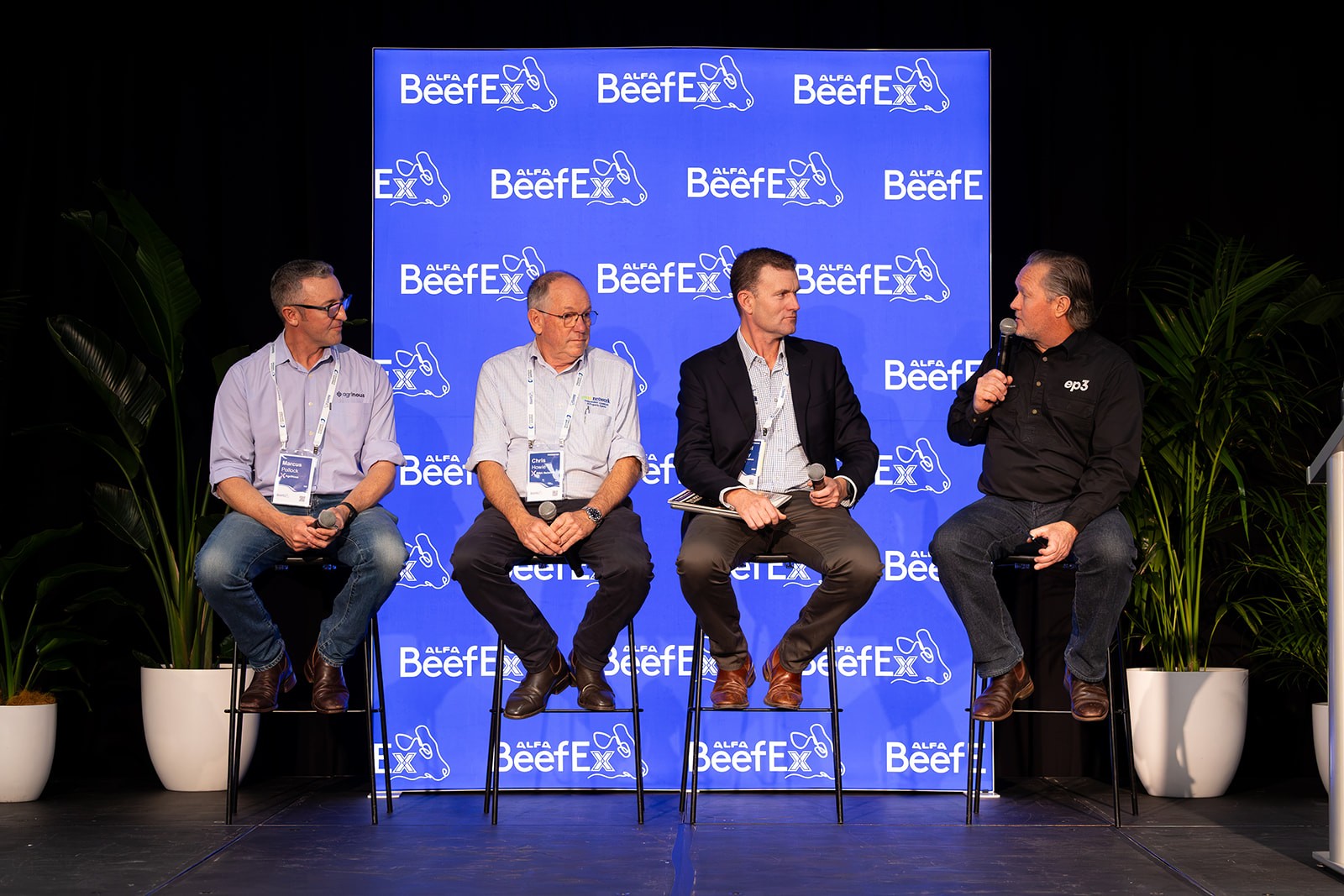
AgriNous General Manager Marcus Pollock, RMA Network CEO Chris Howie and MLA Managing Director Michael Crowley with Matt Dalgleish, Ep3. Image supplied: ALFA.
Navigating a changing global market
BeefEx 2026 also provided an opportunity to discuss the broader operating environment facing Australia's grainfed beef sector.
A panel session titled Chaos, Capital and Cattle brought together MLA General Manager International Markets Andrew Cox, ALFA CEO Christian Mulders and JBS Australia Chief Operating Officer Northern Operations Brendan Tatt to discuss the opportunities and challenges shaping global beef markets.
Discussion centered on the increasing complexity of international trade, including geopolitical uncertainty, shifting trade policies and changing market dynamics.
Andrew said the grainfed beef sector continued to navigate a range of external influences, from US trade policy and protectionism to China's beef safeguard measures and broader global uncertainty.
"The discussion focused on the disruptions that have occurred across global markets over the past 18 months and the need for industry to remain agile in a rapidly changing environment," he said.
Despite these challenges, Andrew highlighted the strong performance of Australia's grainfed beef exports and the growing diversification of export markets.
"Ten years ago, Japan accounted for around half of Australia's grainfed beef exports,” he said.
"While Japan remains an important and consistent market, we've seen significant growth from not just China and Korea, but Canada, UK, Middle East and Southeast Asia.
"That diversification is a positive story for the industry and reflects the strength of Australia's reputation as a supplier of quality grainfed beef."
Andrew said maintaining customer trust, product consistency and strong market relationships would remain critical as the industry continues to grow and respond to changing global conditions.
"Our success continues to come back to quality, consistency and maintaining trust with our customers."
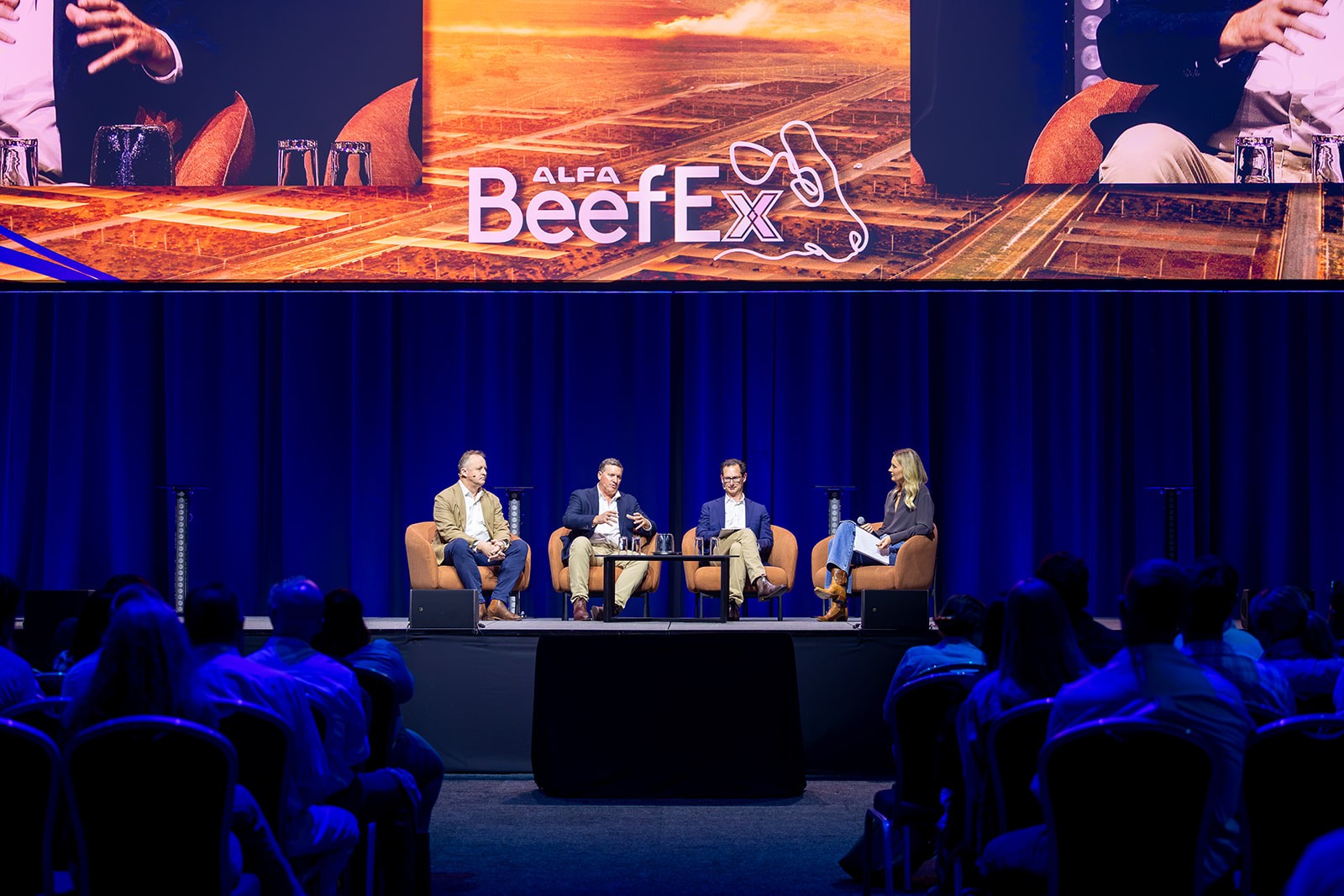
The Chaos, Capital and Cattle panel session brought together MLA General Manager International Markets Andrew Cox, JBS Australia Chief Operating Officer Northern Operations Brendan Tatt and ALFA CEO Christian Mulders to discuss the opportunities and challenges shaping global beef markets. Image supplied: ALFA.
Turning research into adoption
A common theme across BeefEx was the importance of translating research into commercially relevant outcomes that can be adopted by the wider industry.
Programs such as the Feedlot Research for Accelerated Adoption (RAAD) Program are helping accelerate this process by evaluating technologies and management practices under commercial feedlot conditions and generating evidence that supports informed investment decisions.
Feedlot ‘40 reinforced that innovation only creates value when it can be successfully implemented within commercial feedlot enterprises.
Conversations throughout the event highlighted the importance of testing technologies under real-world conditions and demonstrating measurable productivity, operational, animal wellbeing and sustainability benefits before widespread adoption occurs.
Tess said events such as BeefEx played an important role in helping lot feeders engage with emerging technologies and understand their practical application.
“Seeing technology demonstrated in a practical environment and having MLA staff and researchers available to answer questions is incredibly valuable for encouraging adoption,” she said.
“Often the first step towards adoption is simply creating awareness of what is possible.”
She said the connection between researchers, industry and technology providers was critical to ensuring innovations delivered value in commercial feedlot environments.
“Research ultimately creates value when the knowledge generated can be translated into better outcomes for industry,” Tess said.
“Without that pathway to adoption, even very good research risks remaining as words and numbers on a page.”
Working closely with industry, researchers and technology providers, MLA and ALFA continue to focus on solutions that address real-world challenges and strengthen the sector's long-term competitiveness.
Michael said adoption remained a critical focus for MLA's investment in the feedlot sector.
“We're seeing strong momentum through our adoption programs and increasing engagement from commercial feedlots wanting to evaluate innovations within their own operations,” he said.
“The goal is to ensure the research and development we're investing in translates into meaningful benefits for the feedlot sector.”
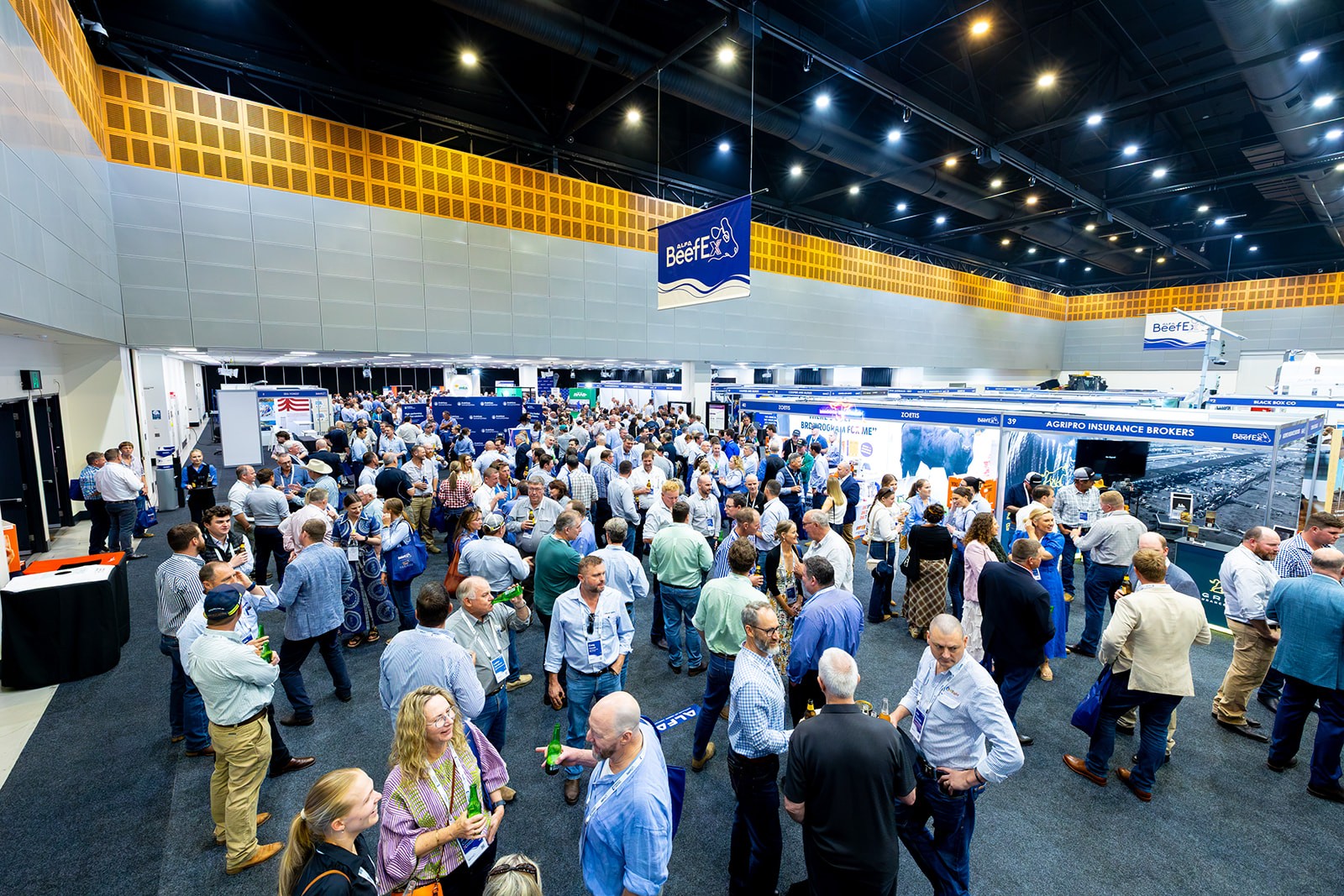
Industry leaders, researchers and lot feeders explored the opportunities that could define Australia's feedlot sector over the coming decades. Image supplied: ALFA.
What's next for the feedlot sector?
BeefEx 2026 reinforced the strength of innovation across Australia's feedlot sector and the importance of industry collaboration in driving future progress.
Feedlot ‘40 explored a broad range of innovations from automated feeding systems and predictive animal performance tools to renewable energy solutions and future consumer experiences.
Yet a consistent message emerged throughout the session – technology is not the end goal. It is a tool to help lot feeders improve productivity, strengthen sustainability outcomes and build trust with customers.
Tess said one of the most exciting opportunities for the feedlot sector lay in helping operators make increasingly informed decisions at an individual animal level.
“Feedlots already generate enormous amounts of information, but the next step is being able to bring different datasets together and turn them into useful, timely decisions,” she said.
“For me, the most exciting technologies are not necessarily those that collect more data; they are the ones that turn that data into information we can actually use to make a better decision.”
Looking ahead, Michael said he remained confident about the future of Australia's grainfed beef industry and the role feedlots would continue to play in meeting growing global demand.
“When I look at the demand outlook for Australian red meat, the fundamentals are very strong,” he said.
“As people earn more money around the world, they're seeking out more red meat, they're chasing quality, and the consistency of our grainfed beef production continues to create opportunities in markets around the world.
“There is also significant diversity within Australia's grainfed beef sector, from short-fed programs through to long-fed programs, allowing us to meet a wide range of customer needs.”
Michael said the continued growth of the sector reinforced the importance of ongoing investment in productivity, sustainability and building social capital.
“The growth of the feedlot sector means we need to continue thinking about sustainability, maintaining and growing community trust, driving productivity and how the feedlot of the future will evolve,” he said.
Michael said MLA was proud to support BeefEx alongside ALFA and valued the opportunity to be part of the industry's flagship event.
“We appreciate being part of the event and the value that comes from our partnership with ALFA,” he said.
“We'll continue to support the feedlot sector as it grows and evolves into the future.”
ALFA Board Member and BeefEx Committee Chair Paul Vogt said BeefEx 2026 highlighted both the current strength and future ambition of Australia's grainfed beef sector.
“This has been the biggest and most ambitious BeefEx in our 30-year history, and it's been a privilege to bring this industry together for three days of genuine learning, celebration and connection,” he said.
“From the Feedlot ‘40 session imagining where our sector is headed, to the awards recognising the people and businesses leading the way today, BeefEx 2026 has shown exactly why this industry, and this event, continues to grow.”