

The Feedlot RAAD Program is a $45 million, five-year investment delivered through a partnership between Meat & Livestock Australia (MLA), the Australian Lot Feeders’ Association (ALFA) and the MLA Donor Company (MDC).
The program has been established to accelerate the adoption of emerging technologies, management practices and production systems that improve feedlot productivity, animal wellbeing, labour efficiency and business resilience.
Feedlot RAAD provides Australian lot feeders with the opportunity to evaluate innovations under commercial conditions, generating robust, independent and commercially relevant evidence that can be shared across industry to support informed investment decisions.
The program will deliver a series of targeted funding rounds over five years, aligned to industry priorities identified by MLA and ALFA. The priorities will be progressed in the following order:
- Shade and Shelter (completed)
- Animal Productivity
- Animal Health and Wellbeing
- Automation
- Sustainability
Each priority area will be supported through a competitive call for submissions, enabling feedlots to investigate and evaluate technologies, systems and practices relevant to their business and production environment.
Program Priorities
Priority 1 – Shade and Shelter (completed)
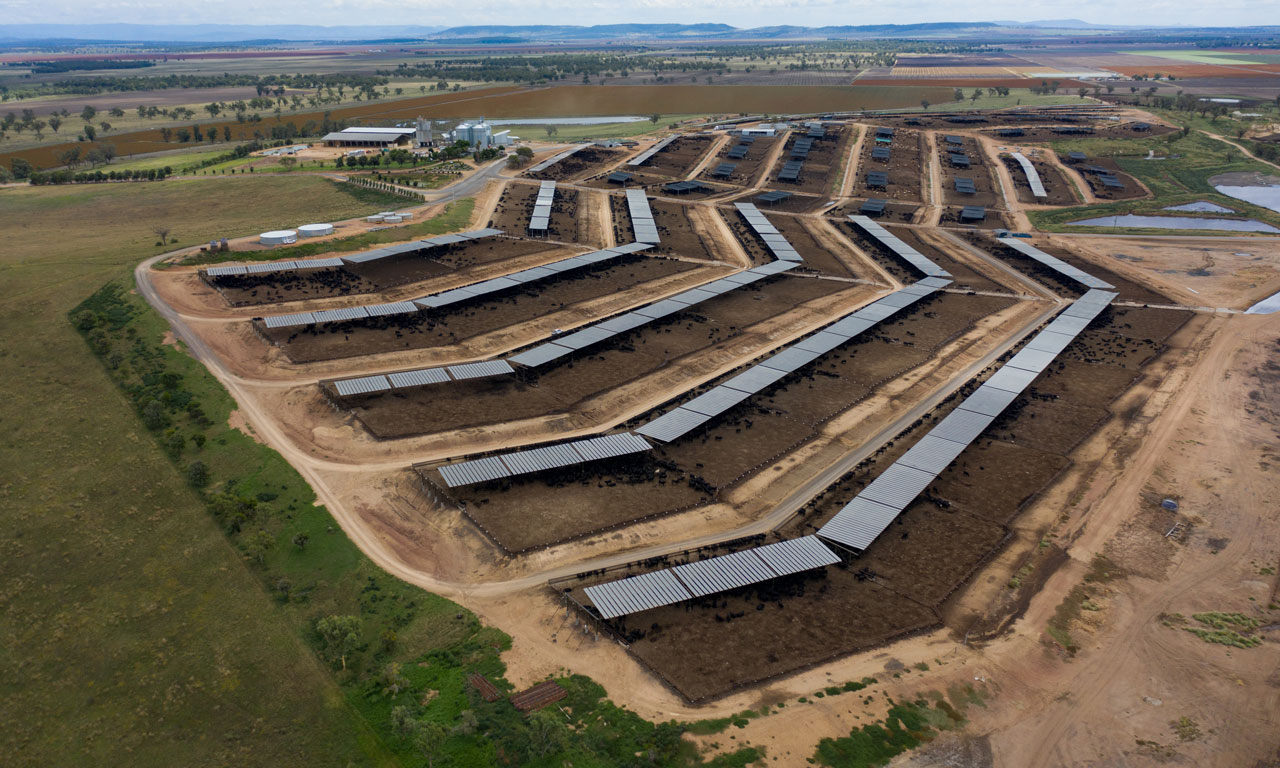
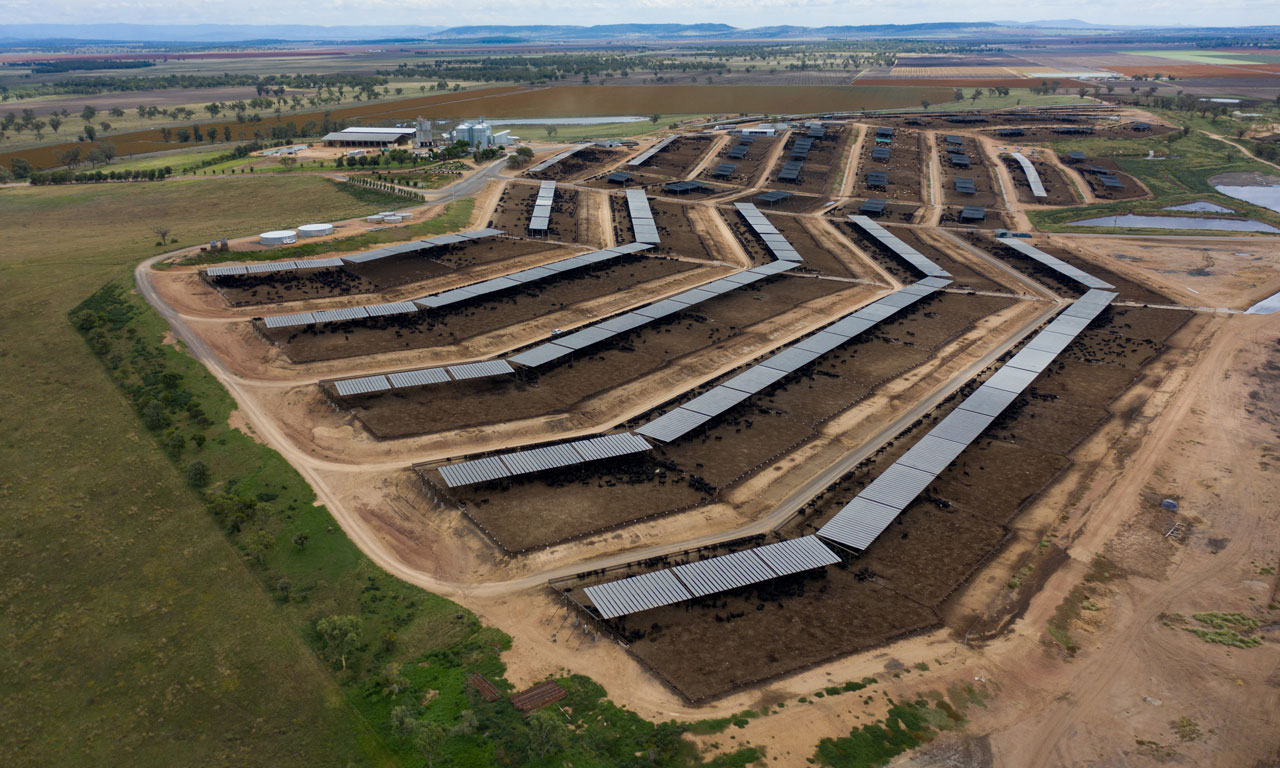
The inaugural RAAD funding round focused on shade and shelter solutions that support feedlots to evaluate structures under commercial conditions and quantify impacts on animal wellbeing, performance and business outcomes.
Expressions of Interest for this priority have now closed and projects are currently being progressed.
Priority 2 – Animal Productivity
The next funding round will focus on technologies, management practices and production systems that improve cattle productivity, feed efficiency, performance and profitability.
Priority 3 – Animal Health and Wellbeing
Future projects will investigate technologies and strategies that improve animal health, wellbeing, disease management and operational outcomes within commercial feedlots.
Priority 4 – Automation
This priority will focus on labour-saving technologies, autonomous systems, digital solutions and smart feedlot management tools that improve efficiency and support future workforce challenges.
Priority 5 – Sustainability
The final priority area will support evaluation of technologies and systems that improve environmental performance, resource efficiency and long-term sustainability outcomes for Australian feedlots.
What is the Feedlot RAAD Program?
The Feedlot RAAD Program helps lot feeders answer important industry questions through rigorous, commercially relevant research conducted within operating Australian feedlots.
By embedding research directly into commercial businesses, the program enables feedlots to:
• Evaluate emerging technologies and production systems.
• Measure impacts on animal wellbeing, productivity and profitability.
• Generate independent evidence under real-world commercial conditions.
• Share learnings with industry and accelerate adoption.
• Contribute to the future direction of the Australian feedlot sector.
RAAD is designed to condense decades of research questions into a focused five-year program, providing industry with timely information and confidence to adopt innovations that deliver measurable benefits.
Who provides the funding?
The program is delivered through the MLA Donor Company (MDC), which:
• Is a wholly owned MLA subsidiary
• Co funds eligible R&D projects under MLA’s Statutory Funding Agreement
• Contributes up to 50% of total project funding
• Applies an 8% access fee on the feedlots 50% contribution.
Funding model
Feedlot RAAD is not a grant or subsidy program.
Funding contributes to the costs associated with conducting research, collecting data and generating commercially relevant, publishable outcomes. Projects are delivered through the MLA Donor Company (MDC) co-investment framework, which generally provides up to 50% of eligible project costs.
To support different levels of project complexity and research rigour, Feedlot RAAD offers two funding pathways:
Gold Standard
• Up to $2.50 per head per day
• Designed for highly rigorous, controlled research projects generating publishable scientific outcomes.
Silver Standard
• Up to $2.00 per head per day
• Designed for detailed commercial evaluations that deliver valuable industry insights and adoption outcomes.
All projects are expected to generate practical learnings that can be shared with industry to support future adoption and investment decisions. This funding structure encourages robust project design while maintaining flexibility for a broad range of feedlot businesses to participate.
What's required?
Gold Standard projects are designed to generate highly rigorous, commercially relevant research outcomes under real-world feedlot conditions.
Projects are expected to:
- Implement the technology, system or practice being evaluated.
- Provide all operational inputs required for project delivery.
- Develop and implement an approved research protocol, including any necessary ethics approvals.
- Supply cattle and production records required for the research.
- Undertake regular monitoring, data collection and equipment calibration.
- Provide relevant production, health, carcase and economic performance data.
- Participate in statistical analysis and interpretation of results.
- Contribute to project reporting and dissemination of findings.
- Present outcomes to industry.
- Participate in MLA and ALFA communications, marketing and extension activities associated with the RAAD Program.
Example: Gold Standard Project Funding
A project involving 1,000 head over 730 days (two years):
- 1,000 head × 730 days × $2.50 = $1,825,000 total project funding
- MLA Contribution (50%) = $912,500
- Feedlot Contribution (50%) = $912,500 + 8% Admin Fee $73,000
Funding payments are made in arrears on a six-monthly basis, subject to achievement of agreed milestones, reporting requirements and data submission obligations.
Silver Standard projects are designed to generate practical, commercially relevant insights that support technology adoption and informed decision-making within Australian feedlots.
Projects are expected to:
- Implement the technology, system or practice being evaluated.
- Provide all operational inputs required for project delivery.
- Develop and implement an appropriate study protocol, including any necessary ethics approvals.
- Supply cattle and production records required for the evaluation.
- Undertake regular monitoring, data collection and equipment calibration.
- Provide production, health, carcase and economic performance data relevant to the project.
- Conduct economic analysis and comparison of outcomes.
- Contribute to project reporting and presentation of results.
- Participate in MLA and ALFA communications, marketing and extension activities associated with the Feedlot RAAD Program.
Example: Silver Standard Project Funding
A project involving 1,000 head over 730 days (two years):
- 1,000 head × 730 days × $2.00 = $1,460,000 total project funding
- MLA Contribution (50%) = $730,000
- Feedlot Contribution (50%) = $730,000 + 8% Admin Fee $58,400
Funding payments are made in arrears on a six-monthly basis, subject to achievement of agreed milestones, reporting requirements and data submission obligations.
When reviewing project proposals, priority will be given to those that clearly demonstrate:
- Genuine R&D Questions – The project addresses a clearly defined research question or industry challenge that requires investigation under commercial feedlot conditions.
- Commercial Practicality – The proposed technology, system or practice can be realistically implemented and evaluated within a commercial feedlot operation.
- Practicality of Adoption – The project has clear potential to support industry adoption through demonstrable benefits relating to productivity, animal wellbeing, operational efficiency, sustainability and/or profitability.
- Willingness to Share Learnings – Applicants are committed to sharing project outcomes, lessons learned and practical insights to accelerate adoption across the Australian feedlot industry.
- Research Capability – The project team has the skills, resources and commitment required to deliver a robust project, collect high-quality data and achieve the proposed objectives.
- Alignment with RAAD Priorities – The proposal aligns with the current RAAD funding priority and contributes to the objective of accelerating technology adoption across Australian feedlots.
Project proposals will be reviewed by an independent panel consisting of independent industry experts, ALFA and MLA.
All submissions will be notified whether their project proposal has been selected to progress to the scoping phase or will not proceed further.
Selected proposals will enter a scoping phase with the intention of progressing to a full project, subject to project feasibility and alignment with Feedlot RAAD Program requirements.
The MLA Feedlot Team welcomes ongoing discussions regarding future RAAD opportunities. Lot feeders, technology providers, researchers and industry partners are encouraged to engage early and discuss ideas aligned with upcoming priority areas.
Future calls for submissions will be announced through MLA and ALFA communication channels as each priority area is released.