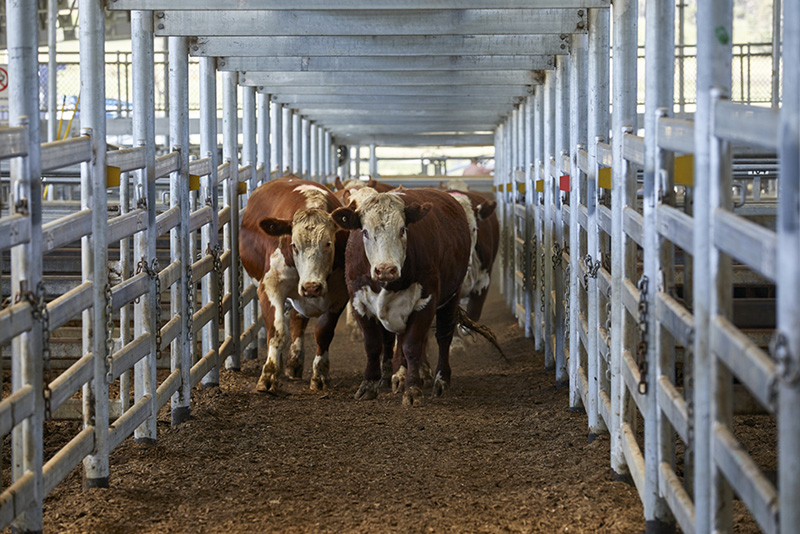
Australia's saleyards tell two different stories in 2025–26
The latest annual Saleyard Survey, released by Meat & Livestock Australia (MLA) and conducted by the National Livestock Reporting Service (NLRS), reveals a year of increased cattle activity alongside a significant decline in sheep transactions.
Over the 12 months to 30 June 2026, more than 5.18 million cattle and 14.5 million sheep were transacted through Australian saleyards.
Cattle numbers rose 7.4%, while sheep transactions fell by 11.6%, highlighting the contrasting market conditions across the country.
Cattle
For cattle producers, particularly in the eastern states, saleyards were noticeably busier. More than 356,000 additional cattle were transacted compared with the previous financial year.
Queensland and NSW led the increases. NSW remained Australia's largest cattle-selling state, recording 2.17 million head across 27 saleyards. Queensland followed closely with 1.65 million head transacted through 23 facilities.
At the centre of Queensland's cattle trade, Roma Saleyards once again recorded the nation's highest throughput. More than 362,051 cattle were sold during the year – an increase of 21.5%.
Further south, both Dubbo Regional Livestock Market and Tamworth Regional Livestock Exchange posted strong growth with transaction volumes rising 31.8% and 38.1% respectively.
While cattle activity strengthened across much of the east, the trend was not consistent nationally. Victoria, WA and SA all recorded lower cattle transaction volumes as regional conditions continued to influence cattle supply and movement.
Sheep
National sheep transactions fell by almost 1.9 million head with most states recording lower throughput.
NSW retained its position as the country's largest sheep-selling state, accounting for 8.66 million head despite a 6.5% fall from the previous year.
Victoria experienced one of the steepest declines with sheep transactions dropping by 25.3% to 3.61 million head. South Australia's volumes also contracted significantly.
Lower saleyard transactions across Victoria and SA largely reflected prolonged dry conditions and elevated livestock turn-off in previous years, which reduced flock numbers and the availability of sheep for sale.
NSW experienced comparatively more favourable seasonal conditions in some regions to help moderate its decline.
Western Australia moved against the national trend. Supported by increased numbers at Katanning and Muchea, sheep transactions rose 19% to 1.28 million head.
The increase reflects different market dynamics as sheep producers adjust their selling decisions in response to declining live sheep exports and changing domestic market opportunities.
Wagga Wagga Livestock Marketing Centre maintained its position as Australia's largest sheep-selling centre to record 2.27 million transactions. The Central West Livestock Exchange at Forbes followed with 1.86 million head.
Despite the contrasting trends of cattle and sheep markets, saleyards continue to play a critical role in Australia's livestock marketing system.
View the full 2025–26 Saleyard Survey.