Genetics that cut methane, not productivity
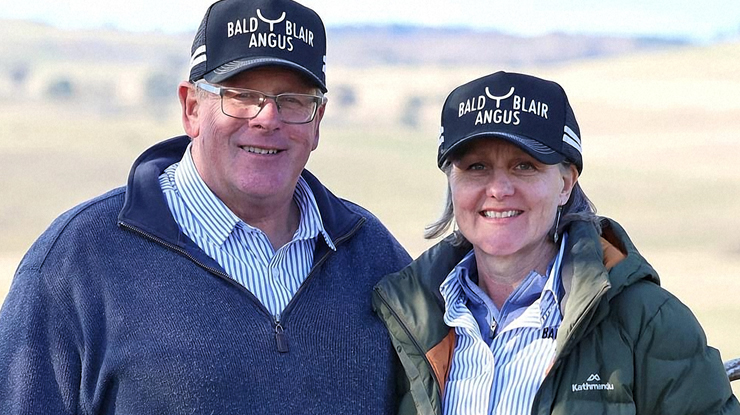
NSW Angus cattle and sheep producers, Sam and Kirsty White are passionate advocates for a more sustainable red meat future, so supporting MLA’s ‘Low methane beef’ genetic research project was an easy decision.
The project’s focus on creating genomic tools to equip producers to balance methane-reducing traits with those that drive productivity fit neatly with the Whites’ productivity-first business approach.
Sam and Kirsty White – ‘Bald Blair’, Guyra, NSW
-
Area2,200ha across four properties
-
Enterprise400 stud and 400 commercial Angus cows, 1,000 ewes
-
PasturesPredominantly perennial pastures, including phalaris and fescue
-
SoilsRed and black basalt
-
RainfallRed and black basalt
“Every decision we make needs to contribute to profitability and efficiency, so the fact the researchers are now looking at developing a methane trait was very attractive to us,” Sam said.
“Being able to select for methane emissions in combination with other key productivity traits will make it a valuable addition to the genomically enhanced Estimated Breeding Values (EBVs) we currently use to make our breeding decisions.”
The Whites have a seedstock operation as well as a commercial herd – with steers produced by their stud bulls – so the project was doubly relevant to their business.
“The project is about developing EBVs for industry to use. We’re measuring mature breeding females and the idea is that we are trying to develop a methane EBV,” Sam said.
“A lot of other participants and ourselves are working together to contribute the data so the scientists can go on to develop this EBV.”
Feed efficiency points to lower emissions
Sam has long held the view that feed efficiency may be linked to lower methane emissions.
He’s pleased the research is investigating this and points to the business and environmental benefits that could be realised from a national herd that makes better use of available feed while emitting less methane.
Until now, breeders could select for feed efficiency, but methane itself remained unmeasured.
“Now, we have the opportunity to measure for methane – this significant global research is good for us to be a part of,” Sam said.
“In the short to medium term we will have an EBV we can use to select for low methane-emitting livestock.
“If an animal can be more feed efficient and emit less methane, then it’s worth it for us.”
Sam explains that if producers can identify productive animals that also emit low methane early in their lives, they can replicate them through breeding.
Producers can then combine this strategy with other methane-reducing management decisions such as feed additives (e.g Asparagopsis).
Harnessing technology
Sam said they did run into some challenges during the data collection phase of the project. He acknowledged the expertise and assistance of the researchers who were quick to respond to any issues he faced using the technology.
“The GreenFeed machines are amazing, but like any technology, the practical realities of measuring cattle in paddock conditions were far more complex than at a feedlot, where animals are confined in one space,” Sam said.
Encouraging all animals to use the machines, which measured their methane emissions while consuming feed inside the machine, was tricky at times.
“This was in part due to dominant animals preventing others from accessing the machines, so we removed these individuals which helped.
Even feeder orientation mattered – a machine facing west had low usage, but once rotated to the east, animals were more willing to use it.
Sam and the Bald Blair team conducted daily checks, feed top-ups and frequently communicated with the researchers.
“These records will be part of ongoing data collection all around the country to be part of the development of the methane EBVs.”
Forefront of genetic science
Looking ahead, Sam and Kirsty are realistic about the timeline required before methane-related EBVs will be reliable enough and available more widely for routine selection.
“We don’t have data that we can rely on just yet for methane decisions, but by participating in research, we can be part of the policy and research development in this space, rather than being at the receiving end with no input,” Sam said.
Sam continues to use a full suite of genomic tools, indexes, MateSel and genomically enhanced EBVs to steer his breeding program.
“We utilise all available technologies, but we wanted to dig a little deeper and see what contribution we could make – we think it’s fundamentally important research,” Sam said.