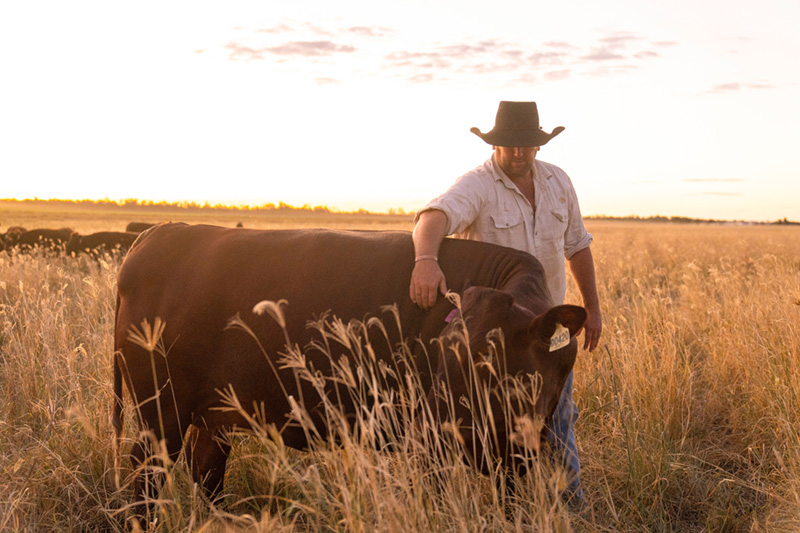
 Breeding for poll is delivering long-term benefits by reducing the need for dehorning and supporting practical animal wellbeing outcomes in northern beef systems. Image credit: AACo
Boost productivity by tackling hidden herd losses
An MLA-supported project, in partnership with the Australian Agricultural Company (AACo) is testing animal wellbeing practices under extensive grazing conditions.
The ‘Horns and Health’ project takes into account how, in northern beef systems, cows do much of their work unobserved.
They may only be handled a handful of times each year, making it difficult to detect reproductive losses while also presenting practical challenges for implementing animal wellbeing initiatives.
The project testing solutions that work in extensive beef businesses by tackling two longstanding challenges facing northern producers:
- Reducing the need for dehorning through increased use of polled genetics, and
- Improving the management of reproductive diseases that can quietly erode herd productivity.
For Michael McGowan, Professor Emeritus Livestock Medicine at The University of Queensland (UQ), the project's greatest strength is that it is being tested under real commercial conditions.
"These kinds of projects are really important because they're being done at scale, in the actual rangeland environment," Michael said.
"It's not a research station. It's working within a large commercial system where cattle are routinely moved between paddocks and properties, and management decisions have to be practical."
A systems approach to animal wellbeing
While the project has two distinct focus areas, both are aimed at improving animal wellbeing while supporting business performance.
The move towards polled cattle reduces the need for dehorning, while improved disease management seeks to reduce reproductive losses and lift herd productivity.
"There are enormous costs associated with dehorning: labour, weight loss, mortalities, bruising and occupational health and safety risks," Michael said.
The disease management component has an equally ambitious target. Across AACo's operations, the project aims to increase weaning rates by 5% through improved understanding and management of four key diseases: trichomoniasis, vibriosis, pestivirus and leptospirosis.
A marathon, not a sprint
One of the clearest lessons emerging from the project is that meaningful genetic change takes time.
AACo began its poll breeding program several years ago with the long-term goal of eliminating the need for dehorning. Rather than selecting solely for the poll gene, the business focused on maintaining fertility, structure and overall genetic merit alongside poll status.
The results have been significant:
- The proportion of polled animals in AACo's Mitchell stud herd increased from 55% in 2017 to 100% by 2021.
- Commercial bull teams have also progressed from 70% polled in 2022 to 100% polled in 2026, while the proportion of polled commercial progeny has increased from ~25% to 70%.
According to AACo, fixing poll in the stud herd took approximately five years, or around one female generation.
The experience reinforces a message Michael believes is critical for producers.
"If you only select for poll genetics but don't address factors affecting reproductive performance, your progress will be slower," he said.
"You're managing a system – it can't be piecemeal."
Tackling hidden reproductive losses
While the benefits of polled cattle are easy to see, reproductive diseases often operate below the surface.
UQ veterinarian Ben Wood said diseases such as trichomoniasis can persist unnoticed in extensive systems, where producers have limited opportunities to observe breeding performance.
"In northern systems, we simply don't see the animals often enough to know exactly what's happening," Ben said.
"Cows are doing their job largely unobserved, so issues like reproductive loss can go undetected."
The project is helping establish practical testing and management protocols for the four key reproductive diseases, while also investigating technologies that could allow faster diagnosis in the field.
Almost 38,000 disease tests have already been completed across AACo since the start of the Horns and Health project.
Testing at this scale has helped build a clearer picture of disease prevalence and informs future management decisions.
One of the strongest results to date has been the reduction of trichomoniasis through targeted testing and culling programs. Ben said through testing and culling, they have achieved up to 75% reduction in some herds.
The project has also reinforced the importance of bull age structure, with older bulls more likely to become long-term carriers of reproductive diseases such as trichomoniasis and vibriosis.
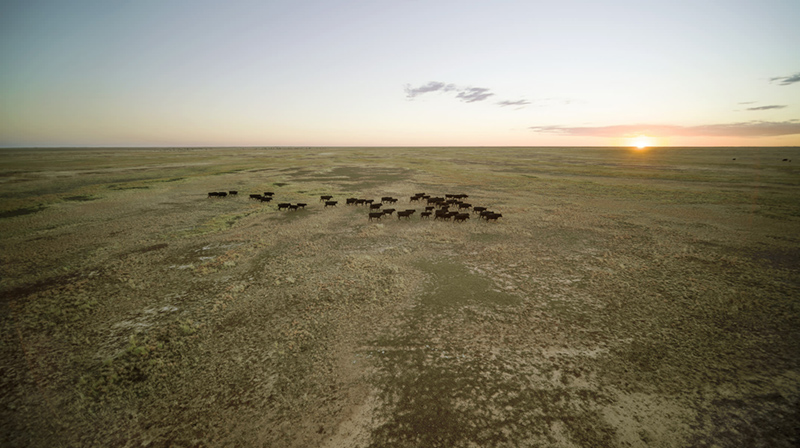
The MLA/AACo ‘Horns and health’ project is helping develop practical pathways to improve animal wellbeing and reproductive performance in extensive northern beef production systems. Image credit: AACo.
Making adoption practical
For Michael, the science behind disease control and genetic improvement is only part of the challenge.
"You have to get the ‘two-legged animal’ on side," he said.
"People underestimate the complexity of implementing these programs at scale."
Maintaining clean musters, controlling bull movements, handling vaccines correctly and maintaining accurate records all are challenging in large, extensive production systems.
This practicality is one of the reasons the project has been extended through to 2028.
Researchers are continuing to monitor herd performance, refine management recommendations and build evidence around the productivity benefits of reducing disease prevalence.
Beyond the on-farm research, the project is focused on building practical adoption pathways for industry.
Through field days, workshops, online resources and producer demonstration activities, the project aims to provide producers with the tools and confidence to implement both reproductive disease management programs and polled breeding strategies in their own herds in extensive operations in the north.
|
Four steps to more productive herds While it can be challenging in extensive productions systems, there are four practical steps to achieve disease control and genetic improvement:
|
How small changes deliver big gains for AACo
The MLA-supported Horns and Health project is helping the Australian Agricultural Company (AACo) demonstrate practical pathways to improve animal wellbeing through both the transition to polled cattle and the implementation of herd health strategies targeting reproductive disease.
For AACo Station Manager Mary Vaughan, one of the most rewarding outcomes of the project is visible every time cattle come through the yards.
“Now you look across a yard full of cattle and about 70% of them are polled – that’s unreal,” she said.
While the long-term goals of the project are ambitious, the benefits are already being seen on the ground.
The scale of the project reflects the scale of the business itself. AACo operates across a network of properties spanning Queensland and the Northern Territory, meaning any new practice must work under a range of seasonal conditions, production systems and management environments.
Station managers and technical staff are central to that process.
Mary, who manages ‘Anthony Lagoon’ and ‘Eva Downs’ in the NT, and Stacey Murray, Technical Officer at ‘Wylarah’ in Central Queensland, are two of the people helping put the project's learnings into practice and demonstrating what works under commercial conditions.
Breeding out the need for dehorning
Mary has spent more than two decades working in northern beef production and has seen first-hand the challenges associated with dehorning cattle.
“We saw a lot of incorrect dehorning and the damage associated with that,” she said.
“It takes cattle back a long way if you’re not doing it properly.”
Beyond animal welfare, dehorning also creates additional labour, handling and safety challenges for staff working in the yards.
For AACo, increasing the number of polled animals in the herd offered an opportunity to reduce those impacts while maintaining productivity.
However, Mary said the project team was careful not to focus solely on the poll gene.
“We were really focused on not losing the integrity of our bulls just to be selecting for the poll gene all the time,” she said.
“We made sure we were selecting the right bulls, not just because they were polled.”
This balanced approach is now paying dividends, with polled genetics becoming increasingly common throughout the herd.
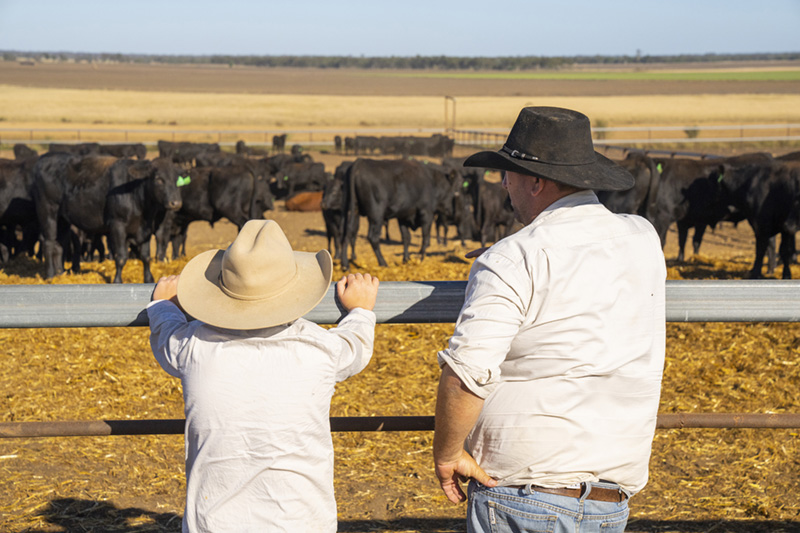
Transitioning to polled cattle is helping AACo improve animal wellbeing while supporting productivity, labour efficiency and safer livestock handling. Image credit: AACo.
Small changes deliver practical benefits
While reducing the need for dehorning was the original goal, the flow-on benefits have been broader than expected.
Mary said fewer horned cattle means less time spent processing animals, reduced stress through the yards, fewer safety risks for both cattle and people, and less weight loss in stock.
At Wylarah, Stacey has observed similar benefits.
“The biggest benefit would obviously be eliminating the need to dehorn,” Stacey said.
She said reducing the number of horned cattle also improves processing efficiency during branding.
“It takes at least two extra labour units for us to do the dehorning process,” she said.
“There’s a lot of efficiencies there that we would gain by having a totally polled herd.”
Health and productivity go hand-in-hand
Alongside the genetics work, the project is also helping strengthen herd health through improved vaccination programs and reproductive disease management.
Stacey said one of the biggest learnings for her team has been seeing the benefits of comprehensive vaccination protocols in terms of herd health.
For example, vaccinating for bovine respiratory disease (BRD) has a clear benefit.
“With the BRD vaccines, we haven’t noticed a lot more of the calves coming in with those pneumonia symptoms at weaning,” Stacey said.
“That’s been a massive uplift for us here at Wylarah.”
She also believes vaccination programs contribute to the strong fertility performance being achieved across the herd.
Benefits for whole industry
While the project is being delivered across AACo properties, both station managers believe the learnings have value well beyond a single business.
For Mary, the message is that even small gains can have a meaningful impact when applied across large herds.
“The production benefits are there,” she said.
“It might only be 1-2% but if it’s across a herd of 10,000 head, it’s enough. It pays for itself.”
Stacey agrees.
“Anyone can start looking at their herd health straight away,” she said.
“That health piece is a really easy win for producers.”
|
Five steps for polled progress 1. Genetic change takes time, but progress is measurable 2. Animal wellbeing and productivity go hand in hand 3. Herd health programs deliver benefits beyond disease prevention 4. Small improvements can deliver significant returns at scale 5. Practical implementation is critical to success Seasonal action plan
|