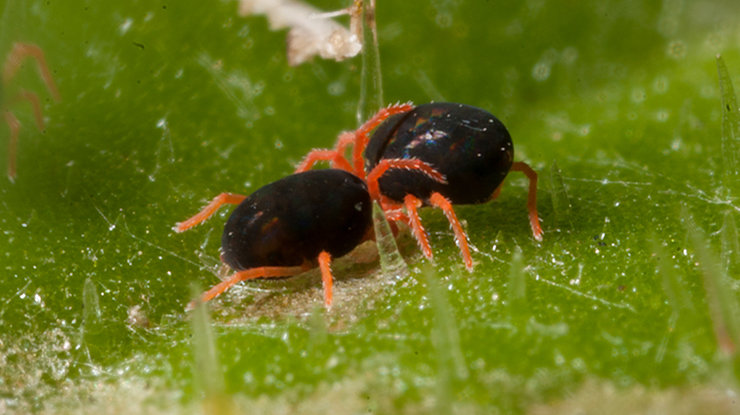
Stop next season's mites before they hatch
It’s time for a green light on tackling redlegged earth mites (RLEM) – with strategic late winter and spring management critical to reduce next season’s mite pressure.
RLEM are one of the most damaging pests facing newly establishing pastures across southern Australia.
As the mites feed on emerging seedlings, they can reduce pasture establishment, limit feed availability and ultimately affect livestock productivity.
With insecticide resistance becoming more widespread, Cesar Australia Extension Scientist Ian Thomas, successful RLEM control is about more than applying an insecticide when mites appear.
"It's not just about spraying – it's about understanding the pest's life cycle and using the right tools so you can make better decisions,” he said.
Timing matters
Waiting until RLEM appear in autumn can mean producers are already behind. The best opportunity to reduce next season's mite pressure comes months earlier, with strategic late winter-spring management that targets mites before they produce the ‘over-summering’ eggs which drive autumn infestations.
RLEM produce several generations between autumn and spring. The last generation before summer produces specialised eggs that survive through the hot, dry summer months before hatching the following autumn in response to cooler temperatures and adequate rainfall.
Unlike the eggs produced earlier in the season, these over-summering eggs remain inside the bodies of the female mites after they die and are highly resistant to heat and desiccation. Once these eggs have been produced, insecticide applications will not affect them, meaning producers have a limited window to reduce the next season's population.
That makes late winter-spring the key opportunity to control mites.
"Once those over-summering eggs have been produced, you've missed the opportunity to reduce next year's numbers,” Ian said.
Smarter decisions
TIMERITE® was originally developed by the CSIRO and Australian Wool Innovation (AWI) to help producers identify the optimum spring spray timing for RLEM control.
The tool has since been updated by Cesar Australia in collaboration with CSIRO, AWI, Grains Research and Development Corporation (GRDC) and MLA to better account for seasonal climate conditions and improve its accuracy.
The tool helps producers identify the best spray date for their location by predicting when mites are likely to begin producing over-summering eggs. Rather than reacting to autumn outbreaks, it supports strategic control that reduces mite pressure before it develops.
A second decision-support tool, the Redlegged Earth Mite Hatch Timing Tool, complements TIMERITE® by estimating when mites are likely to hatch in autumn. This gives producers a clear indication of when to increase paddock monitoring and prepare for control if required.
Used together, they allow producers to plan across seasons and make more informed decisions based on seasonal conditions rather than relying on calendar dates or reacting once damage becomes obvious.
An integrated approach
Ian said producers don't need to rely on a single tactic to manage RLEM. The best results come from combining strategic spraying with regular monitoring, assessing paddock risk, managing broadleaf weeds that favour mite populations and considering crop or pasture rotations where practical.
"Planning ahead gives producers more options," he said.
"The earlier you understand your risk, the more time you have to make decisions that protect feed availability and avoid unnecessary chemical use."
|
Which tool, when?
|