
The Feedlot RAAD Program is a $45 million, five-year investment delivered through a partnership between Meat & Livestock Australia (MLA), the Australian Lot Feeders’ Association (ALFA) and the MLA Donor Company (MDC).
The program supports Australian lot feeders to test technologies, management practices and production systems under commercial conditions. Every RAAD project is designed to generate reliable, practical evidence that helps feedlot businesses and the wider industry make informed adoption and investment decisions.
RAAD combines commercial-scale delivery with sound scientific design. Projects must be capable of showing whether the intervention being tested caused the observed outcome, while remaining practical and relevant to operating Australian feedlots.
The program will deliver targeted funding rounds over five years, aligned to priorities identified by MLA and ALFA.
Program Priorities
Priority 1 – Shade and Shelter (completed)
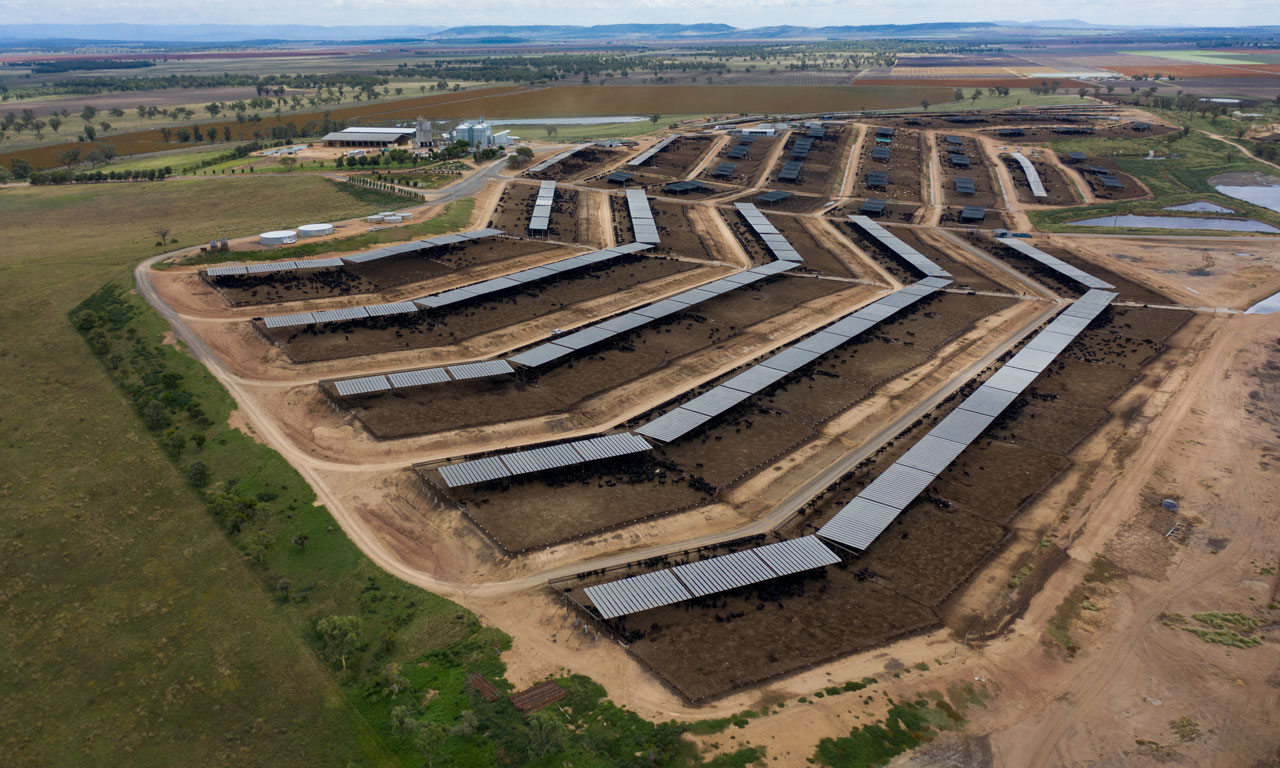
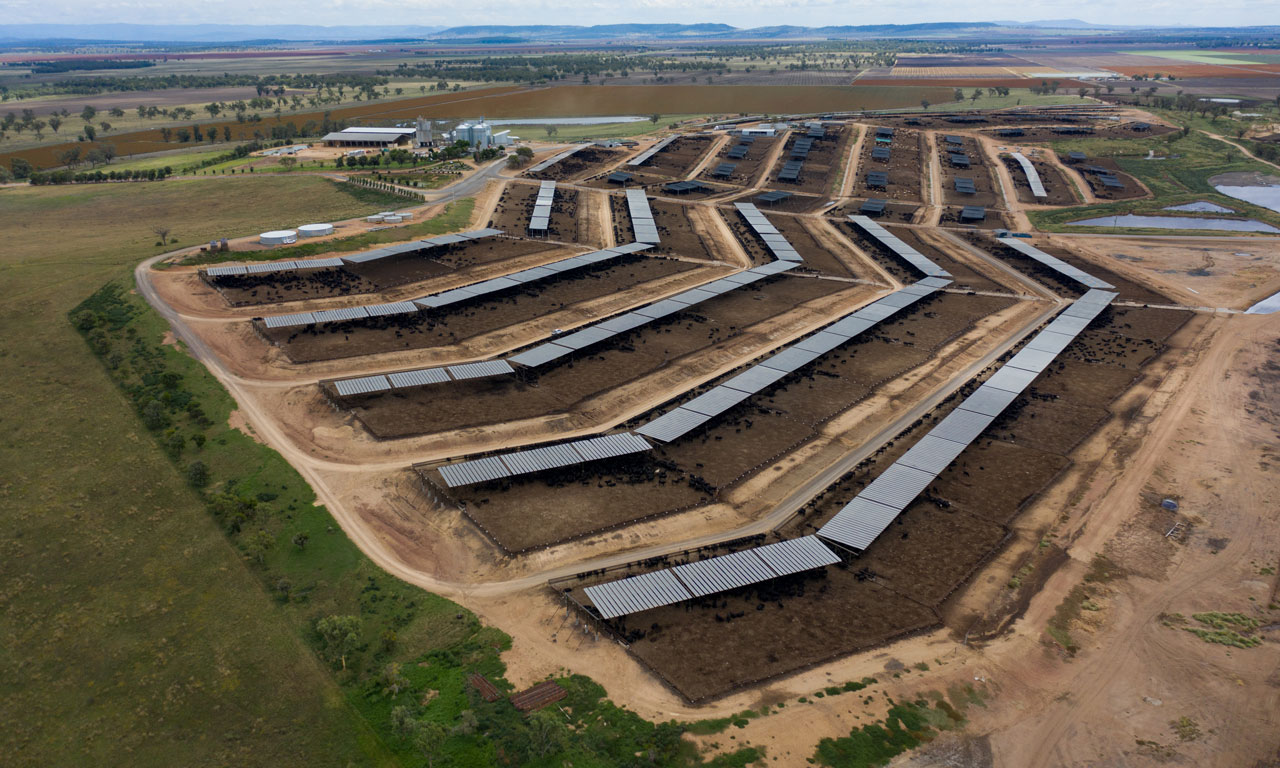
The inaugural funding round focused on shade and shelter systems. Projects are evaluating the effects of these investments on cattle and carcase performance, animal wellbeing, feedlot operations and business outcomes under commercial conditions. Expressions of Interest for this priority have closed, and projects are progressing.
Priority 2 – Animal Productivity
The second funding round will focus on genuine business challenges and opportunities that could improve cattle performance, feed efficiency, operational efficiency and profitability. Relevant ideas may include animal nutrition and feeding strategies, feedmilling and feed-delivery systems, pen management, productivity improvements, precision livestock technologies, sensors, data-driven decision-making tools and other approaches that improve animal performance or feedlot efficiency. Applicants are encouraged to start with a clear question or evidence gap, rather than a specific product.
Priority 3 – Animal Health and Wellbeing
Future projects will investigate technologies, management practices and production systems that improve animal health and wellbeing, disease management and operational outcomes in commercial feedlots.
Priority 4 – Automation
This priority will focus on labour-saving technologies, autonomous systems, digital solutions and smart feedlot management tools that improve efficiency and help address future workforce challenges.
Priority 5 – Sustainability
The final priority will support evaluation of technologies, practices and systems that improve environmental performance, resource efficiency and the long-term sustainability of Australian feedlots.
Funding model
Feedlot RAAD is delivered through the MLA Donor Company (MDC), a wholly owned subsidiary of MLA. It is a co-investment program, not a grant or subsidy, and supports eligible research, data collection, analysis and reporting costs.
• MDC contribution – Up to 50% of eligible project costs.
• Feedlot contribution – The remaining project contribution.
• Access fee – An 8% MDC access fee applies to the feedlot contribution.
• RAAD rate – Up to $2.50 per head per day for cattle included in the approved study.
• Final project value – Determined by the approved study design, eligible cattle and days on feed, research requirements and project scope.
Final funding, eligible costs, commercial terms and milestone-linked payments will be confirmed during project development and contracting.
Example funding calculation:
For an approved project involving 1,000 eligible cattle over 730 days at the maximum rate:
• 1,000 head × 730 days × $2.50 = $1,825,000 total research value.
• Indicative MDC contribution at 50% = $912,500.
• Indicative feedlot contribution at 50% = $912,500, plus an 8% access fee of $73,000.
This is an example only. Approved values will be set out in the final project agreement.
Lead Researcher and Project Team
Each RAAD project requires a Lead Researcher with the skills and capability to manage the study from design through to reporting and industry adoption.
MLA has some capacity to provide a RAAD Research Scientist. Where MLA provides this support, the project’s per head per day funding allocation will be reduced to account for the cost of the researcher. If MLA’s research capacity is fully committed, MLA can connect lot feeders with other potential researcher options. The feedlot remains responsible for engaging the researcher and ensuring the project team can deliver the agreed work.
The Lead Researcher is expected to:
• Manage the study and coordinate the project team.
• Develop the Study Protocol, Statistical Analysis Plan and data management approach.
• Ensure data is accurately collected, quality-checked, securely transferred and appropriately analysed.
• Prepare clear milestone and final reports that meet MLA requirements.
• Lead the project’s adoption and communication activities.
• Present findings and practical implications to the wider feedlot industry.
The wider project team should also include appropriate feedlot personnel, the consulting veterinarian and nutritionist and technical, statistical, economic and communications expertise needed to deliver the approved study.
All RAAD projects must generate robust, transparent and commercially useful evidence under operating feedlot conditions. Detailed requirements will be developed with MLA and the Lead Researcher.
- Clear and testable question – Define the intervention, expected outcomes and industry value.
- Suitable comparison – Use a concurrent control or standard practice, with random allocation where practical.
- Adequate replication – Use sufficient replication and a formally justified sample size.
- Approved study and analysis plans – Complete MLA-approved study, analysis and data plans before commencement.
- High-quality data and records – Maintain accurate records, calibrated equipment and agreed data formats.
- Management of other influences – Account for factors that could affect the results.
- Expertise and independent review – Use appropriate expertise and independent scientific and statistical review.
- Approvals and safeguards – Obtain all required ethics, animal wellbeing, safety, biosecurity and regulatory approvals.
- Economic assessment – Assess costs, benefits and return on investment.
- Reporting and adoption – Complete agreed reporting, surveys, industry-learning and adoption activities.
Project proposals will be prioritised where they demonstrate:
- Alignment with the current RAAD priority – Fits the funding round and supports evidence-based adoption.
- A genuine R&D question – Addresses a clear, testable question or evidence gap.
- Scientific readiness and delivery confidence – Has a credible design and the resources needed for delivery.
- Commercial practicality – Can be delivered safely and reliably in a commercial feedlot.
- Adoption potential – Produces useful, transferable findings with commercial relevance.
- Research capability – Has access to the required scientific, technical, statistical and economic expertise.
- Willingness to share learnings – Commits to agreed reporting, surveys and industry communication.
- Wider industry benefit – Creates value beyond the participating feedlot.
Proposals will undergo an eligibility and completeness check, technical assessment and independent Selection Panel review involving industry expertise, ALFA and MLA. Shortlisted concepts will be refined with MLA and appropriate research support before final approval and contracting. Progression from application does not guarantee funding.
Animal Productivity funding round
The second Feedlot RAAD funding round will focus on Animal Productivity. Lot feeders are encouraged to start with a genuine business challenge, evidence gap or opportunity, rather than a specific product, and explain why the findings would matter to the wider industry.
Relevant ideas may include:
- Animal nutrition and feeding strategies.
- Feedmilling and feed-delivery systems.
- Pen management, productivity and feed-efficiency improvements.
- Precision livestock technologies, sensors and data-driven decision-making.
- Other practices, production systems or innovations that improve animal performance or operational efficiency.
Applicants do not need a complete research protocol at the initial application stage. Strong applications will clearly describe the question, proposed comparison, commercial setting, expected value and available delivery capability. MLA will work with shortlisted applicants to refine the design and confirm appropriate research support.
Next steps and enquiries
The MLA Feedlot Team welcomes early discussions about potential RAAD projects. Lot feeders, technology providers, researchers and industry partners are encouraged to discuss ideas aligned with the current or upcoming priority areas before submitting an application. Future calls for submissions will be announced through MLA and ALFA communication channels.