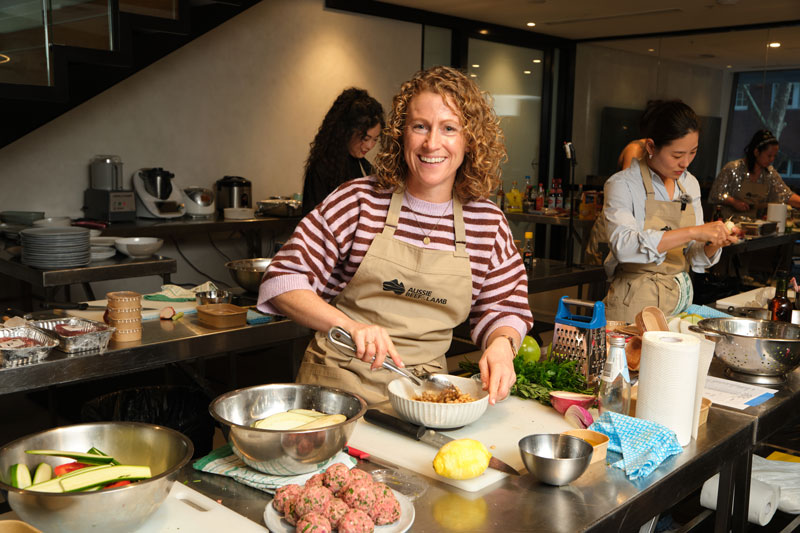
 Dietitian and nutritionist Prue Mynard demonstrates how Australian lamb can be part of a simple, balanced family meal.
Global nutrition leaders gain a fresh perspective on Australian red meat
From cattle country in northern New South Wales to the (nutritionally-balanced) dinner plate, international nutrition leaders got a firsthand look at the people, practices and systems shaping Australia’s red meat industry.
A group of nutritional professionals from Australian and overseas has spent the week exploring the story behind Australian red meat, gaining firsthand insight into the farming systems, sustainability practices and nutritional benefits that underpin the industry’s global reputation.
Hosted by Meat & Livestock Australia (MLA), the tour gave delegates an opportunity to explore Australian beef production systems, learn about sustainability practices and gain insights into the nutritional role of beef and lamb in balanced diets. A consistent theme emerged throughout the week: quality Australian red meat starts long before it reaches consumers.
One of the highlights of the tour was a visit to the Northern Rivers region of New South Wales, where delegates met beef producer and sustainability manager Joe Leven at his family property near Casino.
Joe, who also works for the Casino Food Company, shared insights from both sides of the supply chain. The Casino facility processes about 7,000 head of cattle each week for export markets around the world, while his family operation focuses on Hereford cattle production.
For Joe, sustainability extends beyond environmental outcomes.
“Sustainability means doing the right things for the right reasons. It’s about protecting our industry and ensuring that our children can inherit a viable landscape and a viable agricultural business into the future” Joe said.
Discussions throughout the week focused on the importance of diversity, both in human nutrition and in farming systems. Joe explained how diverse pasture systems contribute to healthier soils, livestock and grazing outcomes.
“Diversity is key. Different plants perform different functions within the landscape, and a diverse diet is important for livestock health. It supports soil health, pasture health and animal health.”
Those messages resonated with visiting delegates, many of whom were seeing Australian production systems up close for the first time.
Canadian dietitian Rowena Leung said the experience reinforced the connection between environmental stewardship and food quality.
“Sustainability is a key consideration. The climate and the wildlife are all part of the reason Australian beef and lamb are so delicious and so highly regarded in Canada,” she said.
Rowena noted Australian beef continues to gain traction with Canadian consumers, driven by its reputation for consistent quality and value.
“Taste is important, but consumers also know what to expect from Australian beef,” she said.
The visit also highlighted the important role nutrition professionals play in helping consumers make informed food choices. Rowena’s work includes one-on-one nutrition counselling for oncology and gastrointestinal patients, as well as weight management support and tertiary education teaching.
Closer to home, Melbourne-based dietitian and nutritionist Prue Mynard showcased how Australian lamb can be part of a simple, balanced family meal. During a cooking demonstration, she prepared Greek-style lamb meatballs with chargrilled vegetables, chickpeas and tzatziki, illustrating the role protein can play alongside fibre-rich vegetables, carbohydrates and healthy fats.
Prue emphasised that balanced eating does not need to be complicated.
“Without planning it, the meal really reflects the traditional healthy plate model,” she said. “You have quality protein, plenty of vegetables, fibre-rich carbohydrates and healthy fats all working together.”
While food and nutrition were central themes throughout the week, Prue said one of her most valuable learnings came from understanding the relationship between soil health and livestock production.
“What really stood out was the importance of soil quality. I hadn’t fully appreciated just how much the health of the soil contributes to raising cattle and lamb sustainably, and ultimately, influences the quality of the final product.”
The tour reinforced the industry’s growing focus on healthy ecosystems, with producers increasingly viewing themselves as stewards of soil, biodiversity and long-term landscape health.
As delegates returned home, they took with them a deeper appreciation of the people, systems and practices behind Australian red meat production. For MLA, the program provided an opportunity to showcase the industry's strengths directly to trusted nutrition voices who influence consumer understanding in key markets around the world.
The experience highlighted the story behind Australian red meat. It is a story built on sustainability, animal care, environmental stewardship and nutrition – a true paddock-to-plate journey that continues to resonate with global audiences.