Three producers, three operations, shared lessons
Across Australia’s red meat industry, rural women are managing livestock, adapting to seasonal conditions and making decisions that shape their businesses every day.
To mark the International Day of Rural Women on 15 October, MLA spoke with three producers from the cattle, sheep and goat industries about the changes that have made a difference, the challenges they are navigating and what they have learned along the way.
The day recognises the contribution rural women make to agriculture, food and livestock production and regional communities around the world.
Behind that contribution are individual stories shaped by different landscapes, livestock enterprises and lived experiences.
While these three producers operate in very different environments, each offers an honest perspective on running a productive business, creating opportunities and preparing for what comes next.
This week, we share their stories.
Georgia backing data and doing things differently
Georgia Whip manages the livestock and land at Leander Station based in Longreach, Queensland. Image supplied.
Leander, Longreach QLD | Goat and cattle producer
Georgia Whip, alongside her husband Toby and their two children Eloise and Daniel, owns and operates Leander Station.
Located 25km north-west of Longreach, the 28,000-acre operation carries approximately 4,500 Rangeland does and 60 Wagyu breeders.
The family also works alongside Toby’s parents across additional properties south of Longreach and north of Aramac.
While Toby operates a mobile auto-electrical and mechanical business in the region, Georgia manages the day-to-day running of Leander.
Her focus is firmly on livestock and the land. From collecting performance data on their goats to taking part in research that could build a better understanding of the animals and their impact on the landscape.
“Toby helps with the big fencing jobs and when we do stock work, but his real passion is automotive,” Georgia said.
“Mine is Leander.”
What's the biggest change or innovation you've implemented in your business over recent years and what impact has it had?
Collecting data on our goats has been one of the biggest changes. We began tagging them a couple of years before it became mandatory and record simple information such as weight, condition score, breed and sex.
This allowed me to undertake a small comparison study of weight gain between castrated and entire male goats. There were mixed opinions about which would perform better, but our data showed the wethers recorded more than double the weight gain of the entire males. We now castrate all male goats that aren’t intended for breeding.
We’ve also fenced squares around our dams, allowing us to trap goats and make mustering easier. This has also helped us manage kangaroo numbers in thick country.
Another important change was starting my Facebook page, Life at Leander. It hasn’t directly generated an income, but it has supported the business in many other ways.
Through the page, we’ve found cattle for agistment on Leander, sold goats and connected with people who have been able to help us when needed. So many positive things have come from it.
What's a challenge you're currently navigating in your operation and how are you approaching it?
Public perceptions of goat meat remain a challenge. When you tell people you’re a goat producer, many say they’ve never tried it or immediately think of curries. If you get a nice goat, you can eat it just like you would any cut of beef or lamb.
A lot of people also still think of goats as pests. They are out of control in some parts of the country, but we want people to understand that, when managed correctly, goats can be beneficial to the landscape.
We’re participating in a study called BioBrowser, which is doing a lot of work to understand the impact goats have on the land. I’m excited to see what comes from that research.
What's one decision you've made that has had the biggest positive impact on your enterprise?
Working hard on relationships within the family business. Communication within the team is a big one.
Learning to back myself has also made a huge difference. Imposter syndrome can feel pretty strong sometimes. I didn’t grow up in the industry, so I often felt as though I was a bit behind. It took time to remind myself that it’s okay, and that I have put in some really hard yards to be where I am today.
Talking with other graziers, I don’t think it matters how long you’ve been in the industry. Everyone probably feels at times as though they don’t quite know what they’re doing.
Working with The University of Queensland on research projects has also been valuable. These studies support the industry, introduce us to new people and help us learn more about our land and animals. There can be drawbacks, but the positives far outweigh the negatives.
What opportunities are you most excited about for your business or the future of the red meat industry?
I’m excited to see where goat meat goes. Will the public perception of it change? Can I help with that? I think I am just excited to be a part of the industry and see where it takes me!
What's one lesson or piece of advice you'd share with other producers?
Just because something has always been done in a certain way doesn’t mean it has to continue that way.
Ask why you’re doing it that way, whether it could be done better and what you could change to make it work more effectively for your operation and your animals.
Read more about Georgia and life at Leander in the Winter 2026 edition of Feedback magazine.
Anna proving the value of dual-purpose Merinos
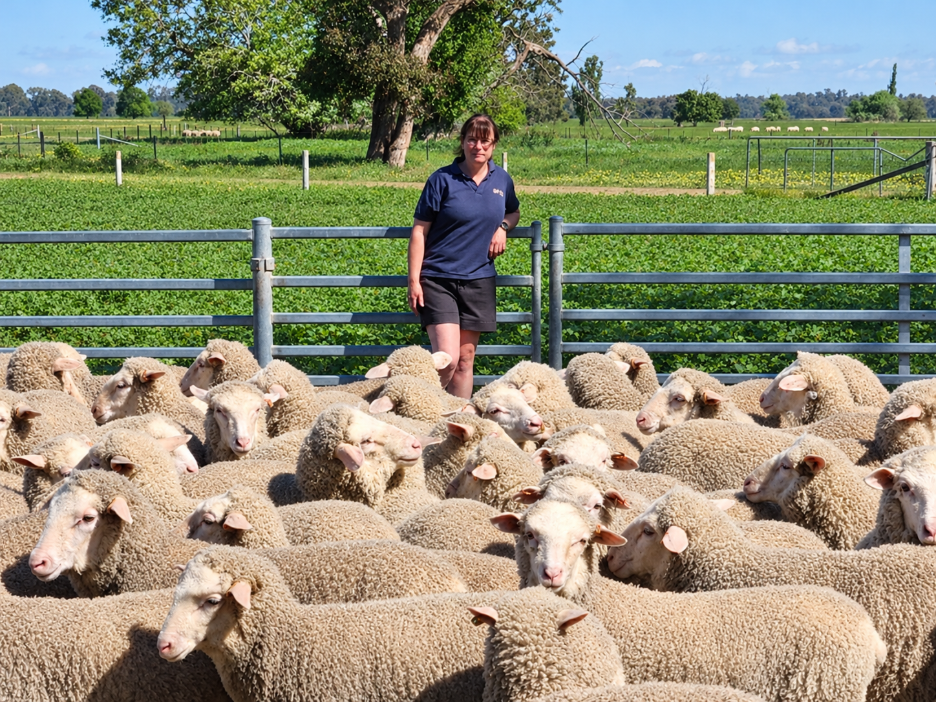
Anna Toland is continuing her family’s 65-year Merino breeding legacy at Toland Poll Merino in Violet Town, Victoria. Image supplied.
Toland Poll Merino, Violet Town, VIC | Sheep producer
Anna Toland is the owner and operator of Toland Poll Merino, based in Violet Town, Victoria.
Established by her father and uncle in Omeo 65 years ago, the stud relocated to Violet Town in 1996 where it remains today.
Anna returned to the farm with her husband Simon Riddle in 2009 and took over full ownership and operation of the business in 2020.
“My role covers just about everything,” Anna said.
“I manage our media, advertising, website, databases and bookkeeping, as well as organising shearing, pregnancy scanning and plenty of other day-to-day operations.
“I’m also heavily involved in the hands-on sheep work, so there is never a shortage of things to do!”
What's the biggest change or innovation you've implemented in your business over recent years and what impact has it had?
One of the biggest changes we’ve made is reducing our stud ewe numbers from 2,000 to 500, while establishing a commercial operation running 2,000 ewes.
This has allowed us to dedicate more time and resources to improving our stud genetics, while also reducing wastage and increasing efficiency.
It gives us the opportunity to see how our genetics perform in a commercial environment and demonstrates the real-world value of the sheep we breed.
What's a challenge you're currently navigating in your operation and how are you approaching it?
One of our biggest challenges is maintaining existing client relationships and attracting new clients while the national Merino flock continues to decline.
Rising input costs and the pressure of balancing expenses against income mean we need to continually assess how we operate.
We’re focused on breeding sheep that deliver genuine value to producers, building strong relationships with our clients and continually improving the productivity and efficiency of our own operation.
What's one decision you've made that has had the biggest positive impact on your enterprise?
Rather than selling our wether lambs for wool production, we’re capitalising on the early-maturing, fast-growing genetics we’ve developed in our sheep and marketing them for meat production.
This allows us to capture greater value from our breeding program and make the most of the dual-purpose potential of our Merinos.
It has been an important step in diversifying our operation and creating more opportunities for the future.
What opportunities are you most excited about for your business or the future of the red meat industry?
I’m most excited about the sheep we’ve been breeding over the past 20 years. Our focus has been on developing productive, dual-purpose Merinos that can deliver both quality wool and valuable meat production.
I believe there are significant opportunities for sheep that can perform across both markets, giving producers greater flexibility and helping them build more resilient and profitable businesses.
It’s exciting to see the progress we’ve made and to continue refining our genetics to meet the changing needs of the industry.
We regularly welcome school groups and university students to the farm for educational visits, lectures and hands-on experience working with sheep. Their enthusiasm, curiosity and passion for agriculture are always encouraging to see.
I believe we need to harness that enthusiasm, nurture their interest and create opportunities to inspire the next generation to become involved in the red meat industry and help shape its future.
What's one lesson or piece of advice you'd share with other producers?
Stick with it. Farming can be tough and there are times when you question whether it’s all worth it.
When things get difficult, pick up the phone, call a mate and have a chat. Sometimes, simply talking things through and getting a different perspective can make all the difference.
It’s also important to take a step back and appreciate what we have. My office certainly beats an office in the city! I feel very fortunate to work on the land, be involved in an industry I’m passionate about and carry on the family business.
There will always be challenges, but it’s important to remember why we do it.
Read more about Anna and Toland Poll Merino in the Autumn 2025 edition of Feedback magazine.
Lauren building change from the ground up
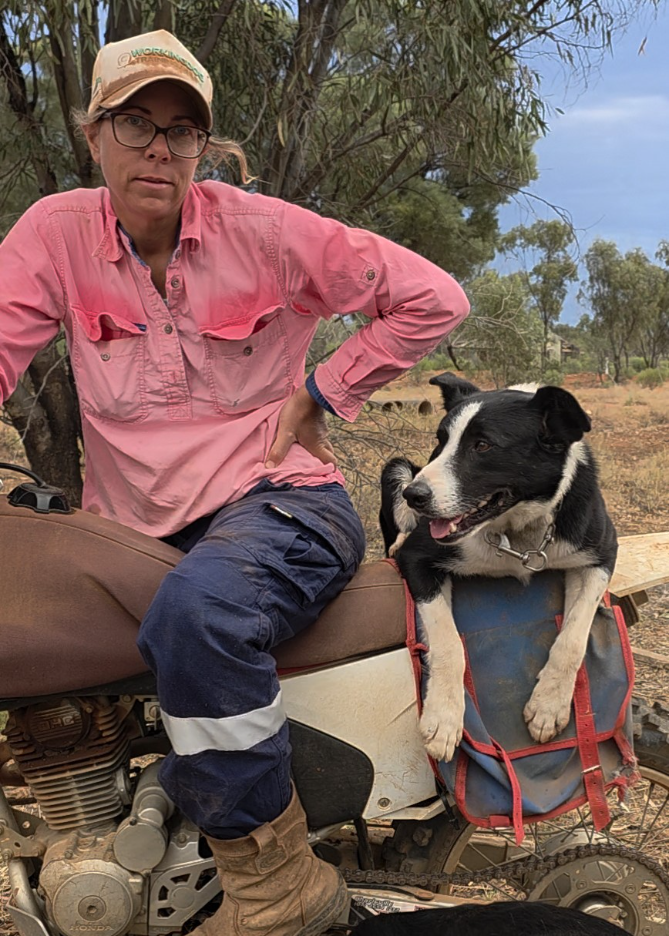
Lauren Beresford runs Farnham Grazing Co with her father at Farnham Plains, north of Eulo in south-west Queensland. Image supplied.
Farnham Plains, Eulo, QLD | Cattle producer
Fifth-generation cattle producer Lauren Beresford owns and operates Farnham Grazing Co with her father, north of Eulo in south-west Queensland.
Based at Farnham Plains on the banks of the Paroo River, the family-run cattle breeding enterprise sits within the state’s Mulga Lands.
“As a partner in the operation, I’m involved in the day-to-day running of the business and the decisions that go along with that,” Lauren said.
“I live on the property with my son.”
What’s the biggest change or innovation you’ve implemented in your business over recent years and what impact has it had?
One of the biggest changes I’ve made is moving from herd-based record-keeping to keeping individual records for each beast.
It means I can track the history of each animal, including which paddocks it has been in and, in particular, when it was last brought through the yards. Having that information at our fingertips gives us a much better picture of what’s happening across the operation.
It’s certainly not groundbreaking, but for us it’s a big step forward in keeping better records and improving the way we manage the business.
What's a challenge you're currently navigating in your operation and how are you approaching it?
As with so many other producers, one of our biggest operational challenges is working with difficult seasonal conditions.
We operate in a low-rainfall, highly variable environment, so maintaining groundcover, improving soil function and making the most of every rainfall event are really important. The more we can improve the way our soils function and their ability to capture and use rainfall, the better placed we are to build productivity and resilience into our grazing enterprise over the long term.
I think there are a lot of opportunities to improve the productive value of our soils through more intensive and adaptive rotational grazing. In a low-rainfall region such as south-west Queensland, it’s about managing grazing pressure, allowing the country adequate recovery time and maintaining groundcover to protect the soil and help it make the most of the rainfall we receive.
By being more flexible with our grazing management and adapting to seasonal conditions, we can better manage how stock uses the landscape, encourage more even utilisation and give pastures the opportunity to recover.
It’s not a one-size-fits-all approach, particularly in our environment, but I see real potential in using adaptive grazing to improve landscape function, build resilience and support the long-term productivity of our enterprise. We are currently in the process of adapting this kind of rotational system.
What’s one decision you’ve made that has had the biggest positive impact on your enterprise?
I can’t really point to one decision that has had the biggest impact. It’s been a combination of things we’ve worked on over time.
We continue to adjust our grazing management to better suit seasonal conditions, prioritise the health of the landscape, invest in better record-keeping and infrastructure, and continue to invest in learning and improving our knowledge.
I think it’s the way all these things work together that’s making the biggest difference. Each improvement builds on the others and helps us make better decisions, improve the way we manage the operation and build resilience for the future.
What opportunities are you most excited about for your business or the future of the red meat industry?
I’m really excited about the future of our grazing enterprise. I see so much potential in our business and on our property, particularly through continuing to build a healthier, more functional and resilient landscape.
I’m looking forward to finding ways to improve productivity and profitability through better infrastructure, grazing management and technology.
I think there are some great opportunities ahead to keep learning, adapting and improving how we do things, while making sure we’re looking after the country and building a sustainable business for future generations.
What’s one lesson or piece of advice you’d share with other producers?
I think one of the biggest lessons is to never stop learning and be willing to challenge the way you’ve always done things.
Every operation is different and what works for one producer might not work for another. Particularly in a region like ours where seasonal conditions can be so variable.
There is no right or wrong. I think it’s important to understand your own country, keep an open mind, learn from others and be prepared to adapt as conditions change.
You don’t have to change everything overnight. Even small improvements over time can make a real difference to the long-term health of your land and the productivity of your business.
Read more about Lauren and her Farnham Grazing Co enterprise in the Autumn 2026 edition of Feedback magazine.
Different paths, common ground
Georgia, Anna and Lauren work across different regions and livestock enterprises, but common threads run through their stories.
Each is looking closely at what works for her business, responding to the conditions around her and making considered changes over time.
Their experiences show that progress doesn’t always require a major investment or a complete change in direction. Sometimes, it begins with questioning an established practice, making better use of information or having the confidence to try a different approach.
International Day of Rural Women offers an opportunity to recognise these contributions and hear directly from the women helping share Australia’s red meat industry every day.