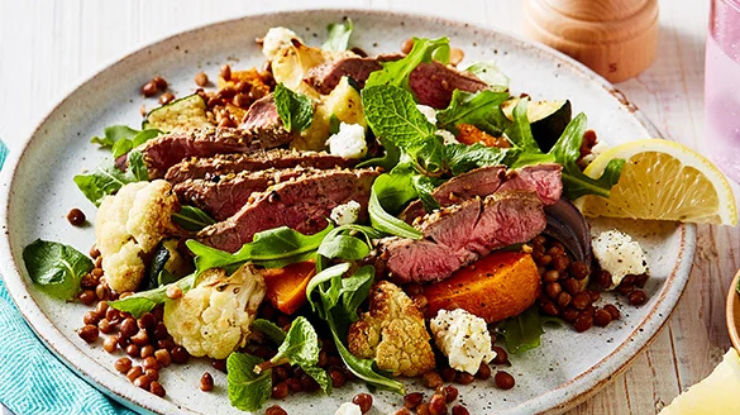
 Warm lamb salad. Source: Australian Lamb
Wellness trends open doors for red meat producers
As the global wellness economy continues its rapid expansion, the red meat industry is positioned to play a meaningful role in conversations about health, nutrition and longevity.
Monique Cashion, Meat & Livestock Australia’s (MLA) Group Manager – Food and Nutrition, says changing consumer priorities are creating significant opportunities for Australian red meat producers, particularly as people place greater value on their health and wellbeing.
The global wellness economy is forecast to reach an estimated US$9 trillion annually by 2028, growing at 7.3% each year. Against this backdrop, consumers are making more deliberate choices about where they invest their time, money and attention. Despite ongoing cost-of-living pressures, health and wellness have emerged as a top priority for many people around the world.
“When it comes to health and wellness, it means many different things to different people. It may be physical health, mental health, or both, but it’s clearly top of mind,” Monique said.
Fresh, healthy and personalised
One of the strongest trends emerging globally is a shift towards fresh, healthy foods and home-prepared meals. Consumers are increasingly looking for convenient ways to create nutritious meals while maintaining control over what they eat.
For the red meat industry, this trend aligns well with growing interest in whole foods and high-quality sources of protein. According to Monique, people are also becoming more proactive in looking after their health, with fitness, longevity and healthy ageing all gaining greater attention.
As populations age, maintaining muscle mass and overall physical function becomes increasingly important. Protein intake plays a critical role in supporting these outcomes, positioning red meat as a valuable component of healthy eating patterns.
At the same time, weight management remains a major health priority globally. Consumers are seeking sustainable approaches that support both weight control and overall wellbeing, creating opportunities for foods that deliver substantial nutritional value.
The GLP-1 opportunity
One of the most significant developments in nutrition and health over the past two years has been the rapid growth in the use of GLP-1 weight-loss medications.
While these medications typically reduce appetite and overall food consumption, Monique believes they may create new opportunities for nutrient-dense foods such as red meat.
“When people go on these medications, they often eat less,” she explained.
“They’re looking for ways to get more nutrients into their body without eating large amounts of food. That’s where nutrient density becomes incredibly important.”
Red meat provides high-quality protein alongside essential nutrients such as iron, zinc and vitamin B12. For consumers eating smaller meals, nutrient-dense foods can help maximise nutritional intake within reduced calorie consumption.
There can be challenges in the early stages of treatment. Some users experience nausea or reduced interest in certain foods, including red meat. However, emerging evidence suggests many consumers gradually reintroduce red meat into their diets as they adapt to the medication and recognise the nutritional benefits it provides.
The role of protein becomes even more important when considering muscle preservation. Weight loss associated with GLP-1 medications can include loss of lean muscle mass, making adequate protein intake essential for maintaining strength and function.
“There’s a huge opportunity. People need nutrients and they need to maintain muscle, and red meat can help deliver both,” Monique said.
Australian Dietary Guidelines under review
A key issue facing the food and nutrition sector is the ongoing review of Australia’s Dietary Guidelines, which has not had a major update since 2013.
While Monique doesn’t anticipate major changes to the core nutritional recommendations, she notes that sustainability considerations are increasingly being woven into dietary policy discussions globally.
“The nutrition science around red meat hasn’t changed,” she said.
“If anything, our understanding of high-quality protein and bioavailable nutrients such as iron and zinc has strengthened.”
This is particularly important for groups that are at higher risk of nutrient deficiencies, including many Australian women. Red meat remains one of the most effective dietary sources of iron and zinc – two nutrients that can be difficult to obtain in adequate amounts from some other foods.
The integration of sustainability into dietary guidelines has generated significant debate internationally. However, Monique believes Australia’s livestock industry is well positioned to contribute positively to these discussions through ongoing improvements in environmental stewardship, productivity and waste reduction.
She also notes that broader sustainability conversations are increasingly focused on reducing food waste and limiting consumption of highly processed foods, rather than targeting individual food categories alone.
Bringing global nutrition experts to Australia
In July, MLA will host a delegation of approximately 13 international nutrition experts in Australia as part of an initiative designed to deepen understanding of Australian red meat production and nutrition science.
The delegation will visit Sydney and regional NSW, providing participants with the opportunity to see first-hand how Australian red meat is produced and to engage directly with industry experts.
“It’s a chance for people to get curious and ask questions,” Monique said.
“They’re very interested in understanding how red meat is produced in Australia and what role it can play in healthy diets.”
The group includes dietitians, nutrition professionals, healthcare practitioners and influential content creators. Many work in hospitals, food service, catering and clinical settings, while others are shaping public conversations about nutrition online.
For MLA, the visit represents an opportunity to build confidence in evidence-based communication about red meat and nutrition. Discussions will cover everything from the science of nutrient density through to practical applications, such as meal preparation and cooking techniques.
Leading Australian dietitian and nutrition advocate Dr Joanna McMillan will also contribute to the program. Having worked closely with MLA for more than a decade, Dr McMillan brings extensive knowledge of both nutrition science and Australian red meat production systems.
Building trust through nutrition
For Monique, who joined MLA after a career spanning more than 25 years in nutrition and consumer-focused roles, the goal is simple: help people make informed decisions based on sound science.
In a world where nutrition advice comes from an increasing number of sources, evidence-based communication has never been more important.
“There are lots of people talking about nutrition online. Our role is to ensure conversations are accurate and evidence-based,” she said.
As health and wellness become increasingly important priorities for consumers worldwide, the red meat industry has an opportunity to be part of that conversation – demonstrating not only the nutritional value of red meat, but also its role in supporting healthy, balanced and sustainable diets for the future.