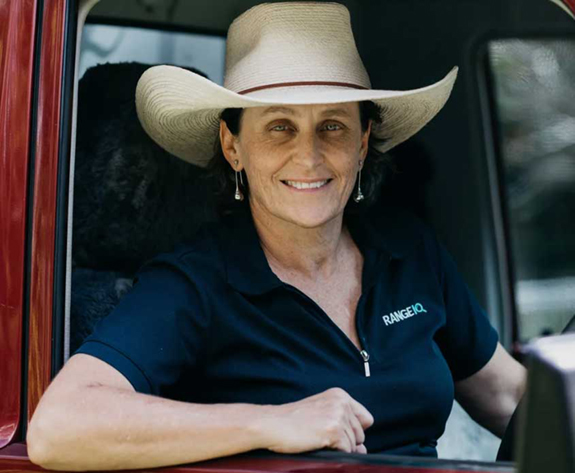
 Dionne Walsh, Range IQ.
Wet to dry: feedbase management and budgeting for the long haul
When it comes to understanding and managing the constraints impacting pastures across northern Australia, grazing land management consultant Dionne Walsh said the challenge is rarely one-dimensional.
“For northern beef producers, there is a complex balance between immediate feed demands and the longer-term health of their pastures that they’re continuously working to navigate,” she said.
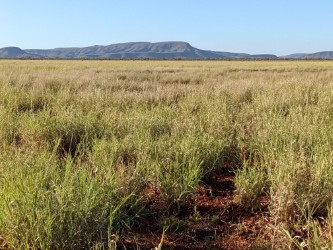
“In the short term, many regions that have experienced high levels of rainfall during the wet season are dealing with a large bulk of feed that may lack the nutritional value their cattle require.
“That means there’s an immediate need for those producers to invest in supplementation.
“At the same time, many producers are also facing the longer-term challenge of declining land condition, which can reduce productivity further and drive up input costs year-on-year if not addressed.”
Considered one of the biggest threats to the future prosperity of the northern beef industry, Dionne said while it’s critical to respond to current on-ground conditions, improving grazing land management over the long term will deliver the greatest return on investment.
Here, she shares practical insights on how producers can better manage their feedbase year-round – and steadily improve it into the future.
Setting paddocks up for recovery
Dionne said that while grazing land recovery can be actioned at any time of year, winter is a key period for mapping out which paddocks will be rested during the upcoming growing season.
“If you want to make the most of your summer growing season, it’s a good idea to have planned which paddocks you’ll spell,” she said.
"In your first year in particular, you’re unlikely to be able to spell all the paddocks you want to, which is why I recommend setting a clear objective that helps prioritise paddocks.
“This might be improving groundcover, increasing key pasture species, or addressing areas most impacted by grazing pressure.
“However, it’s important to consider your stock numbers and current available pastures, as they will impact how many and which paddocks you are able to rest.
“I like to think of a wet season spelling program as one that’s rolled out gradually over several years, as it ensures herd productivity and cashflow while still delivering meaningful land condition improvements where they’re needed most.”
When supported by favourable seasonal conditions, Dionne said that consistent wet season spelling can deliver significant improvements over time.
“What we’re hoping to achieve in most cases is an increase in groundcover, as well as an increase in what we call our 3P species – palatable, perennial, productive,” she said.
“Over time, we’re also aiming for a better mix of species that ultimately help achieve a resilient, more nutritious and productive feedbase.”
For producers in regions where fire is a suitable management tool, there may also be opportunities to combine strategies.
“If a paddock needs to be burnt, you can stack that with a wet season spell,” Dionne said.
“You can burn at the start of the wet season and then lock the paddock up, so you’re doubling up the benefit, which delivers great bang for buck whilst it is out of production.”
However, she noted this approach requires careful planning, including maintaining adequate fuel loads and potentially removing stock earlier in the dry season to set paddocks up for a successful burn.
What your animals are eating vs. what they need to be eating
Once paddocks come back into rotation, the focus shifts from recovery to utilisation – and making sure livestock are getting the nutrition they need from what’s available.
To understand where your pasture nutrition may be lacking – and help you plan and budget for any supplementation required – Dionne said tools like faecal NIRS testing are incredibly valuable.
“Faecal testing can be done at any time of the year – but doing it multiple times throughout the year will give you a clearer picture of how the nutritional profile of your key paddocks performs across various seasons,” she said.
“This data can help inform supplementation decisions, identify when pastures are struggling to meet nutritional requirements and guide decisions around whether introducing legumes could improve overall diet quality.”
Just as important as understanding herd nutritional needs, Dionne said producers should also be spending time in the paddock observing grazing behaviours.
“One of the common mistakes I see many northern producers making is relying on visual estimates of feed volume rather than assessing which pasture species are actually being grazed and which are being left behind,” she said.
“A lot of people overestimate how much palatable feed is in the grazable area of their paddock – which is often what leads to paddocks being grazed harder than they should be, and long-term decline in land condition and livestock productivity.”
According to Dionne, only around 30% of total pasture biomass is typically available for grazing, and livestock intake can increase by 20–30% when supplementation is used.
“This is why I recommend producers utilise their time in the paddock to take note of what their herd is consuming.
“If they’ve moved onto those less palatable species, the paddock is likely past its prime and a stock rotation is in order.”
Making the most of the tools and resources available
To further build understanding and confidence around your grazing land management decision-making, Dionne encourages producers to invest in skill development.
“EDGEnetwork courses, like Grazing Land Management (GLM) EDGE and Grazing Fundamentals EDGE, are both great starting points for those wanting to begin improving their land and pasture condition,” she said.
“Additional tools, such as the Australian Feedbase Monitor, FORAGE or MYFORAGE (Queensland), the Northern Territory Pastoral Feed Outlook, and Pastoral Remote Sensing (WA), can also help in providing a first-pass estimate of the feed supply.”
However, Dionne stressed that online tools should always be followed up with paddock-level checks.
“You still need to go out into the paddocks and check how accurate those estimates are,” she said.
“That might involve cutting quadrats, using visual assessments with photo standards, estimating stock days per hectare, or using methods such as Dick Richardson’s STAC approach.
“Whatever you do, make sure you’re starting at a manageable level – don’t bite off more than you can chew.
“By steadily building capability over the years – and making the most of the tools, training and advisory support available – you can develop a strong grazing land management strategy that supports both livestock performance and long-term pasture resilience wet to dry.”