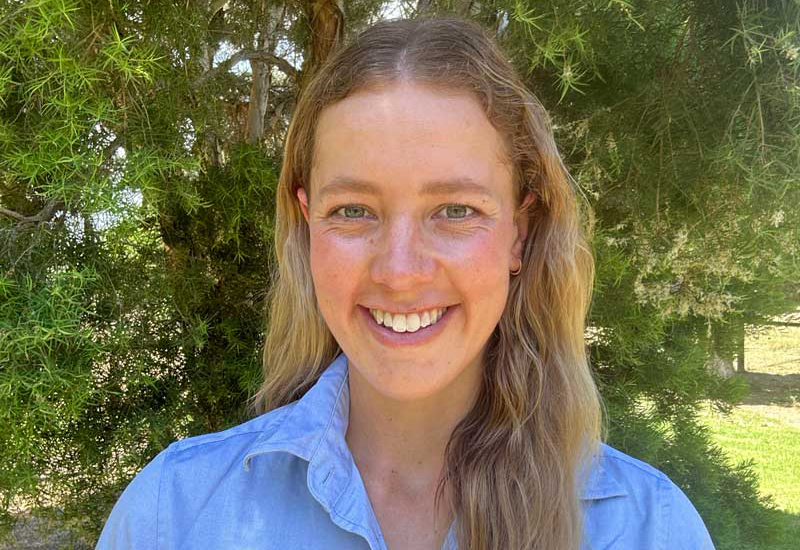
 Holbrook Landcare Network's Steph Cowley encourages producers to establish a regular soil testing program to support productive, resilient grazing systems.
Two fundamentals to get more from every hectare
Southern producers looking to maximise pasture performance and make more informed grazing decisions should start with two fundamentals: soil testing and feed budgeting.
According to Holbrook Landcare Network's Steph Cowley, both practices provide the information needed to identify production constraints, improve feedbase management and support profitability.
Start with the soil
Soil testing provides the foundation for understanding whether soil fertility is limiting pasture growth and carrying capacity.
"If producers have a production target they're trying to achieve and soil fertility is the limiting factor, soil testing is the best way to identify that."
Poor soil fertility can reduce pasture production, lower carrying capacity and increase weed pressure, all of which affect livestock performance and profitability.
While there is no one-size-fits-all approach, Steph recommends establishing baseline soil data and then developing a testing program that suits the business.
"As a general rule, testing the whole farm every three to five years, or testing parts of the farm annually or every second year, can be a realistic approach," she said.
When collecting samples, consistency is key. Producers should aim to sample representative areas of paddocks and, where possible, return to the same locations over time to track changes and identify trends.
For southern grazing systems, Steph said pH should be the first priority, followed by key nutrients including phosphorus, potassium and sulphur.
Build a feed budget
While soil testing allows limitations to be identified and addressed in order to grow more feed, feed budgeting ensures it is utilised efficiently.
Steph said feed budgeting provides a clear picture of current pasture availability and future feed requirements, turning information into practical management decisions.
"It helps identify where you are now, where you need to be and how you're going to get there," she said.
A feed budget can help determine whether supplementary feeding will be required, whether stocking rates need adjusting or whether additional grazing opportunities exist. Importantly, it gives producers time to respond before feed shortages become critical.
How far ahead producers plan will depend on their experience and confidence with feed budgeting. Those developing their skills may benefit from reviewing feed budgets monthly, while more experienced operators often focus on key decision points throughout the year, particularly ahead of spring and autumn pasture growth.
Avoid relying on rules of thumb
One of the most common mistakes Steph sees is producers relying too heavily on assumptions rather than current data.
"Manage between your four fences, not around the district," she said.
That might mean challenging practices that have simply become routine, such as applying fertiliser at the same time every year, assuming stocking rates are appropriate because they worked in previous seasons, or basing decisions on what neighbouring producers are doing.
While rules of thumb can provide a useful starting point, regularly updating soil test results, pasture measurements and livestock demand allows producers to make decisions based on conditions within their own enterprise.
Plan for variability
Climate variability remains one of the biggest challenges facing grazing businesses, but Steph said producers can improve decision-making by using available information and focusing on what they can control.
"Go in as informed as you can," she said.
Tools such as Farming Forecaster allow producers to compare current conditions with previous seasons using pasture growth and soil moisture information. Historical records can also help identify how the business performed under similar seasonal conditions.
While no tool can remove uncertainty, regularly reviewing feed budgets and monitoring seasonal conditions can help producers identify risks earlier and make more confident management decisions.
Seasonal action plan
1. Establish a soil testing program
- Collect baseline soil data if you haven't tested recently.
- Work with an agronomist or advisor to identify priority paddocks and nutrients.
2. Strengthen feed budgeting skills
- Review feed supply and livestock demand regularly.
- Complete a feed budgeting course or use available calculators and decision-support tools.
3. Reflect and plan
- Review the past season and identify what worked well and what could improve.
- Use those insights to set priorities and management goals for the coming year.