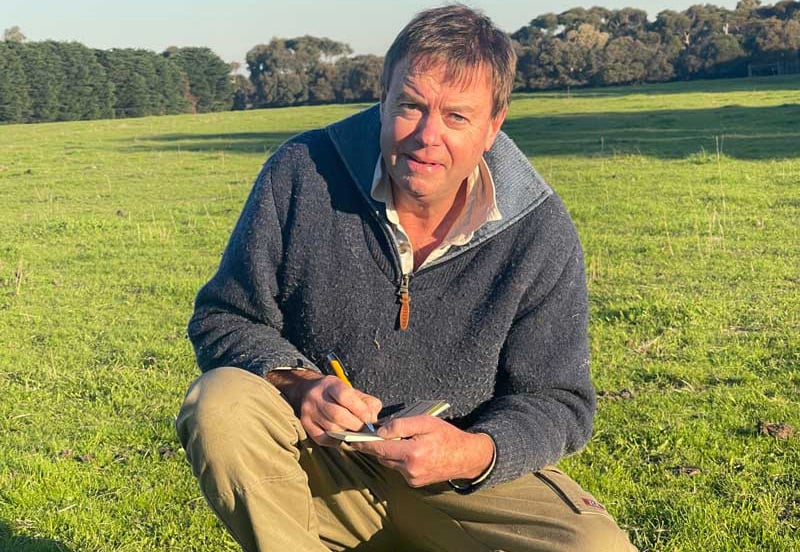
 Cam Nicholson says regularly assessing pasture composition can help producers identify limiting factors and prioritise pasture improvement efforts.
Could low legume content be limiting your profit?
Legumes have long been recognised as one of the most valuable components of productive southern pastures, but according to pasture consultant Cam Nicholson, many producers may be unintentionally reducing legume content through management practices designed to improve overall pasture production.
Cam said legumes play a much bigger role than simply improving feed quality.
"If it's a long-term perennial pasture, your ideal mix has to have a significant legume component," he said.
While legumes are well known for supporting animal performance, they also provide nitrogen that helps drive perennial grass growth and persistence.
"Without a good nitrogen base, we're limiting the production and survival of our grasses," Cam said.
Legumes also help fill gaps within a pasture, reducing opportunities for weeds to establish and compete.
Focus on the fundamentals
Before investing in new pasture species or renovation programs, Cam said producers should first identify the factors limiting pasture performance.
"The number one thing is usually soil fertility," he said.
Many producers either underinvest in soil fertility or invest in the wrong area. For example, applying lime when phosphorus is limiting production, or investing heavily in phosphorus when another nutrient is constraining growth.
Grazing management is the second major factor influencing pasture productivity and persistence.
While legumes can improve animal performance and provide valuable nitrogen for companion grasses, producers are unlikely to realise those benefits unless the plants are supported by appropriate fertility and management.
Legumes require the right soil conditions to thrive, particularly adequate phosphorus levels, and their contribution to the pasture system will decline if those requirements are not met.
"These species have been bred to be fed," Cam said.
"If you don't feed them well, don't expect them to perform."
Cam said producers can sometimes focus too heavily on controlling weeds when addressing issues with soil fertility or grazing management would deliver greater benefits.
"Get some of these fundamentals right first and the weeds become less of an issue," he said.
Finding the balance between grass and legume content
Rotational grazing has helped many southern producers improve groundcover and pasture production, but Cam said it can also favour grasses at the expense of legumes.
"We've embraced rotational grazing, which has favoured the grasses considerably," he said.
As a result, producers need to monitor legume content and occasionally adjust management to encourage seed set and rebuild seed reserves.
"If your legume content is getting low, what can we do to flip that over and bring it back?" Cam said.
The goal is not choosing between grasses and legumes, but maintaining a balance that allows both to contribute to pasture productivity.
"Make sure you're aware of what legumes like and how you can design a system that allows both the grasses and the legumes to be favoured when they need to be," he said.
Choose species that can handle variability
For southern grazing systems, Cam said annual legumes such as sub-clover remain the backbone of productive pasture mixes.
As seasonal conditions become more variable, he said species selection should focus on persistence and the ability to recover from challenging seasons.
Hard-seeded annual legumes such as sub-clover and Balansa clover can build a seed reserve in the soil, helping maintain legume content even if seasonal conditions limit seed production in a particular year.
"It's about having enough seed in the ground to come back next year," Cam said.
Producers should also select varieties with flowering times and growing seasons suited to their local environment.