Environmental sustainability
Overview
MLA’s investments in environmental sustainability research, development and adoption (RD&A) aim to provide practical solutions for industry to enhance environmental outcomes alongside red meat production.
Ongoing RD&A ensures that all sectors of the value chain are able to demonstrate their sustainability credentials and respond to changing regulatory frameworks, market requirements and community expectations around the sustainability of their products.
Environmental sustainability RD&A covers soil and landscape health, water, greenhouse gas emissions, biodiversity, natural capital, climate variability and waste.
Core activities
Current and recent R&D explores the following areas:
- emissions reduction and carbon storage in the grassfed, grain fed and processing sectors
- soil health and fertility, ground cover, grazing management and landscape function
- opportunities for agro-forestry in grazing systems
- development of the Environmental Credentials platform
- exploring the relationship between natural capital and farm productivity
- understanding climate variability and ways to improve the resilience of red meat operations
- delivering climate forecast products and extension services
- improving shelf life, reducing waste and finding opportunities to convert wastes into value-added products
- sustainable packaging solutions.
Benefits to industry
- improved environmental sustainability that maintains or improves long-term productivity contributes to the industry’s profitability and social licence to operate
- protecting natural resources ensures the industry safeguards the environment and its biodiversity for future generations
- being able to demonstrate the sustainability credentials of Australian red meat may support market access and emerging market opportunities in the future
- finding solutions for waste products can help the industry extract extra value from its products.
Current projects
Organisation:
Commonwealth Scientific and Industrial Research Organisation (CSIRO)
Summary:
To reduce enteric methane emissions from intensive and extensive grazing systems, DSM developed a methane mitigation compound, 3-nitooxypropanol (3-NOP). Delivering 3-NOP to cattle from birth alters the rumen microbial profile to reduce enteric methane emissions, this reduction occurs for a long period after treatment has stopped. The efficacy of this compound has been extensively evaluated on intensively raised calves, while further evaluation is required on extensive cattle systems, primarily in northern Australia and NSW. If research deems 3-NOP a viable supplement for early life cattle, PGS/PDS packages and adoption activities will be developed with consultation from the MLA adoption team.
Organisation:
Central Queensland University
Summary:
DIT AgTech has commercialised a remotely managed direct water injection technology (DWIT) that delivers soluble supplements to ruminants in extensive grazing systems. DWIT utilises existing water infrastructure (bores, tanks, water troughs) to supply vast areas with methane suppressing compounds. The methane suppressing compounds delivered by DWIT are required to be soluble, stable and palatable in water. Experimentation is required on the effects of dry matter intake, amount of water imbibed with soluble compounds and other adverse impacts on animal production. If this research supports the carbon neutral position by 2030 (MLA’s ‘CN30’), it has the potential to reach a large proportion of grazing ruminant animals where other methane mitigating technologies are not viable.
Organisation:
The University of Sydney
Summary:
This project seeks to design an anti-methanogenic lick block to reduce methane emissions and increase herd production in grazing systems. The dosage of different lick blocks will be evaluated in metabolism trials that measure individual performance, methane emissions, feed and block intake with electronic feeders (GreenFeed). This technology is designed to accommodate growing animals (backgrounding and finishing) and breeding cows.
Organisation:
Western Sydney University
Summary:
Different legumes and herb species respond to extreme climate conditions in a variety of ways, altering the productivity, phenology and nutritional chemistry. Research into plant responses from predicted climate changes will allow producers to gain the knowledge for informed management decisions to achieve economic viability and carbon neutrality. Some of the plant species investigated in this project are, desmanthus, sainfoin, sulla and lotus as they have affiliations with reduced ruminant methane emissions. This project will optimise production-led environmental outcomes, including resilient and persistent pastures, climate-risk management and making progress towards being carbon neutral by 2030 (MLA’s ‘CN30’).
Organisation:
The University of Queensland
Summary:
Examination of rumen microbiome profiles is an existing method to determine low and high methane producing cattle. Developing a Low Emission Saliva Test for Ruminants (LESTR) will utilise this knowledge through a saliva test which can be done on farm by producers to rank individual animals against their methane emission rates. The use of a LESTR will fit into current production systems at the time herd selection decisions are made, it is expected to have a 10-15% reduction in enteric methane emission intensity per enterprise. This project will be conducted in the extensive Northern beef production system on both pregnant and non-pregnant cows.
Organisation:
The University of New England
Summary:
Enteric methane emission levels are a hereditary trait within sheep, the development of a mobile field test to measure methane emissions from sheep will be designed to maximise breeding selection efficiency. This project will work to quantify the economic value of selecting low emission sheep along with develop a strategy for breeders to genetically improve their sheep for low emission traits. Implementing this method aims to reduce methane emissions by 1% per year, along with improving production efficiency and product quality.
Organisation:
The University of New England
Summary:
Estimated Breeding Values (EBVs) are the current tool used for breeding selection. The creation of a new EBV for methane production will help producers to select for reduced greenhouse gas emissions from accurate estimations of genetic variation and heritability of emission traits along with an increase to on farm productivity and efficiency. A pipeline will be created to include methane production into BREEDPLAN to assist with genetic improvement. The data collected will be from a mixture of feedlot and pasture-based systems from the Southern MultiBreed and Australian Angus Reference Population projects.
Organisation:
The crown in right of the state of New South Wales acting through the Department of Primary Industries a division of the Department of Regional NSW (NSW DPI)
Summary:
Developing highly productive pasture mixes with anti-methanogenic compounds in vast pastoral areas is a method to reduce the amount of enteric methane production. Species that present tannins and/or saponins will be investigated in this project, including tendera lotus, hedysarium, sainfoin, desmanthus, biserrula and chicory. These species will be tested for their compatibility with companion species and their persistence will be further improved in mixed farming systems. Region specific guidelines on pasture establishment and grazing management will be made to suit areas with differing rainfall in north and south NSW.
Organisation:
The University of Queensland
Summary:
The incorporation of bioactive compounds and biopolymers is a developing method to provide animals with methane mitigating substances. The biopolymer bolus composites when ingested will deteriorate through surface erosion causing a controlled daily dosage of the bioactive agents, such as 3-nitooxypropanol (3-NOP). The long-acting nature of this technology will allow it to be used by producers in both intensive and extensive systems. Using this method to treat young calves is a method to manipulate the establishment of the ruminal microbiome profile to produce less enteric methane from an early stage. This technology is expected to reduce methane emissions intensity per enterprise by >30%; however, this statistic is limited by the size of the bolus(s).
Organisation:
University of Technology Sydney
Summary:
Brewer’s Spent Grain (BSG) is a by-product from breweries that is being outsourced to the Australian agricultural industry as ruminant feed. By combining BSG with nutrient-rich microalgae, creates a possible pathway to reduce enteric methane emissions. Different concentrations of the BSG and microalgae supplement will be evaluated using the rumen simulation technique (Rusitec), feeding trials with sheep and a metabolic study with steers. The results from the metabolic study will be used to determine the effects on microbial growth and fermentation, methane production and nutrient utilization within rumens. The results from the feeding trials with sheep will be used to determine animal performance, carcass characteristics, meat quality and fatty acid profiles.
Organisation:
University of Tasmania
Summary:
To enable the research, development and adoption of multiple greenhouse gas (GHG) emissions mitigation interventions for economic, environmental and social benefits of livestock grazing systems. The project will quantify the benefits of biodiversity, natural capital and environmental stewardship for enhancing grazing land management as well as quantify the economic, environmental and social effects of multiple GHG emissions whole farm abatement options. Producers will be equipped to understand regionally-specific GHG emissions mitigation practices to enable them to derive revenue from environmental services and/or natural capital markets. Increased industry use of data and evidence to inform production led outcomes will assist the red meat industry in progressing towards the CN30 target.
Organisation:
Agrimix / QUT
Summary:
Current methods to measure soil carbon in agriculture are costly and, in many cases, inaccurate due to spatial variability of farming landscapes. Agrimix, in collaboration with Australia’s leading soil and greenhouse gas institution, QUT, are developing a measure-model-verify (MMV) technology that enables lower cost and higher accuracy soil carbon measurement. The technology being trialled are eddy flux towers; an in-field device that can estimate changes in soil carbon by measuring carbon dioxide 'respired' from the soil.
Queensland University of Technology’s Program Leader, Professor Peter Grace, said even a small annual increase in topsoil carbon over the 300 million hectares of pastoral leases in Australia could potentially offset Australia’s greenhouse gas emissions from all sources.
The project will also deliver farm management tools never before available, allowing farmers to understand the ecosystem’s response to normal and extreme conditions (e.g., rain, drought) and to management decisions (e.g., rotational grazing or introduction of improved pastures).
Organisation:
QUT
Summary:
To determine if time-controlled grazing can increase soil C stocks and improve delivery of ecosystem services, leading to increased production-led environmental outcomes and more producers deriving revenue from natural capital trading markets/environmental services.
Carbon flux towers will be used to estimate the changes in carbon in the landscape by sampling the air above the paddocks on high clay soils in 500-800mm rainfall areas across 1,700km of Eastern Australia. The data will be combined with soil carbon models and remote sensing images to generate landscape-scale data for carbon markets and decision making. In addition to this, biodiversity will be monitored using bioacoustics, identifying species present from the sounds they make, with the measures compared with landscapes which do not use time controlled grazing.
Organisation:
University of Melbourne
Summary:
To quantify the value of integrating trees into livestock operations and assist farms in making informed decisions, to increase adoption of tree planting that meets objectives for enterprises as well as contributing to the CN30 target. This will be achieved through literature reviews, on-farm interviews with producers and whole farm carbon accounting and modelling of productivity impacts. The project will provide resources on the available information on the impacts of integrating trees into farming operations, with a focus on carbon and productivity benefits. A decision framework will be developed based off on-farm interviews with producers that will include resources to assist with the implementation and incorporation of adoptable products and information. Case study modelling on multiple enterprises will assist in quantifying the carbon and productivity implications of incorporating trees into farming enterprises. Read more
Organisation:
QDAF
Summary:
To quantify the productivity and ecosystems services of silvopastoral
systems (SPS), a dual management of livestock and trees as a pathway to achieving the CN30 target. The project will connect the beef and forest industries across tropical Queensland northern NSW to examine the potential of SPS to mitigate GHG emissions, enhance income diversification and increase livestock productivity, enhance land use, improve animal welfare and improve overall on-farm biodiversity.
This will be achieved through investigating optimal conditions for the establishment of SPS in native forests and pastures, improving the existing carbon calculator tools by more accurately estimating carbon sequestered in trees, evaluating the financial and economic performance of SPS as well as the potential for SPS as an alternative for mitigating woodland thickening issues.
Organisation:
Perennial (formerly Cloud Agronomics)
Summary:
This project identified whether hyperspectral-driven remote carbon measurement has accuracy comparable with that of physical soil coring and lab analysis at quantifying field-level soil organic carbon (SOC) content and demonstrate that the approach is significantly more cost effective than current approaches. The project will involve conducting field soil sampling at specific georeferenced locations in southern Australia and comparing results from carbon quantification with remotely sensed data collected using manned-aircraft flights. The outputs from the investment include a hyperspectral approach for quantifying SOC data, a report of model calibration and validation, and an economic analysis of the cost of implementing the new approach. Read final report.
Featured resources
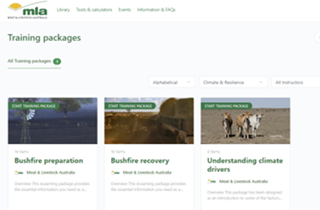
MLA’s online training
Use these free training packages to upskill yourself or your staff in different areas of environmental sustainability.
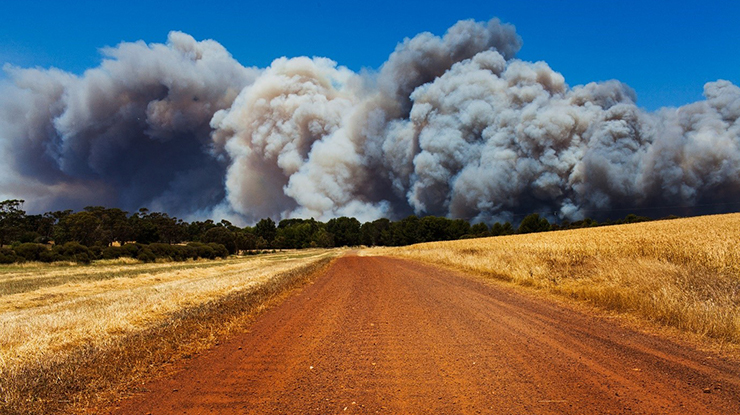
Responding to climate variability
Managing climate variability in the livestock industry is an important strategy for future-proofing the business.
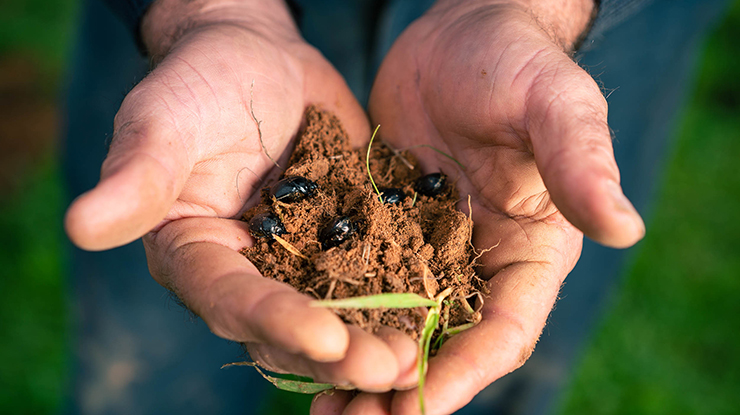
Dung beetles
Dung beetles play a critical role in Australia’s grazing ecosystems. By burying dung in the soil, beetles improve the flow of water, nutrients and carbon into the root zones of pastures.
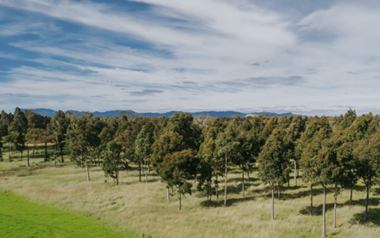
Trees on farm factsheets
Learn about optimising the co-benefits of trees on your property.
Co-benefit of trees on farm: Carbon sequestration - fact sheet
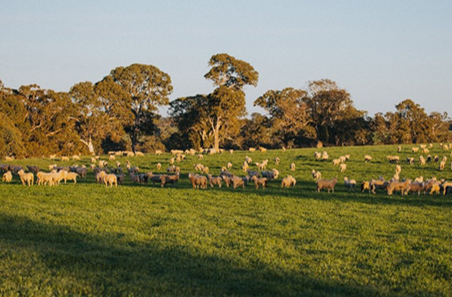
Making more from sheep: protect your farms
A resource to help you build the capital value and profitability of your sheep enterprise and keep your natural assets functioning effectively.
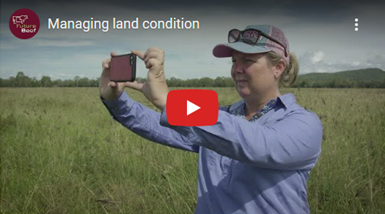
FutureBeef: Managing land condition
Hear from the FutureBeef team about how land condition is assessed and managed to support carrying capacity.
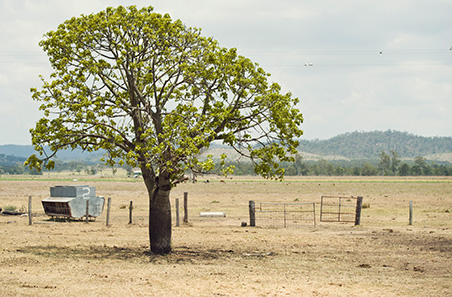
Native vegetation 1: Assessing the condition of remnant vegetation
Remnant vegetation is an important resource with high biodiversity values. For remnant vegetation to persist and provide ongoing habitat, it must be healthy. Protecting existing remnant vegetation is the number one priority for biodiversity.

More meat, milk and wool: less methane
Developing a better understanding of the science of methane emissions in livestock is critical to helping Australian producers increase productivity and improve sustainability.
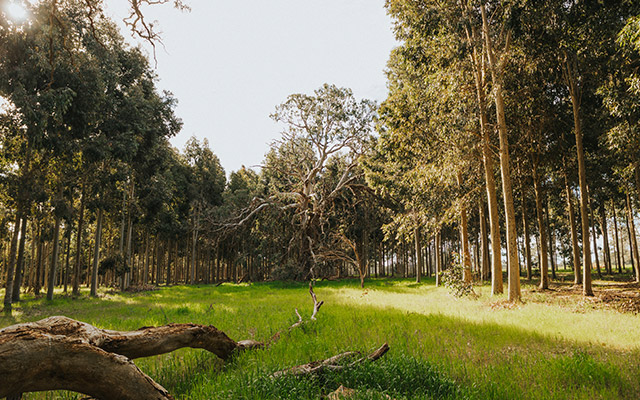
Biodiversity toolkit for grazed lands
The cattle, sheep and goat industries in Australia have had an impact on the Australia's biodiversity. This ranges from the direct impacts of land clearing for conversion to exotic pastures, overgrazing and trampling, to indirect impacts such as the introduction of weeds, changes to fire regimes, altered hydrological flows and major impacts on soil.
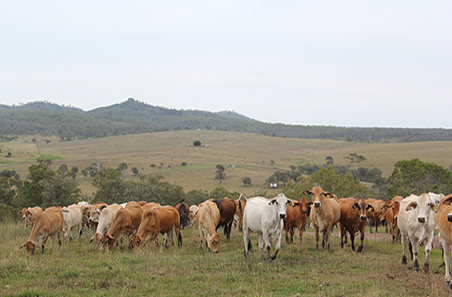
Grazing Land Management: Sustainable and productive natural resource management
This booklet provides an introduction to the grazing land ecosystem and outlines a section on climate and the relationship between rainfall and pasture growth.